
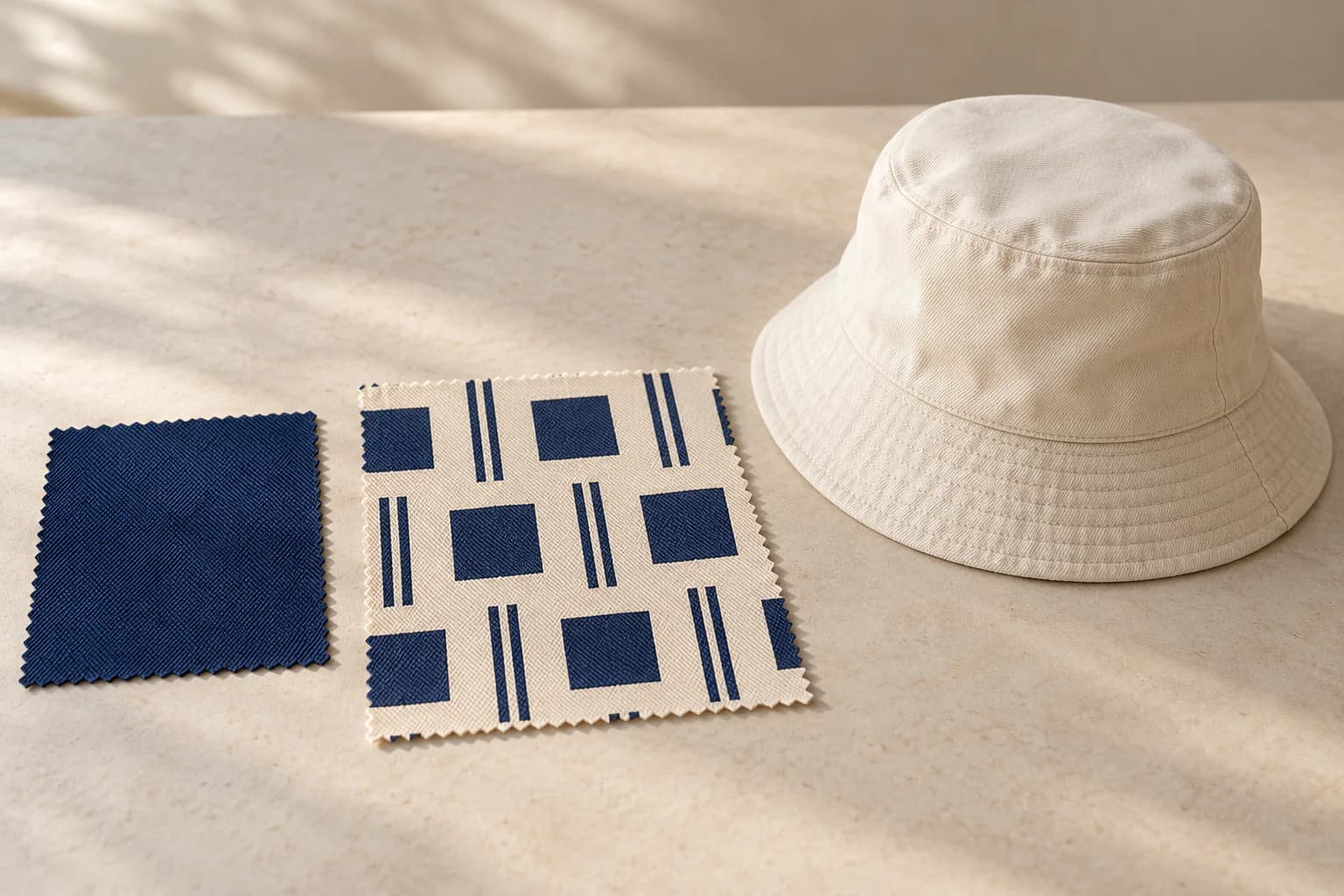
Choose a lab dip for dyeing and a strike-off for printing
A lab dip is a small trial-dyed material sample used to develop and approve a requested color before the dye formula is taken into production. A print strike-off is a printed fabric trial for reviewing the proposed artwork and its reproduction. For a bulk hat buyer, the first decision is which question the supplier needs the sample to answer: a dyed shade, a printed design, or both.
Cotton Incorporated demonstrates lab dipping as a request from a brand for a particular color on a specified substrate, followed by trial dyeing, evaluation and possible revisions. The material is part of that request. A color approval made on one cloth should therefore remain identified with that cloth while another material proposal is assessed.
Use the terms precisely in the brief. A navy crown with a printed underbrim can need separate material and print decisions. A digital artwork proof can confirm the file you sent, while the fabric trial addresses the printed result. Ask the hat manufacturer which submissions are appropriate for the proposed materials and decoration route, and who will coordinate them.
Keep the material and process attached to the sample
Give each submission a material reference and a proposed use: crown fabric F1, brim covering F2 or printed underbrim F3, for example. Record confirmed composition, construction and finish where available. If those details are still being sourced, ask the supplier to identify the proposed cloth rather than filling the record with assumptions. A small sample labeled only with a color name leaves its production relevance unclear.
Ask what preparation, dyeing or printing route the sample represents and which later treatments remain planned. Cotton Incorporated notes that its cotton lab-dip demonstration changes with other fibers and dye types, and that scaling a formula into production may require adjustments. Treat the trial as an identified development result, with the supplier explaining how it relates to the intended production route.
For printing, name the selected base fabric, artwork and proposed print method together. If a supplier uses an available substitute cloth for an early trial, record what that trial can settle and request the review still needed on the intended material. Do the same when the proposal changes after sampling. A new fabric or finish should arrive as an explicit change with affected approvals reopened.
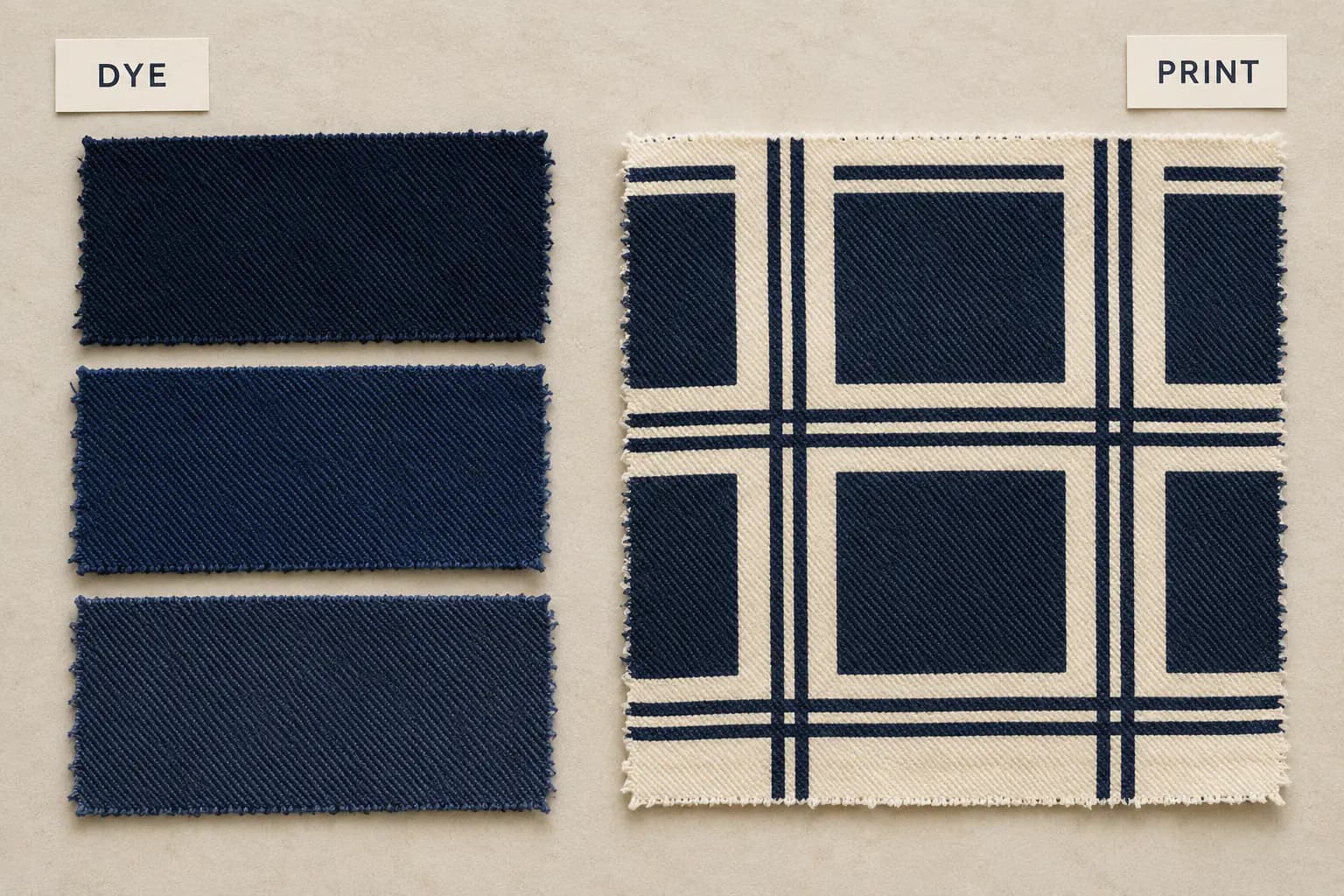
- Identify the actual material and proposed process.
- Distinguish a dyed-shade decision from printed artwork.
- Record any substitute cloth and remaining review.
Write a lab dip or strike-off submission request
Give the supplier a short request that connects the sample to the order. Include the style, finished colorway, material reference, controlling target and purpose of review. For a print, attach the current artwork and dimensioned drawing. Ask the supplier to return a submission identifier and explain any difference between the proposed sample and the intended specification.
Use separate fields for the submission round and the option within that round. For example, LD02-B can mean the second lab-dip round, option B; SO03 can identify the third print trial. These are illustrative codes, not a required industry format. Keep the identifiers consistent across the physical sample, email comments and file list so a later reply can name exactly what it accepts.
Salling Group’s supplier manual illustrates why the review purpose matters: it asks suppliers to identify samples and state what needs checking, including material quality, color, design, print and finish. Apply that principle to your request. Name the reviewer, the decision needed and the unanswered questions, then consolidate feedback before another submission is prepared.
- Request: style, colorway, material, target and sample purpose.
- Return: sample identifier, actual process and any substitutions.
- Decision: reviewer, date, accepted scope and next action.
Specify print size, repeat and artwork revision
A print strike-off request needs dimensions as well as a file. State the finished artwork width and height, the units and the revision identifier. For an all-over pattern, identify the horizontal and vertical repeat and the intended direction on the fabric. Ask for enough of the printed design to judge those relationships, rather than a crop containing one attractive detail.
PSSCIVE’s fashion-development guidance distinguishes printed samples from dyed color samples. It calls for the specified fabric and colors, a complete motif where relevant, and accurate, aligned repeats for an all-over print. This makes pattern scale a procurement instruction: if the printer proposes a different repeat or size, resolve that change before accepting the trial.
Keep fabric scale and hat placement as separate review points. For a printed underbrim, mark the intended orientation on a brim drawing and identify any motif that must occupy a particular position. Then request an assembled hat to review the result at the brim edge and seams. A flat print trial cannot show the finished hat’s complete arrangement. Decide which details the strike-off establishes and which remain for the sewn sample.
- Identify the artwork file, revision and finished dimensions.
- Show repeat measurements and direction for all-over patterns.
- Name the base fabric and proposed printing method.
- Mark hat placement questions for the assembled sample.
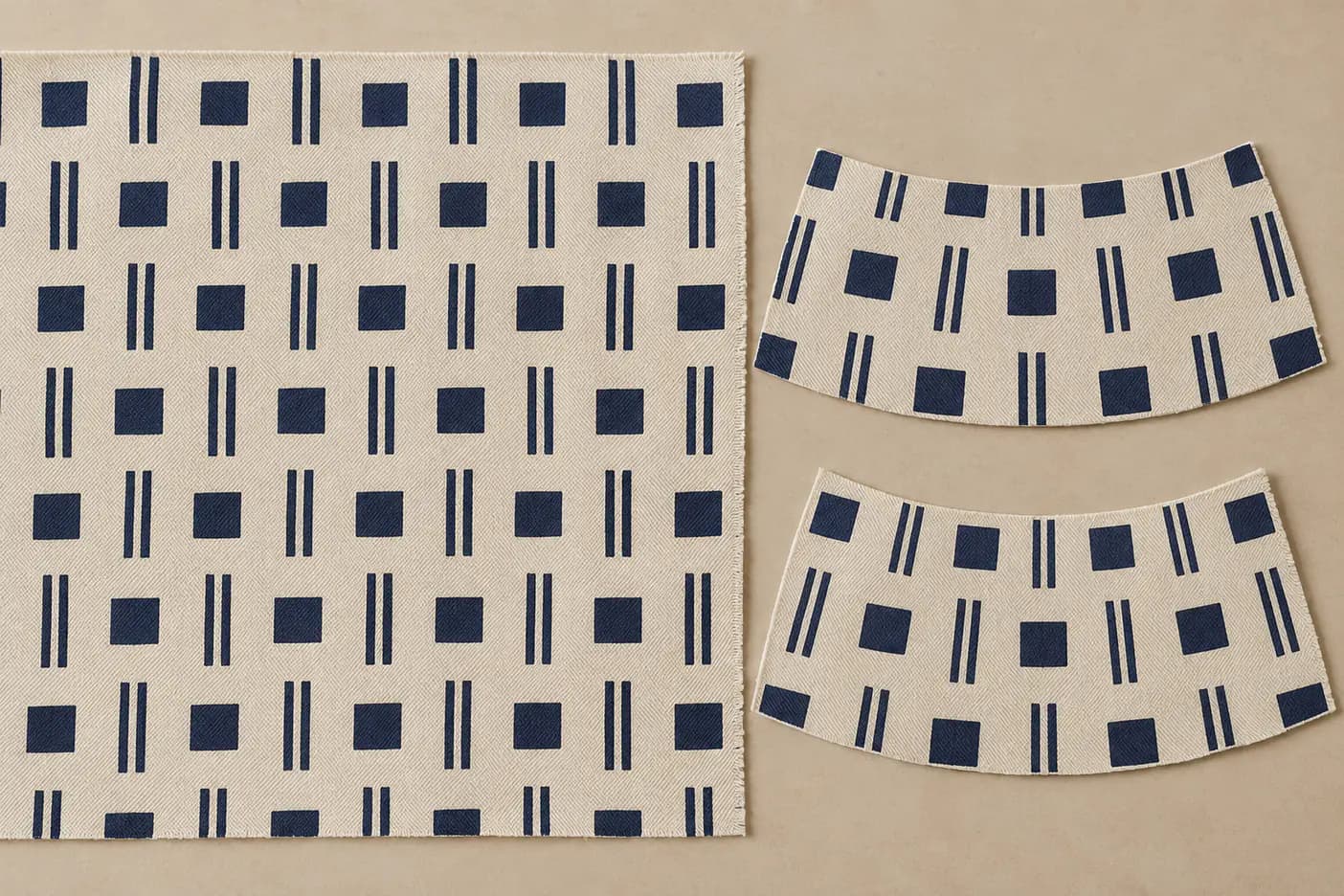
- Identify the artwork revision and repeat dimensions.
- Review the pattern before approving the cropped view.
- Check final placement on the assembled hat.
State what approval releases and what remains open
Record a clear status for each submitted item: accepted for its stated purpose, revise and resubmit, or pending information. If you accept one shade option but still need the proposed finish reviewed, write both decisions. Avoid an unqualified “approved” reply to an email containing several fabrics, print files and sample photographs.
Identify the reference that will control the next stage. Confirm whether production will be assessed against the original target, a specifically accepted physical sample or another agreed master. Keep that choice explicit when approving a development trial; the word “approved” should not silently replace the controlling reference. Retain the accepted identifiers with the current specification and confirm what each party holds.
The later checks still need a plan. Datacolor warns that color errors can occur after a lab dip or strike-off is accepted and discusses production-lot checks. Salling Group separately describes pre-production samples using bulk fabric and final components. For your hat order, agree which subsequent material and assembled samples require review. Record any performance or colorfastness requirements separately; accepting the appearance of a trial does not establish those results.
Example: approve a dyed crown and printed underbrim
Consider an illustrative order for a navy cap with a small repeating print beneath the brim. The buyer assigns F1 to the crown cloth and F2 to the underbrim cloth. The dye request names F1 and color target C1. The print request names F2, artwork AB04 and a dimensioned repeat drawing. These identifiers describe a hypothetical project, not a FORMBRIM customer order.
The returned crown trial is LD02-B. Its shade is accepted for F1, while the printed trial SO01 needs a smaller motif. The buyer writes: “Accept LD02-B for the F1 color-development review against C1. For F2, revise the motif to artwork AB05 and the attached dimensions; keep the proposed base fabric unchanged. Print approval remains pending. Confirm the references for subsequent production review and show the accepted print on the next assembled cap.”
When SO02 arrives, check it against AB05 and record its decision separately. If the assembled cap later shows an unwanted motif crop at the brim edge, identify that placement issue without reopening the accepted crown shade unnecessarily. Update the hat specification and request the affected revision. The useful outcome is a connected set of decisions that tells the supplier what may proceed and what still needs work.
Send the sample questions with your bulk hat brief
Send the hat construction, quantity by finished colorway, material references, color targets and dimensioned print files. Explain whether you want an available material shade assessed or a custom color proposal investigated. Attach any retained approval samples or their identifiers, and name the person who can consolidate material and artwork decisions.
FORMBRIM provides OEM and ODM headwear development with cutting, sewing, embroidery and printing. Bring the sample questions into that discussion so the proposed material route, submissions and approval responsibilities can be confirmed. Ask about feasibility, additional material quantities, cost and timing for the specific project before treating the requested development work as agreed.
The bulk hat MOQ is 300 pieces per style, per color. That finished-hat minimum does not establish a dyehouse or printed-fabric minimum. Keep any separately proposed material commitment visible in the quotation. Add the destination and required arrival date, then request a response identifying the next sample, its review purpose and the information still needed from your team.