
What an AQL inspection can decide
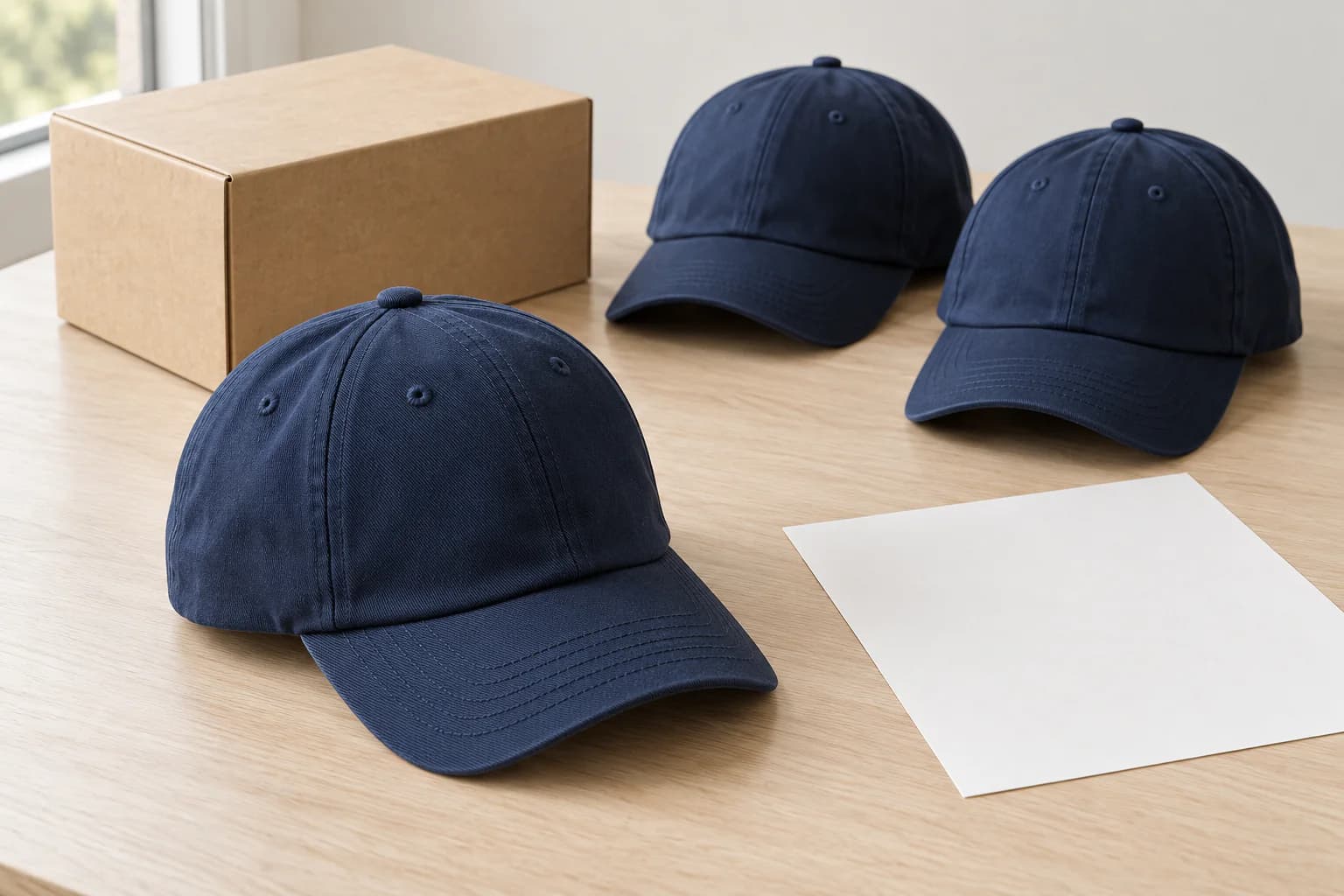
An AQL inspection helps a brand or importer decide whether an identified production lot meets its agreed acceptance rules. AQL means acceptance quality limit. The useful starting point is the decision the report must support: which hats are being considered for release, against which requirements, and by whose authority? A number in a purchase order cannot answer those questions alone.
NIST explains acceptance sampling as a decision about a lot using randomly selected items. It is not a method for establishing the exact quality of every item in that lot. A passing sample therefore does not show that every delivered hat conforms. Keep the sample findings, the acceptance decision and any separate checks distinct in your records.
A development sample establishes what the hat should be; a production inspection examines goods submitted against that reference. FORMBRIM’s published capability states 100% inspection. Confirm how that activity and the buyer’s lot acceptance will be documented: the published phrase alone does not identify an AQL scheme or assign shipment release authority.
Define the lot before selecting hats
Describe the lot as an identifiable quantity submitted for one acceptance decision under the agreed inspection arrangement. Give it an order number, style, finished colorway, quantity and carton range. Record relevant size splits or production references. The inspector and release approver should be able to locate the same goods from this description without relying on a photograph of stacked cartons.
Agree whether different styles, colorways or production groups need separate decisions. A navy cap with a metal closure and a cream version with a fabric adjustment may carry different requirements even when they share a collection name. Do not combine them merely to make the order total convenient. If an agreed plan groups variations, document both that grouping and how its selection method covers them.
For order planning, FORMBRIM’s MOQ is 300 pieces per style, per color. An illustrative order of 300 navy and 300 cream caps meets that finished-colorway minimum; it does not automatically establish a single 600-piece inspection lot. Commercial minimums and inspection grouping answer separate questions. Reconcile the packing list with the quantity actually available, and identify anything unfinished or unavailable before selection begins.
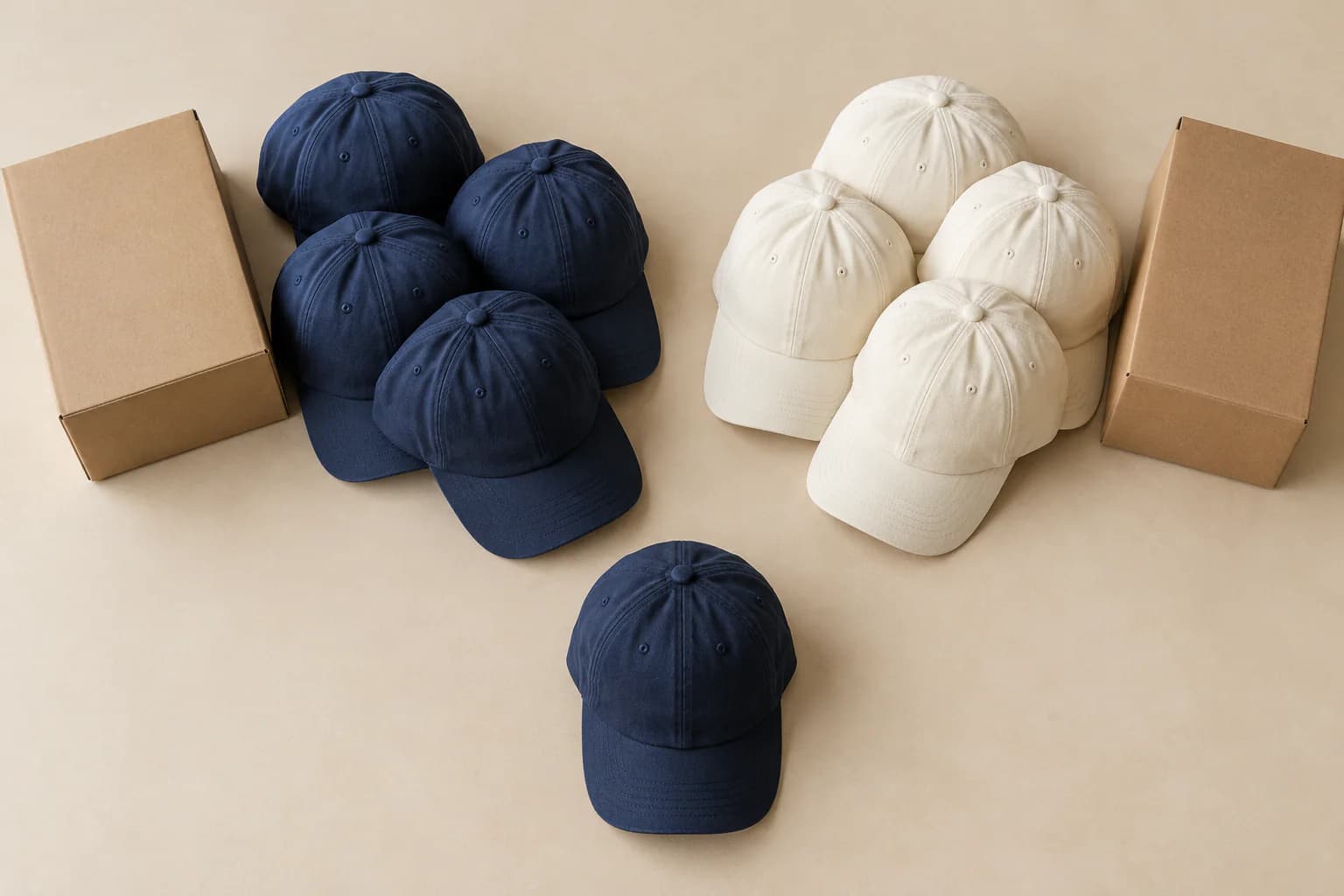
- Name the style, colorway and carton references.
- Agree how variations enter the inspection decision.
- Keep order minimums separate from lot grouping.
Agree requirements and defect references first
Issue one controlled inspection brief containing the approved hat reference, current specification, artwork, component list, measurement methods, labels and packing instructions. For each check, identify the controlling document and revision. An inspector cannot resolve a disagreement between an old logo file and a newly approved sample by counting more hats.
Build defect references around the actual order. For a hypothetical embroidered cap, show the approved lettering and placement reference. For its closure, describe the required operation and attachment. For labels, supply the accepted wording and installed position. Where measurements matter, state the agreed measurement point and tolerance. Photographs can clarify a concern, but an enlarged photograph without scale should not quietly become a dimensional limit.
Agree any critical, major or minor classifications with the responsible buying and quality teams before inspection. These labels must follow the specified requirement and consequence; a loose thread, distorted logo or incorrect label does not have one universal grade for every hat order. Identify mandatory requirements separately, including any required tests or documents that a visual inspection will not establish. An unclear classification remains a question to resolve, rather than permission for the inspector to invent a threshold.
Specify the AQL inspection plan, standard and revision
Record the agreed sampling standard, revision and plan, together with the inspection level, applicable severity, selected AQL values and acceptance or rejection rules. Identify who selects and verifies them. The sample size and decision thresholds must come from that agreed arrangement; copying familiar values such as 2.5 or 4.0 from another order does not establish a suitable plan.
ISO’s official record lists ISO 2859-1:2026 as its third edition for AQL-based attribute sampling of lots. ASQ’s public overview separately identifies ANSI/ASQ Z1.4-2003 (R2018), including switching rules and normal, tightened and reduced plans. Name the actual reference agreed for the order. The two publication references should not be treated as interchangeable revisions, and their public summaries do not supply a complete working plan.
Clarify the counting basis: nonconforming hats and individual nonconformities are different records. State how several findings on one hat will be reported and assessed. Also record how random selection will reach the defined lot, which cartons were accessed and any access restriction. Hats chosen beforehand because they look presentable cannot stand in for the agreed random selection. Preserve the selection record with the report so the release decision has a traceable scope.
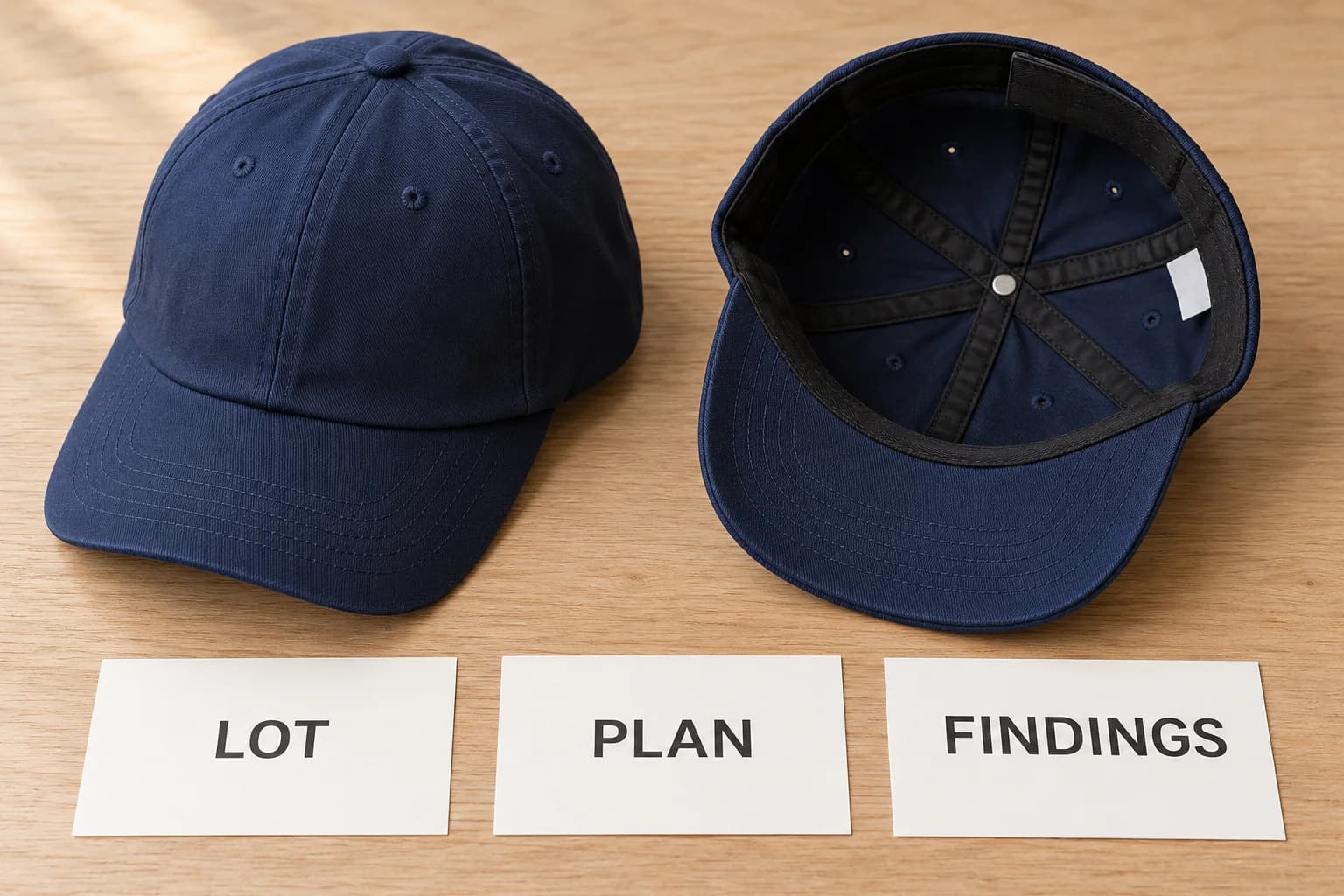
- Identify the agreed standard and revision.
- Record the sample and counting basis.
- Connect findings to the order requirements.
Read the report beyond the pass or fail result
First match the report’s order, lot quantity, style, colorway and carton references to the goods proposed for shipment. Check the inspection date, specification revision, plan reference, selected sample count and completed checks. If a field is blank or a planned check was omitted, establish what that means before treating the result as complete.
Read findings using their stated counting basis. A list of defect photographs is not automatically a count of different defective hats: several images may show one item. Ask for identifiable findings, their requirement references, classifications and recorded disposition. If measurements use a different sample quantity from appearance checks, keep those quantities visible rather than assuming every check covered the same hats.
Quantity, labels and packing need explicit scope too. SGS’s final random inspection service description includes these subjects alongside product quality. For your order, ask which checks were actually performed: a count of cartons is different from verification of pieces inside them, and one label photograph does not identify every carton’s contents. Record the checked quantities, label revisions, packing arrangement and any exclusions. Keep required test reports separate from visual observations, and reconcile unresolved packing or quantity discrepancies before shipment release.
Worked example: hold, correct and recheck
Consider a hypothetical importer ordering 300 navy and 300 cream embroidered caps of one style. The parties have agreed to assess the colorways separately, using identified cartons, an approved specification and a documented sampling plan. These are editorial assumptions, not a report of a FORMBRIM order or a proposed sample-size calculation.
Suppose the cream report records a label revision that differs from the brief, and its result does not meet the agreed acceptance rule. Identify and hold the affected lot. Ask whether the problem is the installed label, the document supplied to the inspector or both; each possibility requires different evidence. Confirm how the other colorway’s labels were checked before assuming it is unaffected.
The corrective action should identify the affected goods, required sorting or replacement, responsible party and completion evidence. Keep corrected goods distinguishable from goods awaiting work, and reconcile the quantity and carton record afterward. A photograph of one replaced label does not establish completion across the held lot.
Agree the reinspection scope and applicable procedure before presenting corrected goods again. Retain the original failure, corrective record and new report together. Do not repeatedly draw fresh samples until one happens to pass. If separate release of the navy lot is considered, the authorized buyer must assess its own evidence and confirm that the shipment can remain identifiable. Record who decides, exactly which goods are released and which remain on hold.
Prepare the inspection brief and release handoff
Before asking a supplier to review your requirements, assemble the information below. Flag open decisions and assign an owner rather than filling missing fields with a borrowed AQL value. If your buying team appoints an inspection provider, identify that party’s scope and reporting route alongside the supplier’s responsibilities.
For release, retain the final report, resolved discrepancies and written authorization against the same lot identifiers. Specify whether approval covers the goods, the packing and the shipment handoff, and record any outstanding conditions. FORMBRIM can discuss the headwear project and requested inspection requirements; the applicable plan, responsibilities and evidence need agreement for the actual order.
- Order and lot identifiers, quantities by style and color, size splits and carton references.
- Approved sample, specification and artwork revisions, plus defect and measurement references.
- Proposed sampling standard and revision, plan settings, counting basis and selection access.
- Required product, quantity, label, packing and separate test or document checks.
- Contacts responsible for inspection, corrective action, reinspection and final release.