

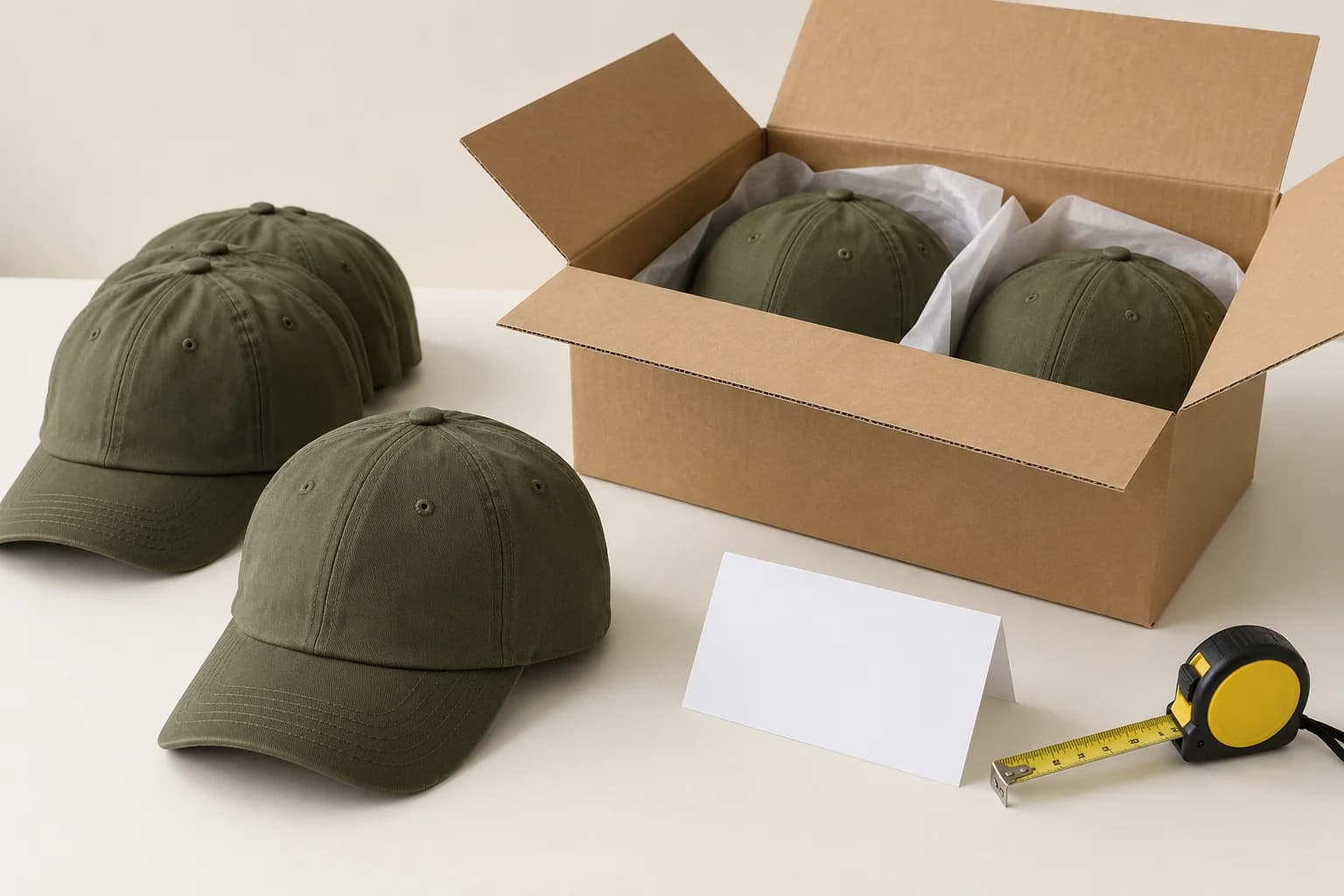
Book against a defined order and an agreed scope
A pre-shipment inspection reviews goods near the end of production against agreed requirements before dispatch. For a hat buyer, the preparation task is to make the order, inspection scope and decision process identifiable. Do not rely on “inspect before shipping” as the complete instruction.
Name the order revision, styles, finished colorways, quantities and destinations. Identify the approved product and packing references. Then agree with the inspection provider and manufacturer what will be available, what will be checked and how findings will be reported. A date can be booked while important details are still unresolved; record those conditions before treating the booking as ready.
This article concerns the booking packet and the response to findings. The AQL article covers statistical lot-acceptance decisions; the packing guide covers how to specify cartons. Keep those detailed requirements attached to this handoff rather than substituting a broad inspection instruction for either one.
Confirm readiness in quantities, not reassurance
Ask for the quantities finished, packed, unpacked and still in process for each order line. Reconcile those statuses to the ordered quantity and record when the information was confirmed. A statement that production is nearly complete can conceal one unfinished colorway or packing that has not yet started.
Inspection providers set their own booking and readiness conditions. QIMA’s public service description, for example, describes checks near production completion and covers product specifications, quantities and packing. Confirm the conditions for the actual service you arrange; do not copy another provider’s completion threshold into a FORMBRIM promise.
If goods will be incomplete, disclose that before the visit. Ask what scope the provider can cover, what must be deferred and whether another check will be needed. Keep the answer with the booking. A report covering the available goods should not be silently expanded to cover units completed later.

- Confirm finished, packed and pending quantities.
- Reconcile the status to each style and colorway.
- Agree how excluded goods will be handled.
Build a compact packet of controlling references
The inspector needs identifiable requirements, rather than every email from development. Send the current specification, approved sample identity, artwork revision, material/color map, quantity breakdown and packing instructions. List approved deviations explicitly. Retired files can remain in the archive but should not compete with the current instruction.
For headwear, show how fit measurements are taken and which adjustment setting applies. Identify front and rear artwork, inside labels, closures and any design-specific checks. A wide brim, reversible face or rope attachment needs a suitable reference. If a photograph leaves a feature ambiguous, resolve it in the brief before the visit.
Name the person authorized to consolidate answers. If design and buying teams send conflicting updates during inspection, the inspector should have a clear route for clarification. Record any approved scope change with its revision and affected order lines. An informal message should not invisibly replace the reference supplied at booking.
Make the packing and quantity checks specific
Connect carton identities with style, colorway, quantity and destination. Show full cartons, partial cartons and any permitted mixed contents. Agree what information the inspection report should capture so the buyer can reconcile what was checked with the shipment plan.
Request packing checks against the agreed requirements: individual presentation, tissue or separators where specified, carton condition, marks, dimensions and weights where relevant. A photograph of one open carton does not establish that every carton contains the same allocation. Identify the sampling or verification scope rather than implying full coverage from a few images.
Keep product acceptance, packing acceptance and dispatch arrangements as distinct recorded decisions. Correct hats can still have an unresolved destination allocation; an accurate packing list can still describe hats needing corrective work. A container-loading check is also a different service stage. Ask the provider what its visit covers before assuming it observes later handling.
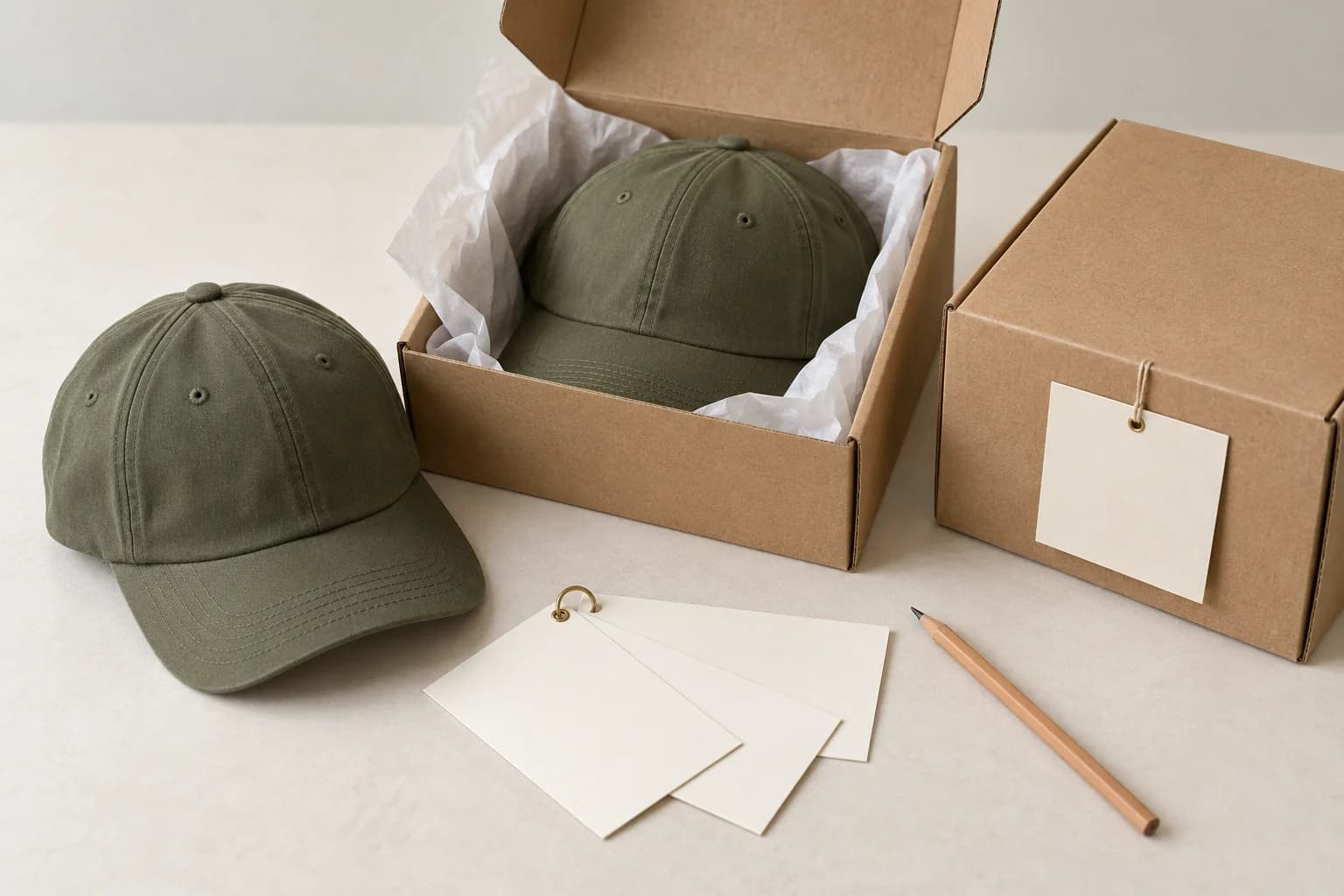
- Trace the carton to the order allocation.
- Identify the correction and responsible person.
- Agree verification before authorizing the next step.
Example: one colorway is packed and another is still being finished
Imagine an illustrative order of 300 olive caps and 300 cream caps of the same design. Before inspection, the olive line is packed while some cream caps still need labels. The order meets the published minimum of 300 pieces per style, per color, but that commercial fact does not make the cream line ready for the planned inspection scope.
List the actual status of both lines and ask the parties how to proceed. Possible decisions need assessment: move the visit, inspect a clearly identified completed scope, or arrange a later check for excluded goods. Record the selected arrangement and its consequences. Do not mark the whole 600-piece order inspected simply because one colorway was available.
If an olive carton also carries the wrong destination code, keep that packing discrepancy separate from the unfinished cream labels. Give each issue an affected scope, proposed action and person responsible for checking completion. This example illustrates order control; it is not a report of a FORMBRIM shipment or inspection result.
Turn each discrepancy into an owned action
Read the inspection report against the agreed scope. For every concern, record the finding, affected goods, supporting photos or measurements, proposed correction, decision owner and verification required. Ask what remains uninspected or unconfirmed as well as what was checked.
A corrected photo may help answer a placement question without proving that all affected units were corrected. Agree the evidence or reinspection needed for the actual issue. If goods are reworked, substituted or repacked, identify the changed scope and whether previously completed checks need to be repeated.
Finish with a written status for each unresolved item and the order release decision. The inspection provider reports within its service scope; the buyer’s commercial authorization and the transport booking need their own responsible parties. FORMBRIM’s stated 100% inspection is not a claim that a particular independent inspection, test method or certificate is automatically included.
Prepare the dispatch handoff after the findings are resolved
Before dispatch, reconcile the final packing list, order quantities and destinations with the accepted inspection scope and any subsequent changes. Retain the final report and the resolution record together. If goods changed after the visit, make that visible to the people authorizing shipment.
The useful output is a packet that another colleague can follow: what goods were available, what was checked, what changed and who authorized the next step. It does not promise that an inspection eliminates every defect or replaces destination-specific requirements, laboratory evidence or freight arrangements.
- Identify the order revision and each style/colorway line.
- Confirm finished and packed quantities before booking.
- Supply one current specification, artwork and packing packet.
- Agree the inspection scope and handling of excluded goods.
- Assign corrective actions and the evidence needed to close them.
- Record release responsibility and reconcile the final shipment.