
Define the material decision before selecting a test
A fabric shrinkage test helps a buyer assess dimensional change under defined conditions. The useful procurement question is whether the evidence applies to the cloth proposed for a particular component and order. A percentage without a specimen identity, method or processing state cannot answer that question.
Start by describing the concern. Perhaps the crown cloth is changing after the intended process, an inside strip is being substituted, or a supplier has sent a report from an earlier material submission. Each situation needs a traceable comparison. Do not begin by copying a passing percentage from another product and assuming that it is suitable for your cap.
This guide concerns cloth specimens and the evidence used to accept, revise or investigate a material proposal. Finished hat opening, depth and fit remain separate checks on the assembled sample. A fabric result can inform those discussions, but it does not calculate the correct hat size or establish the behavior of every sewn component.
Identify the cloth and its processing state
Give the proposed specimen a reference that connects it to the material submission. Record the style, component position, supplier material code, color, available lot or roll identity and the finish being discussed. Ask for missing composition or construction information rather than inferring it from a photograph. The same shade name does not establish the same fabric.
Then record the state of the cloth. Is it an early development swatch, dyed and finished yardage proposed for bulk, or material after an additional agreed process? If two reports cover different states, keep that difference visible. A buyer needs to know what the specimen represents before deciding whether the result is relevant.
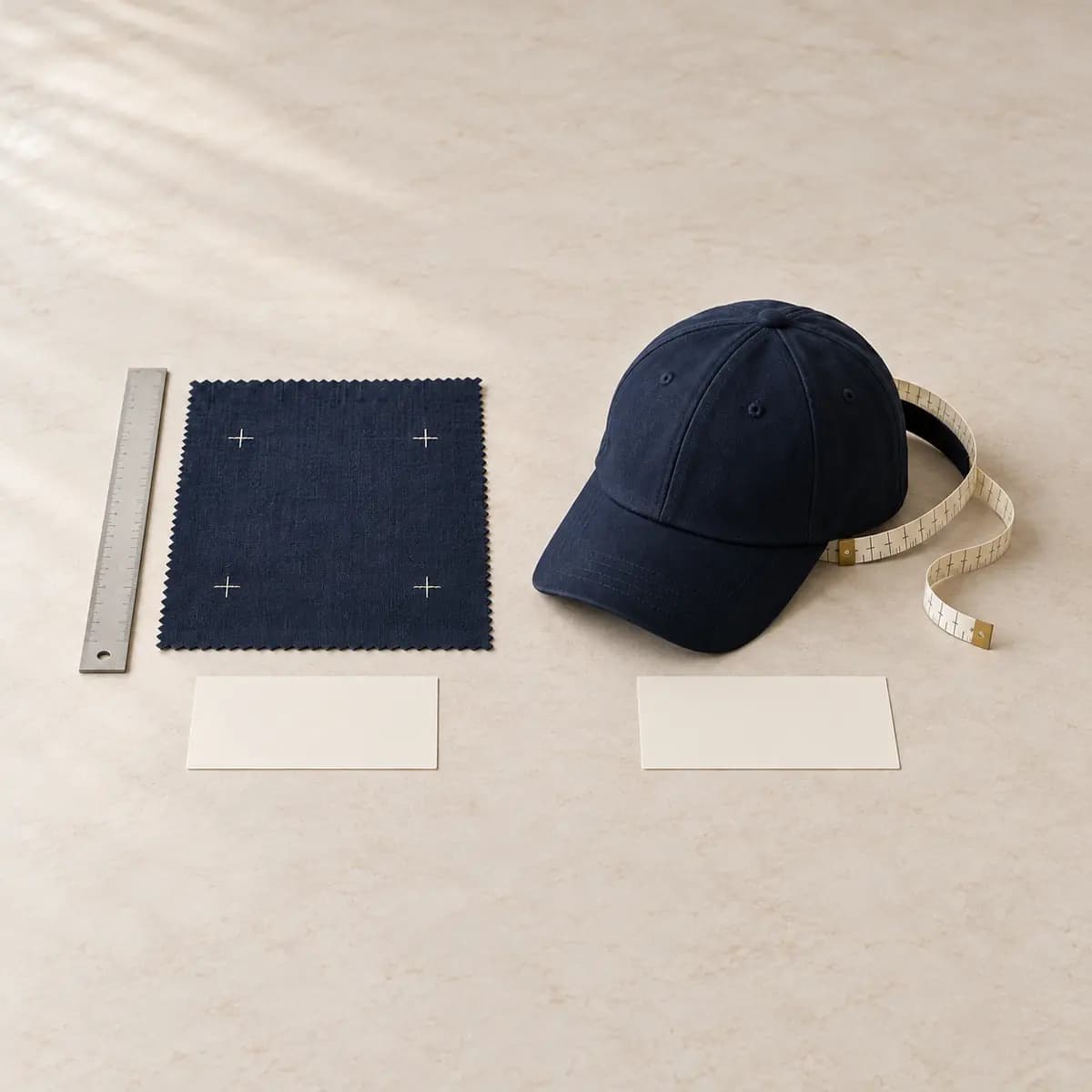
For a cap with several textile components, create separate records for the crown cloth, underbrim cloth and any inside material under review. Add an ear-cover material as its own position when developing a fold-down construction. Sharing a color or supplier does not automatically make those components interchangeable for evidence purposes.
Ask the testing provider what form and amount of material it requires and how the specimen will be identified on the report. Keep the submitted sample reference, accompanying description and resulting report together. A clear request is more useful than an unidentified square of fabric sent with the instruction “test shrinkage.”
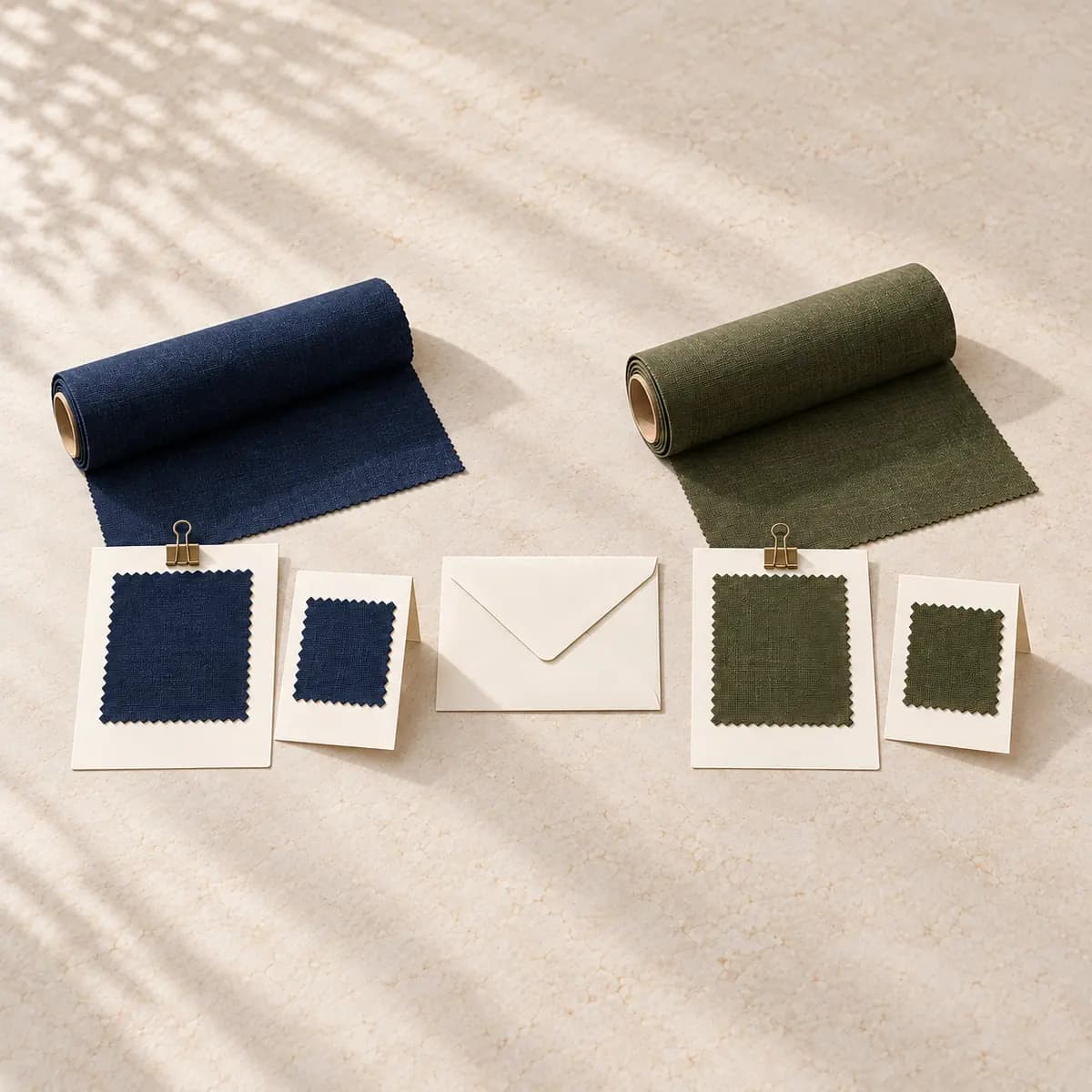
- Keep navy and olive submission identities separate.
- State which processing stage each specimen represents.
- Connect the record with its component position.
Choose the property and conditions with the testing specialist
AATCC TM135 addresses length and width changes in fabrics suitable for home laundering under specified laundering options. Its public scope is a reason to confirm suitability and conditions with the laboratory, rather than treating a reference to TM135 as a complete instruction for every hat material.
SATRA TM234 addresses relaxation shrinkage and hygral expansion of fabrics. That is a different dimensional-stability question from a general laundering request. The existence of both methods shows why “shrinkage tested” needs a named property and method; the identifiers are not interchangeable labels for an identical result.
Tell the specialist the proposed material state, manufacturing concern and intended care direction. Ask which method and current revision are appropriate, which conditions will be reported and what specimen preparation is needed. Agree the project’s acceptance requirement before the result arrives, with the responsible technical parties involved.
Have the testing provider work to the complete applicable method. Keep the agreed procedure reference and acceptance criteria with the testing request; a brief public scope is not an operating instruction. A requirement involving a particular production process may need a different assessment, so ask how that question should be addressed rather than relabeling an unrelated report.
Read directional change before drawing a product conclusion
Ask the report to identify its length and width directions and how they correspond to the submitted cloth. Retain any specimen-orientation record supplied by the laboratory. A directional result loses meaning when the buyer cannot connect it to the fabric reference or distinguish one direction from the other.
For a woven cap proposal, compare that record with the grain direction marked on the crown and brim drawings. Different pattern pieces may orient the cloth differently. Do not assume that a report’s length value always corresponds to the hat opening, or that its width value always corresponds to crown height. The pattern and assembled construction determine those relationships.
As arithmetic only, a marked distance changing from 30.0 cm to 29.4 cm is 0.6 cm shorter, a 2% decrease relative to its starting distance. This invented pair of numbers is not a prescribed specimen size, a test result or an acceptable limit. Read the laboratory’s stated calculation and sign convention; growth should not disappear because a summary says only “shrinkage.”
Keep the separate directional results and any reported variation visible. An average alone may hide the particular direction relevant to your question. Ask the laboratory to explain an unclear entry instead of converting one cloth percentage into a blanket allowance for the finished cap.
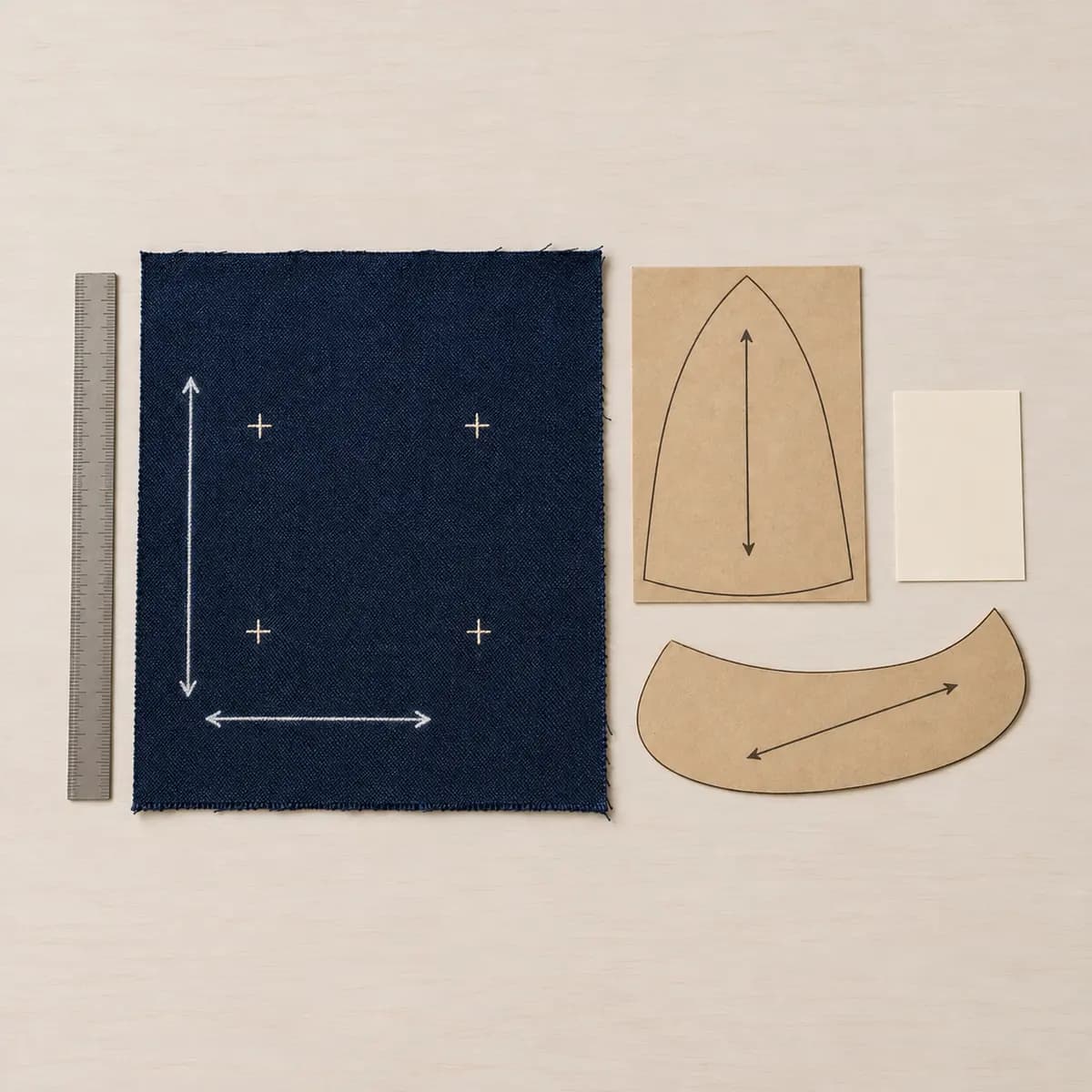
- Retain the specimen's length and width orientation.
- Check grain marks on each crown and brim piece.
- Keep finished-hat checks separate from cloth results.
Example: decide whether the supplied report covers the proposal
Consider an illustrative order with navy crown submission NV-07 and olive submission OL-03. The buyer receives report R-01 naming NV-07 before an additional proposed finish. The olive submission is not listed. The report is useful evidence about its identified specimen, but it does not by itself establish the dimensional behavior of the proposed finished navy cloth or the olive material.
Make the gaps explicit: confirm the process state represented by NV-07, ask whether the added finish changes the evidence needed, and request a reasoned assessment of OL-03. The appropriate next step might be clarification, further information or another test agreed with the specialist. Do not invent equivalence because both fabrics have the same stated composition.
Suppose an updated report then identifies the intended navy submission and conditions. Compare it with the requirement agreed for that component and record the decision for navy only. Olive can remain pending. If a different fabric is proposed to address a concern, it becomes a new submission with its own evidence and sewn-sample review.
This is an example of evidence coverage, not a FORMBRIM laboratory result or customer case. No percentage in the example establishes a universal acceptance rule, and accepting a cloth report does not approve the complete two-colorway order.
Record what a material decision opens and closes
Read the report identifier, test date, specimen description, method and conditions together. Confirm which component and submission the evidence covers, then record whether the agreed material requirement is met, remains unresolved or needs technical review. Keep the actual report available beside that decision; a filename ending in “passed” is not an adequate record.
If the response is to change the cloth, finish or process, identify the affected sample checks. Appearance, hand, decoration, panel behavior and inside finish may need renewed review. Avoid changing the pattern automatically in response to a single percentage; establish the relevance of the evidence and assess a revised sample with the appropriate parties.
Keep dimensional stability separate from other material properties. A result under one method does not establish colorfastness, protection, durability or compatibility with every component. Likewise, an accepted shade swatch is not dimensional-change evidence. Record each requirement against the question it answers so one approval does not silently stand in for another.
Send an evidence request alongside the sampling brief
Bring the component map, material submissions, proposed processing state, care direction and decision question into the sample discussion. Agree who will arrange testing, review the report and authorize any resulting changes. Confirm cost, timing and specimen requirements before assuming that a particular laboratory service is part of the project.
FORMBRIM develops OEM/ODM headwear with a published minimum of 300 pieces per style, per color. That order minimum is separate from a laboratory’s material requirements. Any laboratory arrangement, test cost and reported result need explicit project confirmation. The useful handoff is an identifiable material proposal with an agreed evidence request and a recorded next decision.
- Which component, color and material submission will be assessed?
- What processing state does the specimen represent?
- Which property, method, conditions and acceptance requirement are agreed?
- How will length and width results connect to the cloth and drawing?
- Which order scope is covered, and what remains pending after review?