
Identify one assembly in its lowered and folded states
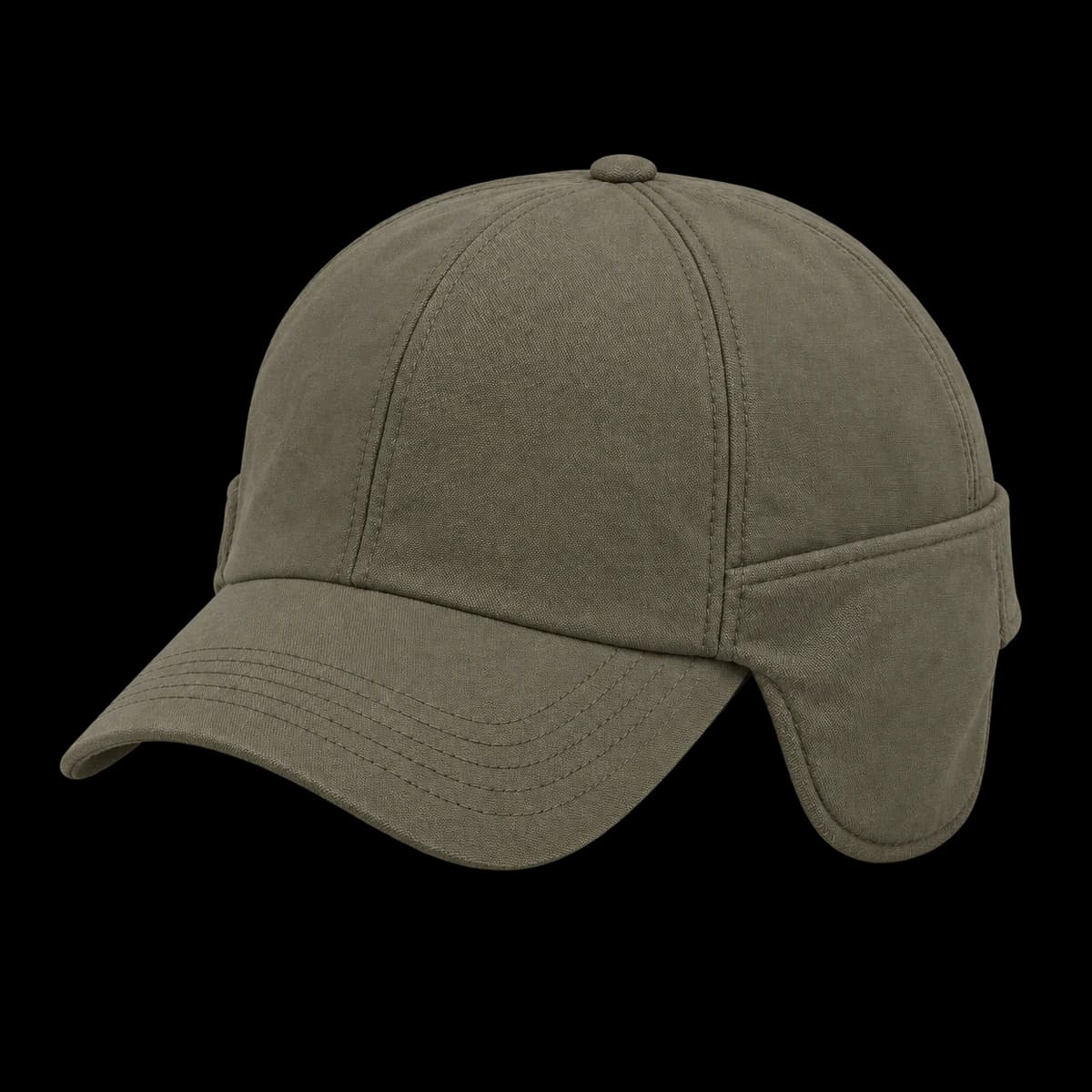
Use front, side and rear views to define the proposed six-panel woven crown, forward brim and continuous side-and-rear ear band. In the lowered state, its deeper side areas cover the ears while the rear section remains shorter than a neck cape. In the folded state, the same band turns upward against the lower crown. Show the turn line, front ends and both states on one identified drawing. This is a different assembly from the all-around-brim neck-flap sun hat; neither the broad brim nor a hanging rear cape is carried into this cap.
Draw the lower crown and band as separate components before adding color. Identify the turn line and the two front ends beside the brim. Label photographs lowered and folded using the same sample code, wearer reference and camera angle. A side view should show the ear area and where the lower edge finishes; a rear view should show the shorter middle section. Exact lengths and widths are decisions to measure and agree, rather than values to infer from the product image.
Review the transition between the two states as well as the final photographs. Note whether folding changes how the cap sits or distorts the brim area. If the buyer requests separate side flaps instead of the continuous band, record that as a new pattern proposal and reopen the affected review. It should not quietly replace the configuration already being discussed.
Inspect the turn line and inside contact in both states
Choose crown cloth, band cloth, inner contact surface and edge finish as separate material decisions. The illustrated woven proposal establishes no fixed fiber content, weight or lining. Review the layers where the band joins the lower crown and where its front ends meet the brim area. Ask how the proposed construction sits over the ears when lowered and against the crown when folded. If the brief needs a retention feature, discuss it during sampling rather than assuming a snap, tie or other fastening is included.
Mark the material identity and seam finish on an inside view. Follow the attachment from one front end around the rear to the other end, checking visible bulk and exposed edges on the physical sample. Compare the area against the intended wearer’s ears in the lowered state and the lower crown in the folded state. A neat exterior photograph cannot establish the contact feel.
If a retaining detail is requested, add its intended location and operation to the drawing before choosing hardware. Ask whether it changes the fold thickness, skin contact or artwork area, then review the agreed proposal on the assembled cap. Keep that decision pending until the actual configuration is known. Do not describe an unselected fastening as supplied, or infer a thermal property from the presence of an extra cloth layer.
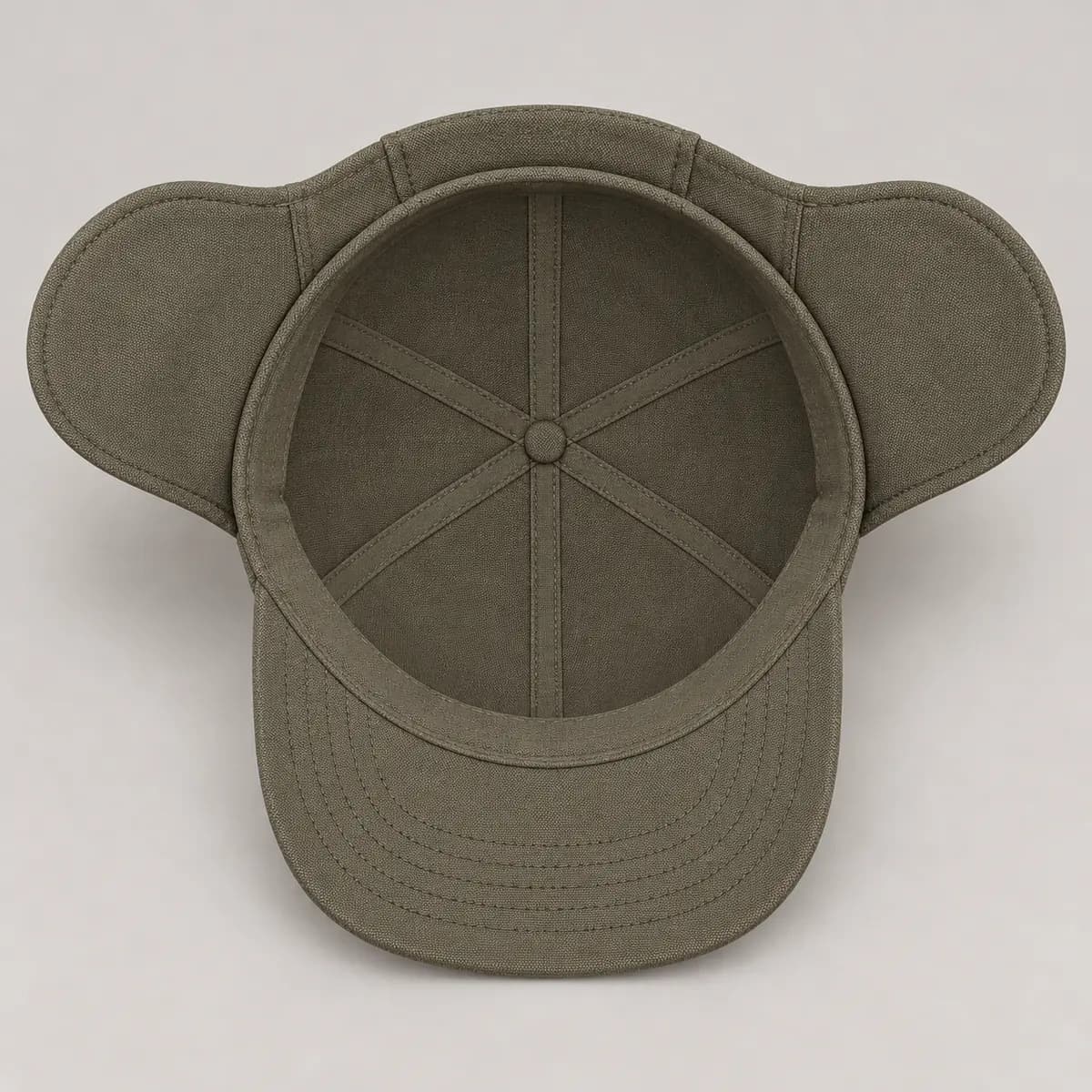
Inspect the attachment turn line and inside contact finish.
Inspect the physical sample before approval.Approve artwork before the folded band conceals it
Assign crown, upper brim, underbrim, ear band, thread and artwork colors in one finished colorway. Place a compact front mark clear of the brim join, and show any side or rear label in both band states. A mark visible with the band lowered may be hidden when it folds up. Review decoration and its inside attachment on the chosen material, then check that the turn line remains clear. Supply final-size artwork and identify which view governs placement instead of approving only a front mockup.
Prepare one placement drawing for the front mark and a second for any band or side label. Reference stable seams and the brim join, with the finished artwork dimensions stated. Photograph each proposed placement in both band positions: the folded edge can cover a label, reveal its reverse or introduce a competing line beside the mark. Select the intended visible state explicitly.
Use the same cloth, band shape and artwork scale when comparing placement alternatives. If a decoration method changes stiffness or thickness near the turn line, request a revised assembled sample rather than accepting the loose label alone. Record whether the concern is visibility, attachment, contact finish or fold behavior. These need different corrections even when they appear in the same close-up.
Close the two-state sample and packing record
What does the order minimum cover? FORMBRIM’s bulk MOQ is 300 pieces per style, per color; list every complete colorway and proposed size allocation separately. Can the material and coverage be specified? Send your cloth reference, intended worn position, lowered and folded views, artwork, labels and packing needs for sample review. Does an ear band establish a warmth or weather rating? No measured performance is specified here; identify any required property and agree the evidence separately. Before requesting a quote, name accepted and pending decisions for the crown, brim, ear coverage, inside finish and any retention proposal.
Keep accepted, revise and pending statuses for the crown, brim, ear band, turn line, contact surfaces, decoration and packing. Name the reference used for each decision. Approval with the band lowered cannot silently approve its folded position, and an accepted first colorway does not approve a second material combination.
Ask for the proposed packing arrangement to be reviewed with the band in its intended shipping state. Check the cap again after unpacking and record any altered fold, crown or brim appearance against the agreed reference. Give quantities by finished style and colorway, with any proposed size allocation separately identified. The guide concerns sample approval; the order quotation, any required test evidence and production-release decision still need their own agreed records.
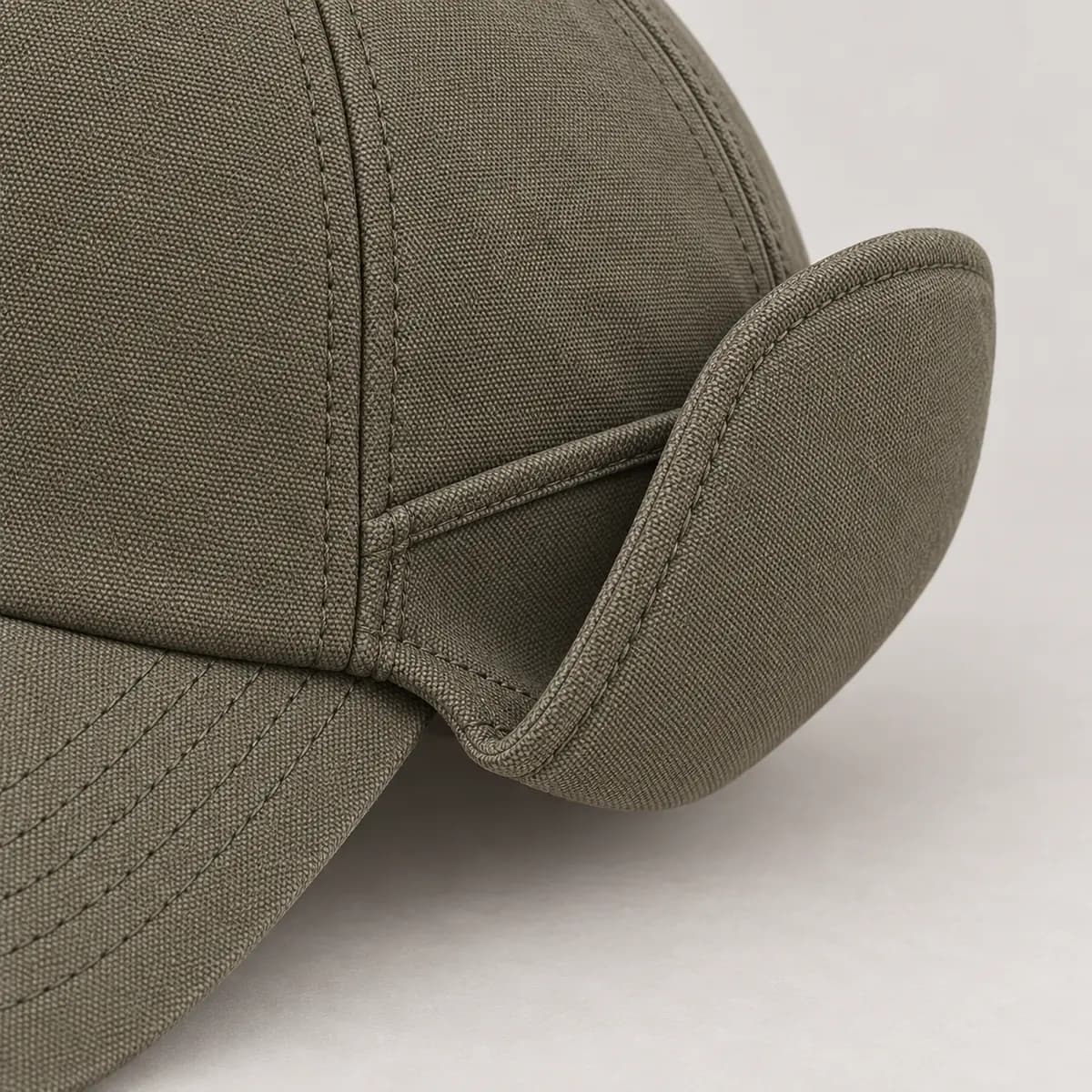
Keep the front band end, fold and brim junction in one review.
Inspect the physical sample before approval.A practical buying example
Imagine a buying team accepts ear coverage with the band lowered but finds that the folded band hides its side label. The team sends photographs of both positions on the same identified cap, marks the accepted lower edge and asks for an alternative label placement while keeping that coverage unchanged. This is an illustrative review, not a FORMBRIM customer case.
On the revised sample, review the label in both positions and inspect its reverse near the contact surface. Recheck the turn line and brim area because a new attachment can affect a nearby fold. If the band’s cloth also changes, reopen the material and fit review instead of carrying over acceptance from the earlier cap. A clear revision closes a named question and records what still remains open.
Questions to settle before requesting a sample
Is this the same as a neck-flap sun hat? No. The proposal uses a forward brim and a foldable band with ear-region coverage. The existing sun hat has an all-around brim and a rear neck flap. Select the structure that matches the procurement brief before comparing cloth colors.
What is confirmed, and what must be settled in sampling? FORMBRIM supports OEM/ODM sample development for a brimmed cap with fold-down ear coverage. The continuous-band drawing, cloth, dimensions, inner finish and any retention detail are the project proposal to agree. They do not establish a warmth, wind or water-resistance rating.
For an enquiry, include both coverage states, the attachment drawing, a worn reference, artwork, labels, packing needs and quantities. Bulk MOQ is 300 pieces per style, per color. Identify who can consolidate the buying team’s comments and approve the final two-state sample record.