
Number the center strip and paired side panels
Draw the crown from above and from both sides. Number the long center strip as one piece, with the left and right sides as the other two. The brim, inner band and any artwork are separate components; do not count them as crown panels. Show the two lengthwise joins all the way toward the rear. A front photograph alone can hide where those seams finish.
Mark which reference controls the shell if your brief includes several caps. A five-panel camp-cap photograph can explain a cloth color, but it should not silently replace this three-piece pattern. Likewise, side mesh on a running cap is not part of the proposal unless a new configuration is specifically agreed. Ask for a drawing and sample identifier that the buyer and development team can both quote in feedback.
Record crown depth and the intended worn position separately from panel count. Three pieces describe the seam layout, not a universal fit. Review the top and both profiles of the sewn shell before placing an artwork boundary close to either principal join.
Fix the short-brim reference and rear finish
Use a side view to show the short forward brim and its join to the crown. Define projection and curve separately, with marked measurement points and units. Agree whether a measurement follows the surface or spans a straight line; changing the method can make two matching brims appear different. Keep the same worn position when comparing crown depth and brim angle.
Discuss the proposed cloth and brim build together. The material submission should identify composition, weight and hand for review, rather than treating a woven appearance as a full specification. Decide what shape the sample should hold under ordinary handling and how it will be packed. A short brim does not automatically establish folding, flip-up behavior or recovery after packing.
The reference proposes a short elastic section at the rear without a strap opening. Confirm whether that is suitable for the intended fit brief, then agree the inner opening, elastic construction and review settings on the actual sample. Do not assign an all-size fit range from an unmeasured image or assume compatibility with another item of equipment.
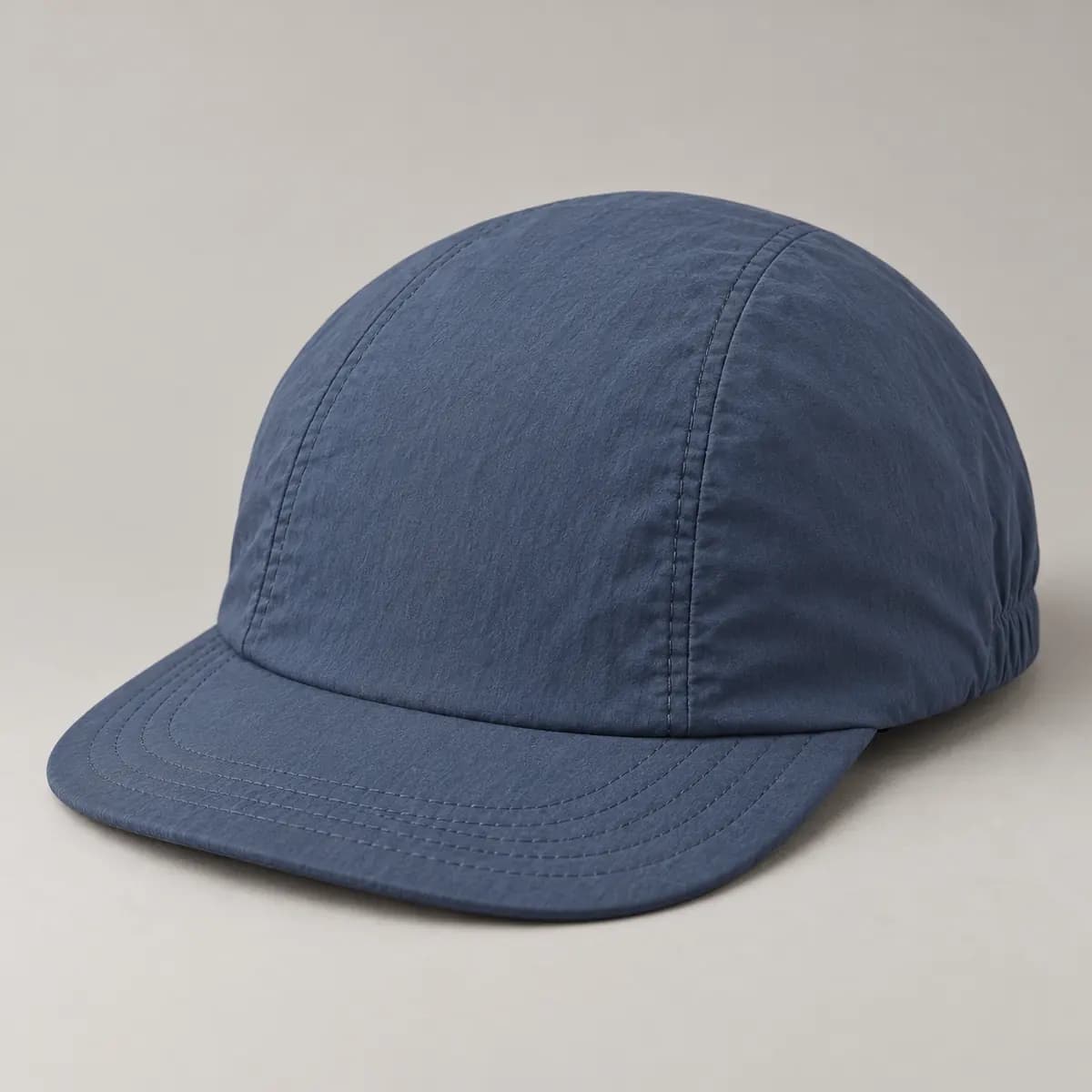
Read the three-piece crown and short forward brim together.
Inspect the physical sample before approval.Keep the artwork map separate from the sewing map
Send the artwork revision at final width and height. Mark distances from the brim join, center line and both main crown seams. If a stripe runs along the center piece, identify whether it is printed, applied or simply a color reference for discussion. A visible color boundary is not evidence of another cut panel. Keep artwork and sewing annotations on separate views so the agreed three-piece shell remains unambiguous.
Review the mark on the selected cloth and complete crown. A flat placement file cannot establish how lettering reads around the forehead curve. For embroidery or another proposed treatment, inspect the reverse attachment and surrounding cloth as well as the face. If the decoration changes the crown profile, identify whether the revision concerns its method, scale or position before changing the pattern.
Keep one accepted feature fixed where practical during comparisons. For example, compare two mark sizes on the same shell rather than changing cloth, crown depth and logo together. Name the chosen version and retain matching front, top and inside photographs with the physical sample.
Close the pattern, fit and packing sample record
Use accepted, revise and pending statuses for the crown drawing, cloth, brim, rear finish, inner band, artwork and labels. Identify the sample and specification revision beside each decision. Check the cap at the agreed worn position and compare the inner joins and contact surfaces before accepting only its external shape. A new rear construction or cloth proposal reopens the affected fit and finishing decisions.
Review the cap after the proposed packing, using matching views of the brim and crown. Record nesting, folding or other handling only if it was actually included in the review. Discuss any required measurement or test evidence separately from this appearance assessment; neither a sample photograph nor the cycling name establishes drying, airflow, protection or helmet compatibility.
For the quotation, send quantities by finished style and colorway, together with proposed sizes, destination and required arrival date. FORMBRIM’s bulk MOQ is 300 pieces per style, per color. Agree any size allocation and sample scope separately. Keep the accepted pattern and artwork versions with the order record so a later revision cannot become an unrecorded substitution.

Follow the crown seam paths, inner band and brim junction.
Inspect the physical sample before approval.A practical buying example
Consider a hypothetical brief for 300 slate caps with a small cream front label. The buyer accepts the three-piece drawing but has not accepted the rear fit proposal. That is a partial development decision, rather than approval of the complete cap. Keep the drawing identifier with the sample and mark the rear review as pending.
Suppose the decorated sample puts the label close to one of the center-strip seams. Send a straight front view with the artwork boundary and seam marked, then request a position adjustment while preserving the accepted crown map and mark size. Recheck the inside attachment and front profile on the revision. Do not replace the three-piece crown with a wider five-panel front simply to create more logo space. This example describes a buying-team review method, not a previously supplied order.
Questions to settle before requesting a sample
What should stay fixed during a revision? Name the accepted shell drawing, material proposal, short-brim reference and artwork version. State whether a comment concerns the crown, the rear finish, the mark or their interaction. A general request for a sportier cap does not identify a pattern change.
What should the enquiry include? Send top, front and side references, a numbered three-piece map, marked dimensions, the rear finish to explore, finished artwork and inside-label requirements. Include each colorway’s quantity, proposed sizes, destination and arrival needs. The bulk MOQ remains 300 pieces per style, per color; the feasibility of a size split is discussed separately.
Does the cap name confirm a performance or equipment fit? No. If the project requires a measured property or use with other equipment, define the actual requirement and evidence before approval. Keep those questions separate from accepting the seam layout and visual sample.