
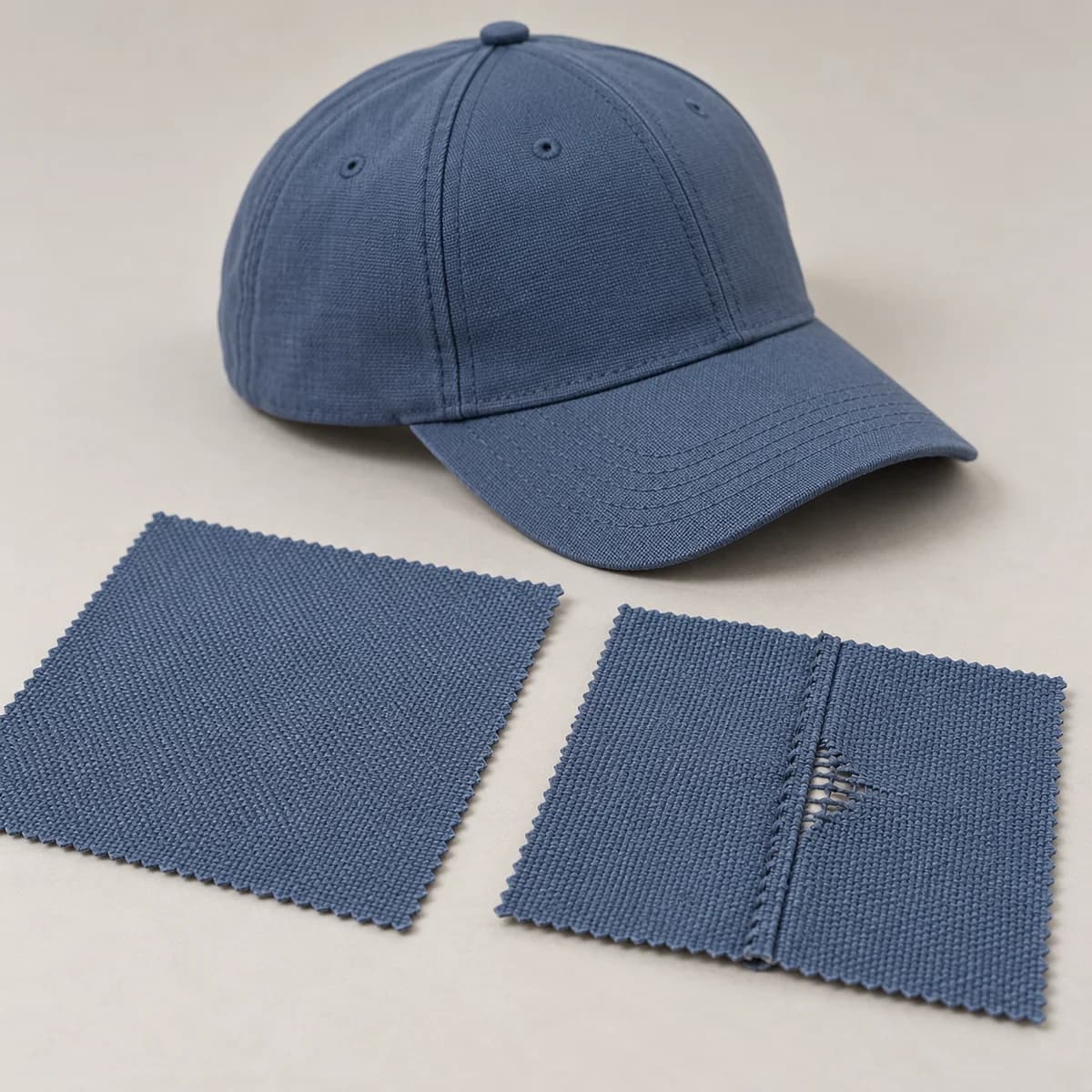
Start with one crown seam and two cloth proposals
A seam slippage test becomes useful to a hat buyer when it answers a specific development question: can the proposed woven cloth and seam preparation move forward, or does something need to change before the next sample? The instruction “make the seam stronger” is too broad when the team has not identified what opened or failed.
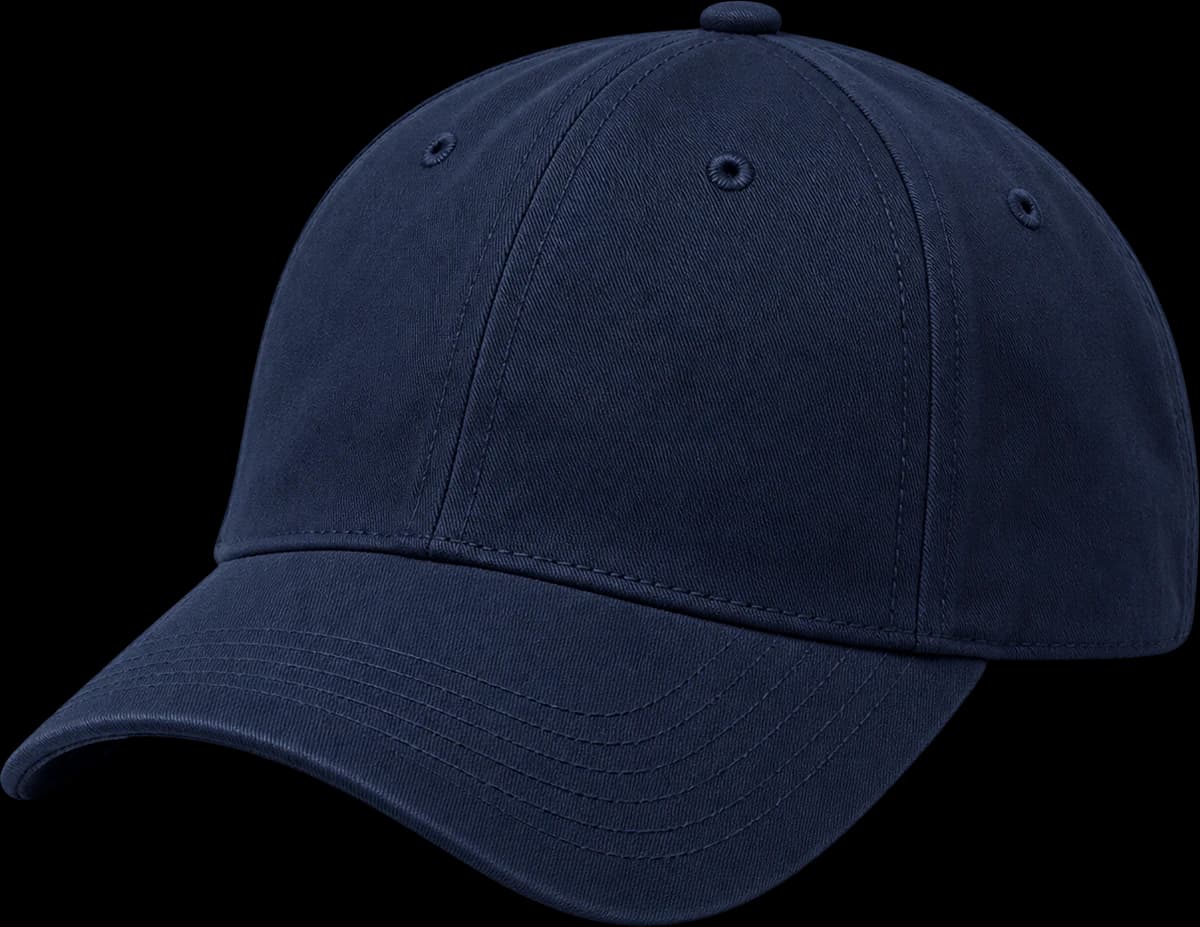
Consider a hypothetical slate-blue six-panel cap with an identified front center crown seam, marked S1 on the drawing. Cloth A is the first woven proposal; cloth B is an alternative with a similar slate-blue appearance. The intended cap geometry stays fixed while the team reviews these options. Material composition and construction must be identified rather than inferred from their matching colour.
Connect each sewn specimen to its cloth reference, the preparation used and the fabric direction. Keep a marked view of S1 on the cap beside that record. The specimen and the finished curved seam are related evidence subjects, but they are not interchangeable. This example does not report a FORMBRIM test, a measured force or a successful bulk order.
Identify yarn displacement, broken stitching or torn cloth
Examine the area beside the stitch line, not only the apparent width of an opening. In a yarn-displacement example, the woven yarns move from their original arrangement and leave a gap beside stitches that can remain intact. In a thread-breakage example, the sewing thread itself breaks. Torn cloth is another observation and should be recorded separately; more than one mode can appear together.
ASTM D1683/D1683M distinguishes stitching failure from displacement of fabric yarns and treats seam preparation as part of the engineering question. That distinction changes the next request. A photograph showing intact stitches beside displaced yarns does not support a thread-only diagnosis. A broken stitch does not, by itself, prove that the cloth has slipped.
Use close and wider views with the cloth, seam and specimen references still identifiable. Ask the testing specialist to confirm the reported mode where the image is ambiguous. The paired explanatory image shows two different conditions at a comparable scale; it is not a result sheet or a statement that either proposed cloth performed that way.
Write the observation before the remedy. For example: “At S1, a gap is visible beside the stitch line; the visible sewing thread remains continuous. Please assess yarn displacement and identify the preparation represented.” If thread ends are broken instead, name that difference and request the corresponding stitching review.
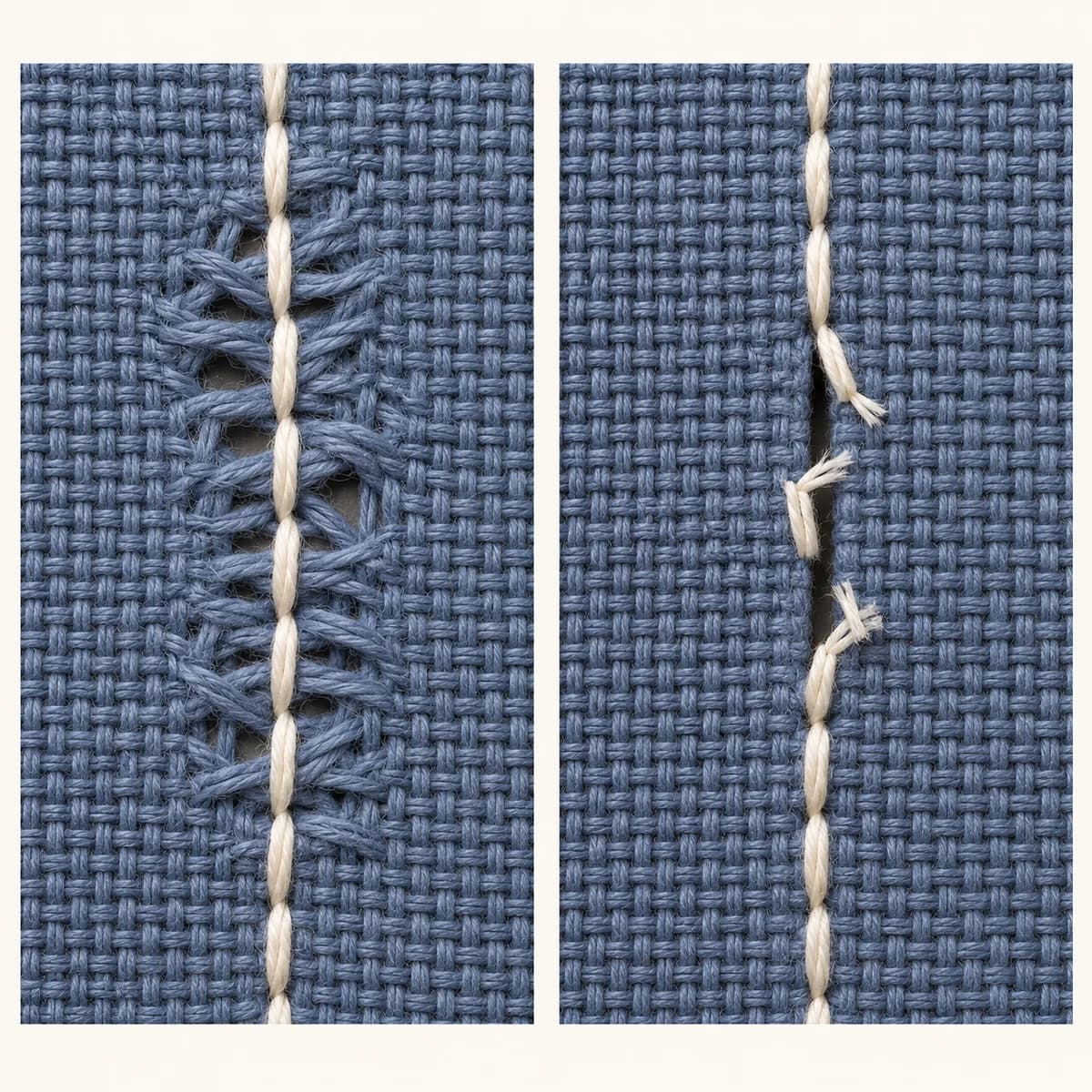
- Locate the change beside the stitch line.
- Record continuous or broken sewing thread separately.
- Ask the specialist to resolve ambiguous observations.
Choose the seam slippage test scope with the specialist
ISO 13936-1 addresses resistance to yarn slippage at a sewn seam in woven fabric using a fixed-seam-opening approach. ASTM D1683/D1683M covers failure in sewn woven seams and states that it does not predict actual seam wear. Their identifiers describe different assessment questions; a supplier should not substitute one report title for the other without explaining its relevance.
Tell the laboratory or responsible technical provider that the concern is S1 on a woven cap crown. Send the identified material proposals and ask which applicable method, current revision and specimen preparation address that concern. Agree the acceptance requirement and reporting basis before testing. Keep method selection with the specialist rather than choosing a universal load or gap limit from an unrelated product.
Ask the report to connect the tested orientation with the cloth directions and the specimen seam. Keep that orientation beside the cap drawing so the team can see what is represented. Evidence for one direction should not silently approve another. This woven-cloth discussion also does not establish a test route for every knit, mesh panel or complete hat assembly.
Revise one named proposal rather than every seam variable
First compare cloth A and cloth B using comparable, documented preparation and orientation. If both the cloth and stitching change at once, the buyer cannot assign a difference to either one. Where the method prescribes a specimen assembly, ask the specialist how a separate production-seam proposal should be assessed and reported; do not quietly alter the test procedure.
Then consider a focused revision on the selected cloth. Preparation P1 is the documented starting proposal. P2 changes one identified preparation detail for review while keeping the cloth reference and direction visible. Have the technical team define that change and the reassessment needed. These labels organize the development request; they do not prescribe a stitch recipe or represent tested results.
For S1, the next request depends on the observation. Keep the following alternatives separate so the supplier can respond to the actual issue. Wider allowance, denser stitching or a different thread may warrant technical investigation, but none is a universal cure for yarn movement.
- Displaced yarns beside intact stitches: request a review of the identified cloth, direction and seam preparation. Ask what material or preparation alternative should be assessed before accepting S1.
- Broken sewing thread: request review of the documented thread and stitching preparation, including any observed sewing damage. Keep cloth movement as a separate finding rather than assuming it happened.
- Missing relevant direction: retain the current proposal as pending and request evidence for the direction represented by the intended crown layout.
- P2 proposed: name exactly what differs from P1, preserve the earlier specimen reference and reassess the affected question before accepting the revision.
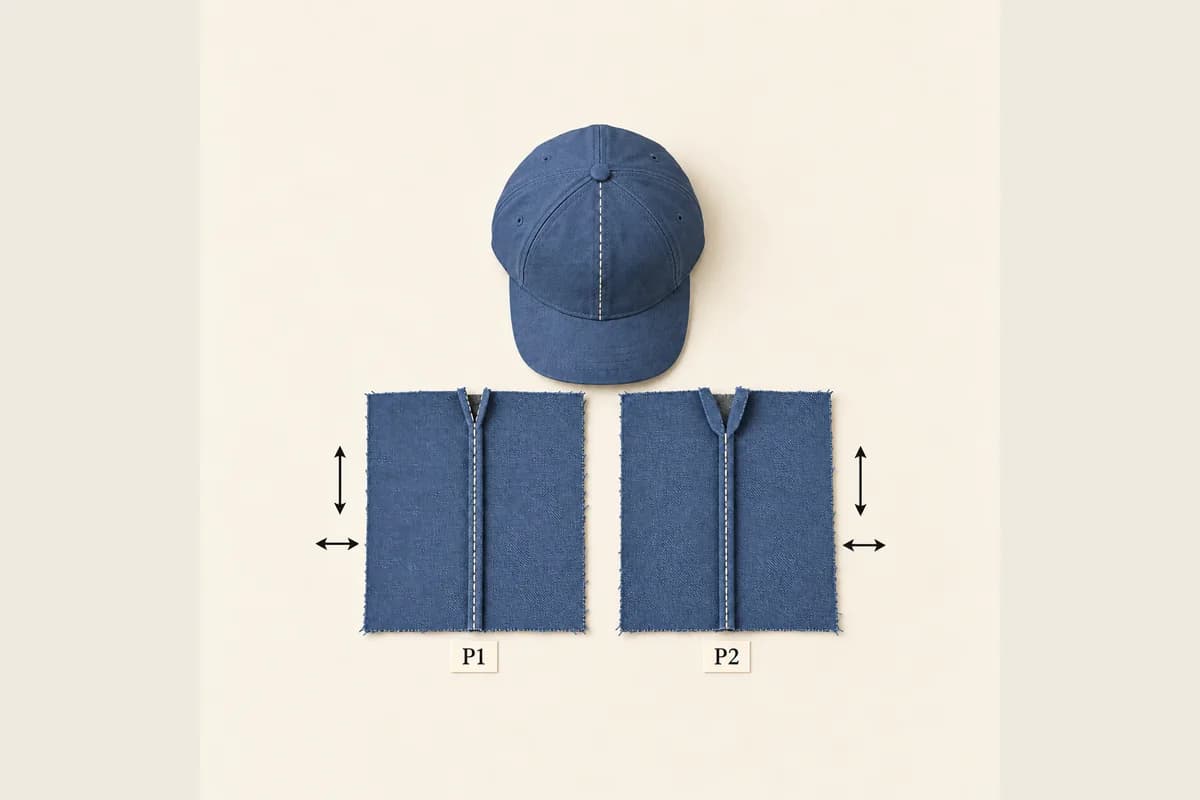
- Retain the selected cloth and direction references.
- Name the proposed preparation change.
- Request relevant reassessment before accepting the revision.
Return the decision to the curved crown sample
After the material and preparation review, examine S1 on the revised cap sample. Confirm that it uses the selected cloth and the agreed construction proposal. Check the outside join and the inside finish, then compare crown geometry with the reference that was meant to stay fixed. A material change should not silently approve a different profile.
Record any opening, distortion or damaged stitching at the same named seam and viewing position. Ask which observation requires a further technical assessment and which requires an appearance or assembly revision. A flat specimen result supports its stated scope; it does not certify every seam, join and component in the complete cap.
The sample review should close this seam decision explicitly: retain the documented proposal, issue a named revision, or leave it pending with the missing evidence identified. Keep dimensional change and colour transfer in their own reviews. A cap may have an acceptable silhouette while its woven seam evidence remains unresolved.
Make the next inquiry a seam-specific request
Send the marked S1 drawing, cloth A/B references, specimen observations and the current P1/P2 proposal together. Include the intended fabric directions and identify what must remain fixed on the next cap. Ask for a response to the observed mode and the proposed action, rather than a general assurance that the fabric is suitable.
FORMBRIM provides OEM/ODM headwear development with a published minimum of 300 pieces per style, per color. The sampling discussion can connect material and construction choices to the bulk-order brief. Testing arrangements, evidence requirements and any claimed performance remain separate project decisions; this guide establishes no in-house laboratory or universal seam pass level.
- One named woven crown seam linked to the current cap drawing.
- Two identifiable cloth proposals and their tested directions.
- A description of yarn movement, broken thread or torn cloth.
- A documented preparation to retain or a precisely named revision.
- The evidence and sewn-sample checks needed to close the decision.