
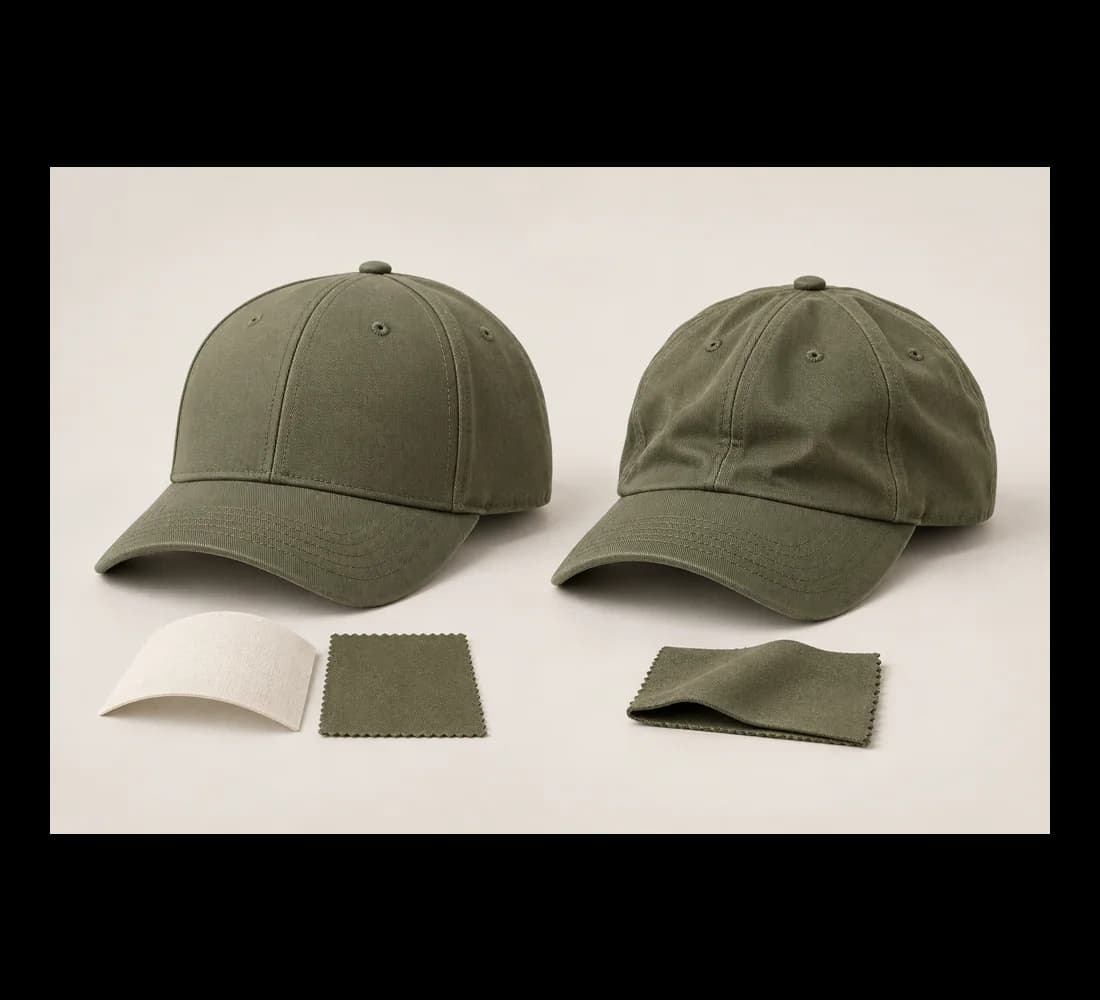
Choose the crown behavior your collection needs
A structured cap uses reinforcement behind its front panels to help maintain a defined shape. An unstructured cap has a softer front without that shaping support. This distinction concerns crown construction; it does not establish size, crown height, visor curve or overall quality. For a brand placing a bulk cap order, the useful question is what the front should do when the cap is worn and when it is resting on a table.
Start with the intended product experience. A collection may need an upright front that keeps a clear outline during presentation. Another may depend on a relaxed crown that settles around the wearer. Write that priority beside a reference photograph. Avoid treating “premium,” “sporty” or “casual” as construction instructions: each could describe several different products, and none tells the manufacturer which parts to reinforce.
Then list the details already fixed: target wearer, closure, preferred fabric, brim direction and proposed decoration. Mark unresolved choices separately. If you are choosing between two construction routes, ask for their implications against the same brief. This gives the factory a decision to help resolve instead of two unrelated moodboards to combine.
Separate front support from height and fabric
In the opening comparison, look at the front outline and the way the crown fabric rests. The supported example retains a more defined face; the soft example shows a relaxed surface. The interior detail below shows the reinforcement behind that difference. Use these views to explain the behavior you want. They do not establish the reinforcement material, fabric weight or finished dimensions for your order; those belong in the specification and physical sample review.
Low profile and unstructured are not interchangeable terms. Outdoor Cap lists crown stiffness and crown height separately, including lower crowns that may be structured or unstructured. If the sample feels too tall, ask about its profile and measurements before requesting that all support be removed. A lower supported crown and a soft crown address different requests. Likewise, selecting a six-panel cap does not by itself settle the support or fit.
Fabric remains another decision. Bring the proposed cloth into the discussion rather than expecting the same silhouette from every material. Ask to compare front firmness, drape and the crown-to-brim junction in the assembled sample. When two references differ in both material and support, identify both differences. Otherwise you cannot tell which change produced the result you prefer.
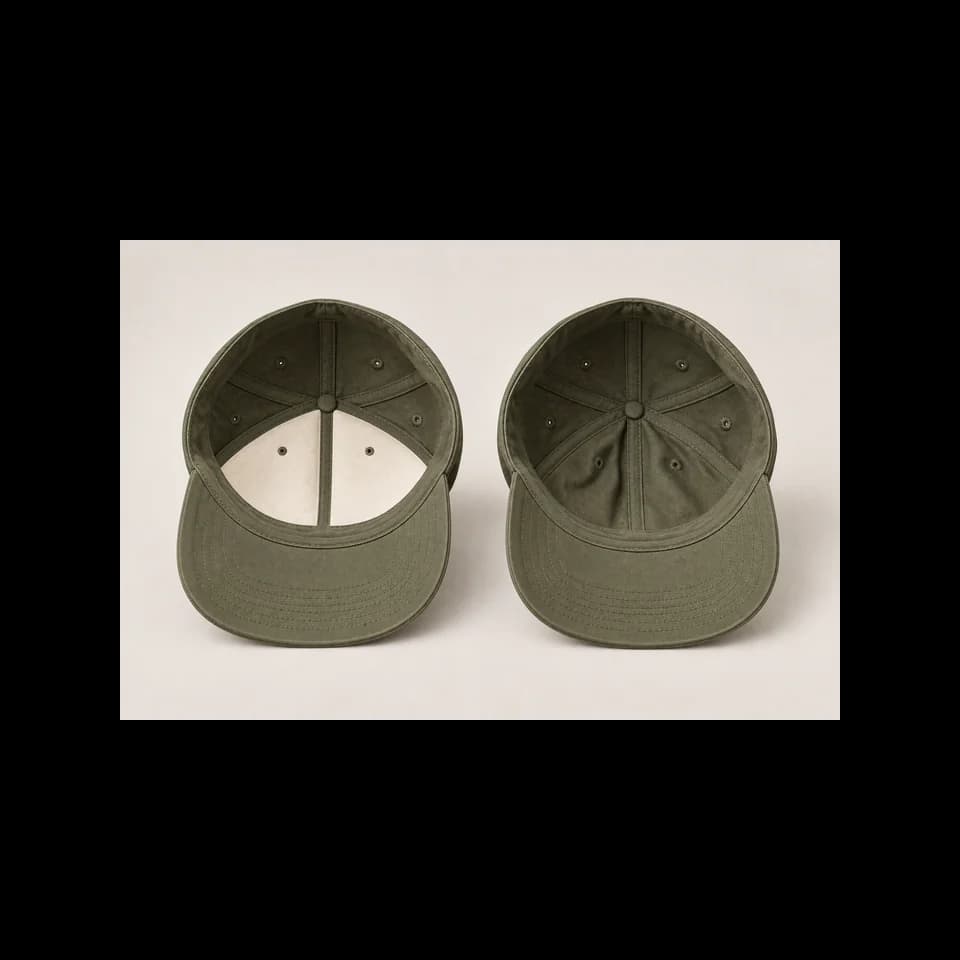
- Left: reinforcement behind the front
- Right: a soft, unreinforced front
- Confirm the actual materials in the sample
Match the decoration to the finished crown
Prepare the actual artwork, finished dimensions and placement before making the final construction choice. A large emblem can be central to the product, while a small wordmark may leave the crown itself more visible. Compare the mark on the chosen cap shape rather than filling the available front area simply because it is there. Include the relationship to the center seam and brim, and show any side or rear branding separately.
A structured front is not automatic approval for every logo, and a soft crown is not a reason to reject embroidery without sampling. Madeira's cap-embroidery guidance treats cap style, seams, frames, backing and stitching approach as connected considerations. Ask the embroidery team how it proposes to execute your artwork on the selected construction. An unstructured crown can still need support for decoration; do not interpret the term as an instruction to omit every interior component.
Review the cap after decoration. Check whether the logo remains readable, whether the surrounding fabric looks as intended and whether the inside finish affects comfort. If a patch or embroidery changes the softness you wanted, identify that local area. Discuss a change to artwork, attachment or construction rather than sending the ambiguous instruction “make the whole hat softer.”
- Supply one current artwork revision at the intended finished size.
- Mark placement against identifiable seams and the brim.
- Compare the decorated crown from front and side, then inspect inside.
- Keep accepted fit details fixed while resolving the decoration.
Compare samples under the same conditions
Give each sample a clear identifier and record what differs between them. If the exercise is to choose support, keep the intended fit, brim direction, closure and artwork brief consistent where practical. When the factory must change another component, have that difference listed. Comparing a high crown with a flat visor against a low crown with a curved visor cannot isolate your preference for front support.
Review both samples on the same intended wearer at an appropriate, recorded adjustment setting. Look at the position above the ears, front height in profile and the space beneath the crown. Then remove the caps and compare their resting shape. Do not pack the soft crown with tissue for one photograph and leave the other unsupported: the styling would conceal the behavior you are trying to choose.
Record observations rather than a single favorite score. One version might have the desired front outline but an uncomfortable inside edge; another might fit well but lose the intended logo presentation. Separate those findings so the next sample retains the successful features. If shipping presentation matters, also agree a packing review for the chosen cap rather than assuming either construction will tolerate any compression.
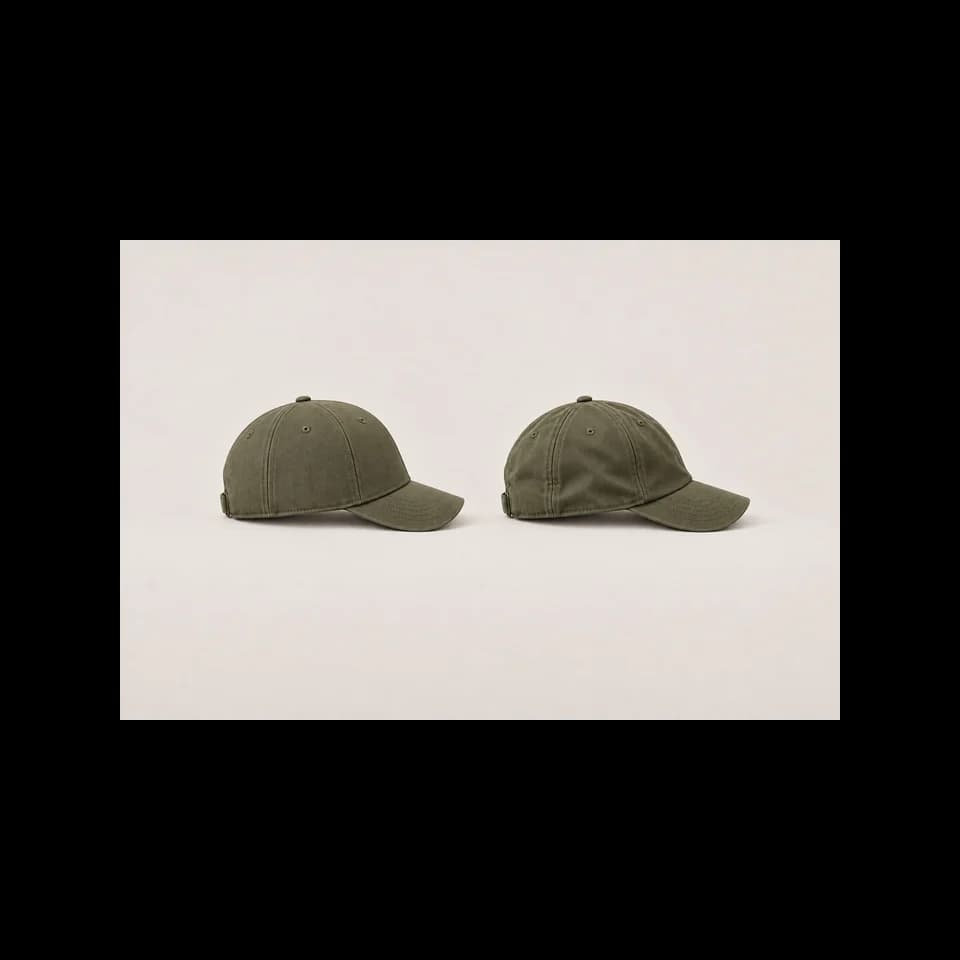
- Use matching angles and light
- Separate support from fabric and brim
- Compare the resting crowns without stuffing
Turn the choice into a quotation and approval record
Once a direction is preferred, update the brief so the quotation describes that cap. Name the crown support requirement, selected material reference, fit reference, closure and decoration revision. Include any inside label or patch attachment that was part of the decision. A price for an earlier undecorated sample is not automatically a price for the revised specification.
For a private label order, also explain how the selected construction fits the assortment. If a second fabric or colorway is planned, ask whether it needs separate review. Do not transfer approval solely because its product name is similar. A supplier comparison is most useful when both quotations state the same accepted construction and clearly identify any proposed alternative.
Before bulk approval, resolve changes that affect the behavior you selected. Revisit an assembled sample when the support, cloth, decoration or fit changes enough to leave that behavior uncertain. Record what remains approved and what is pending, then agree the review scope, charges and timing. Keep the final sample reference beside the current specification so the production discussion uses one complete version.
- Confirm support and profile as separate brief entries.
- Retain the material, artwork and sample identifiers.
- Identify changes since the quotation and ask for their effect.
- Approve the complete decorated construction before bulk handoff.
Example: keep a low fit with a defined front
An illustrative buyer note reads: “Style CP04, sample A. The worn crown height, curved brim and rear fit are accepted. The front collapses more than the reference when the cap is removed. Please propose a supported front while retaining the approved profile, shell fabric and closure. Keep artwork R2 at its marked size and position. Confirm any necessary pattern change before making sample B; construction and decorated appearance remain pending.”
This brief avoids replacing the accepted cap with an unrelated tall snapback. When sample B arrives, compare it with A on the same wearer and review the front both worn and unworn. Check the inside reinforcement edge and the fabric around the embroidery. If the stronger front achieves the outline but changes comfort, describe that contact point and discuss the next adjustment rather than reopening every approved detail.
If the soft silhouette was the real priority instead, the decision could be to retain A and revise the decoration. The right outcome follows the brand's stated requirement, not a rule that one construction is universally better. Bring the marked comparison, current artwork, intended quantities and destination into the next factory discussion.