
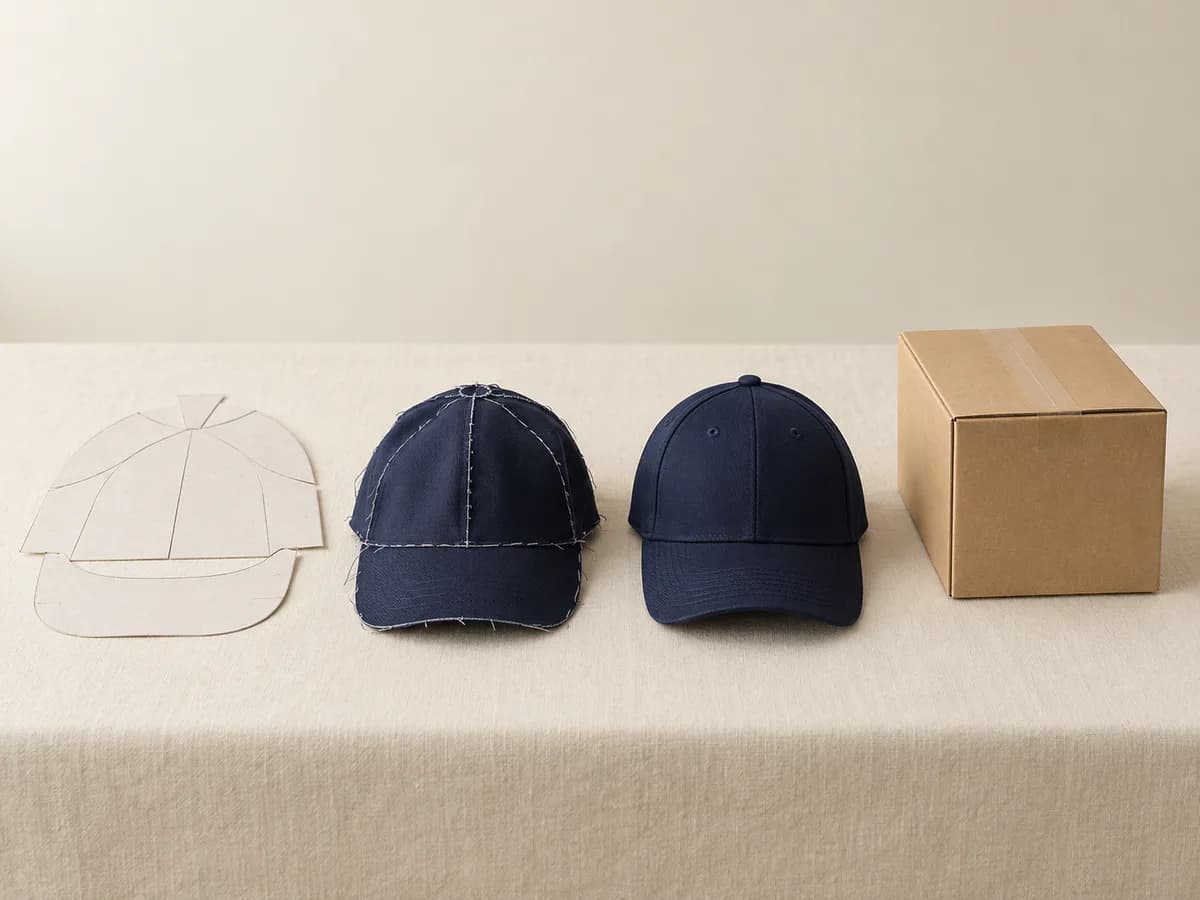
How long does a custom hat order take?
FORMBRIM’s stated sampling time is 7–10 working days. The bulk production reference is 30–45 working days. These describe manufacturing stages, not the full time from first email to delivery. Confirm the applicable start point and schedule for your specification before treating either as a dated commitment.
The order also includes brief preparation, material selection, sample review, changes, final packing and transport. Some of that time belongs to the buyer’s review process. A sample waiting for artwork approval is not the same as a sample still being made, but both affect the launch calendar.
Work backwards from the arrival requirement
Tell the manufacturer where the hats need to arrive and when they will be used. Distinguish warehouse receiving from a retail launch or event date. If the hats need checking, distribution or photography after arrival, include that work in your own plan.
Use named milestones: brief agreed, sample available, comments returned, final approval, bulk completion and shipment handoff. Ask which dates are provisional. This exposes decisions that can still move the schedule and makes it easier to discuss a workable change in scope when timing is tight.
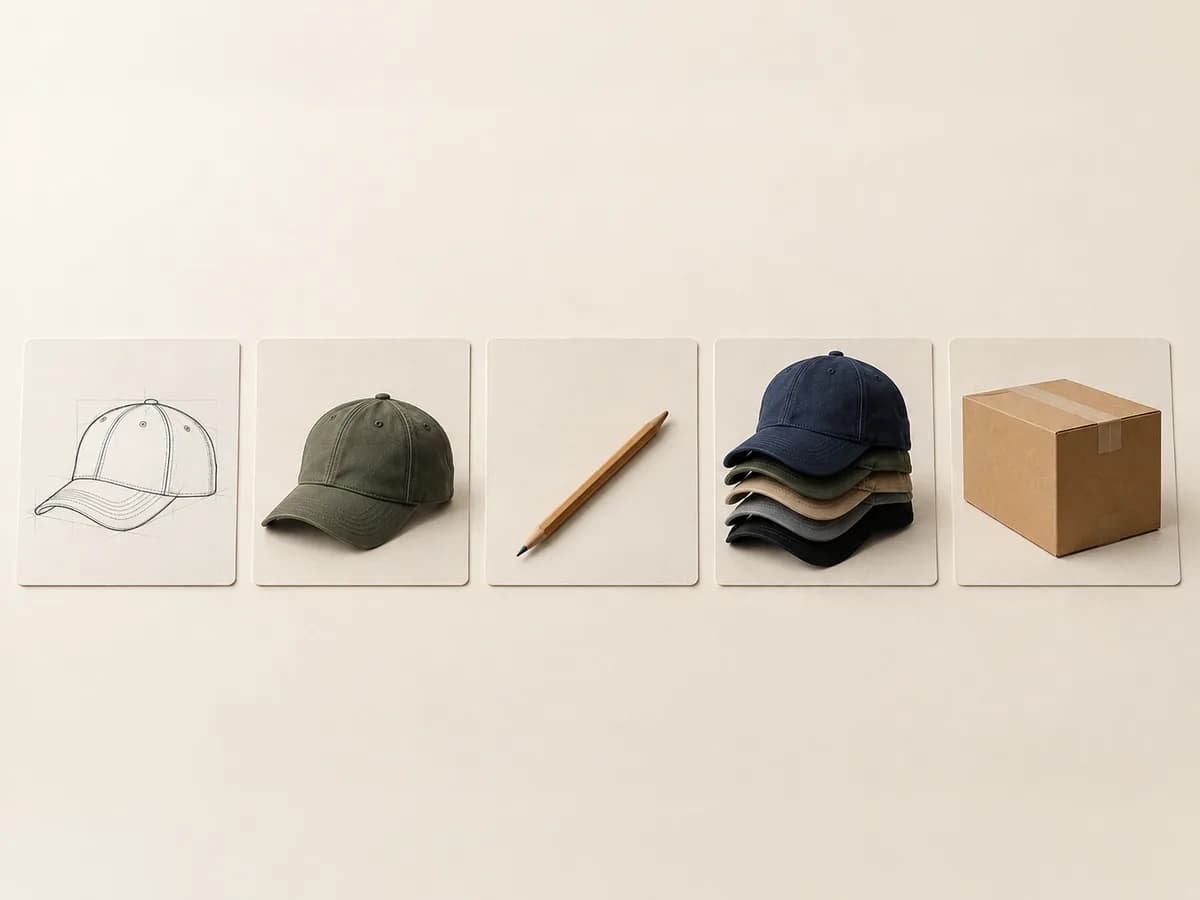
- Name the reviewer for each milestone
- Allow for revisions and approval
- Treat transport as a separate stage
What needs to be ready for sampling?
The factory needs enough information to make the intended product: shape references, material direction, decoration files and placement, closure and trims. If an artwork or material choice is still open, establish whether the proposed sample will settle it or merely illustrate shape.
For example, a sample made to review crown depth may not contain the final label or thread color. That can be useful if its purpose is explicit. Problems arise when a development sample is treated as a final approval sample even though missing details have never been reviewed.
Budget the sample separately from the order
FORMBRIM prototype hat samples cost US$50–200. The first modification is free. Second and subsequent modifications not caused by our error are charged at the prototype rate. Prototype and modification sample charges are refundable with a bulk order of at least 100 pieces. The production minimum remains 300 pieces per style, per color.
Pre-production samples are free of charge. Salesman samples are 2 pieces per order at 2–3 times the bulk unit price and are not refundable. Confirm which sample stage is being quoted, the shipping charge and the refund arrangement before payment.
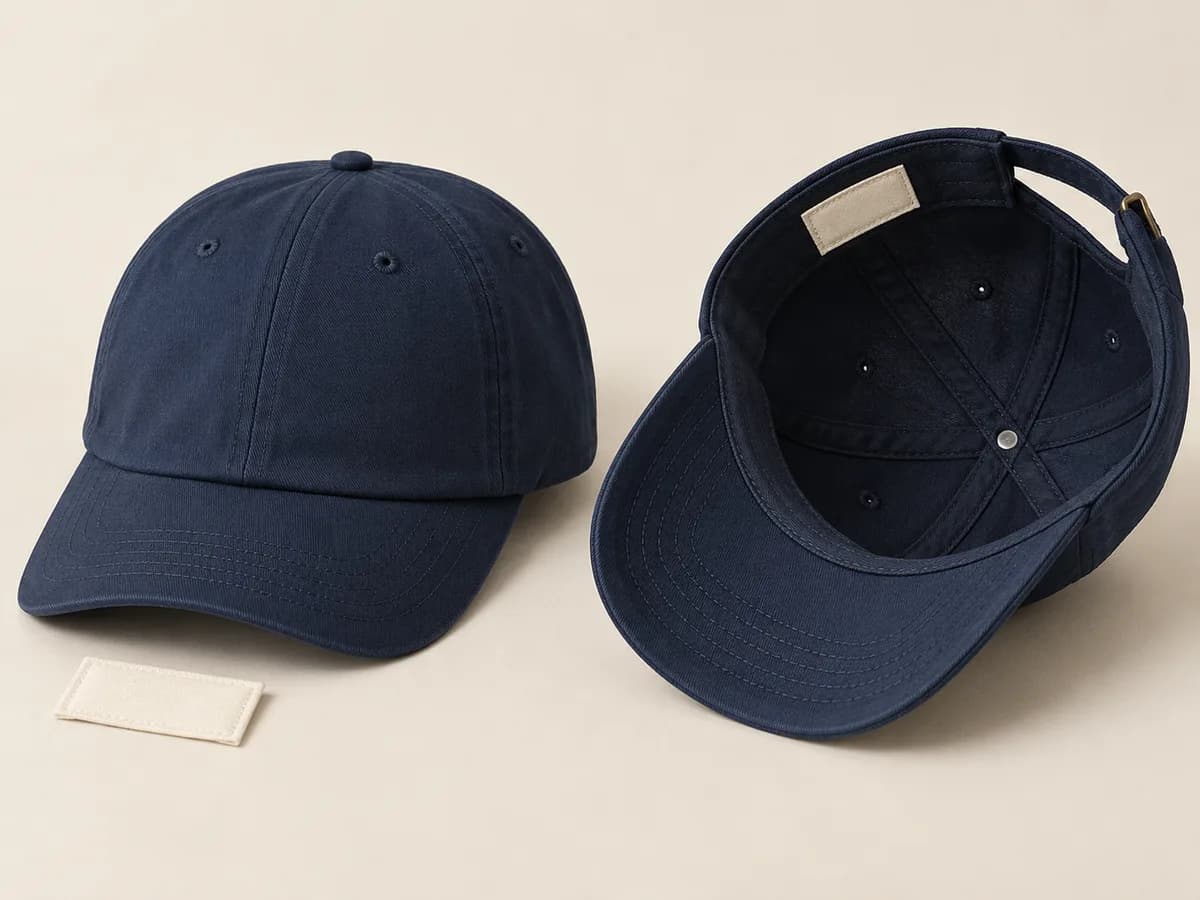
- Name the purpose of the sample
- List details that are still pending
- Confirm sample type and quoted scope
Allow for review and a possible second sample
Decide who reviews fit, artwork and commercial details before the sample arrives. Collect comments into one response. Separate a requested change from an observation, and identify the version in marked photographs. Conflicting messages from different reviewers make the next step harder to establish.
Ask whether a change needs another physical sample and how it affects timing. New fabric, larger embroidery or an altered brim may change more than one part of the hat. Do not assume revision time is included in the first sampling period, or approve an unresolved change only to preserve an optimistic calendar.
Working days and transport need their own treatment
Working days should not be counted as consecutive calendar days. Ask which working schedule and applicable holidays the estimate uses. Keep that answer attached to the dated plan, particularly when an event falls close to a holiday period.
Bulk completion is not delivery. Final inspection, agreed packing, collection and transport have their own arrangements. A broad transit estimate cannot replace a destination-specific discussion, and the number of hats alone does not establish carton volume or freight requirements.
A planning example without a false delivery promise
A brand needs caps in its warehouse before launch. Its plan starts with that receiving requirement, then works back through proposed transport, packing, bulk production, final approval and sampling. The brand assigns an owner and response date to approval. Unconfirmed stages stay provisional instead of being given invented durations.
When requesting a schedule, send the destination, arrival requirement, quantity breakdown and current state of the artwork and brief. Say whether you already have an approved physical reference. We can then discuss the actual project rather than using a generic production range as a door-to-door promise.
Keep a decision owner beside each provisional milestone. The designer may approve artwork, the buyer may confirm the assortment and another colleague may arrange warehouse receiving. A delay in any one of those decisions can affect the sequence even when manufacturing work is on schedule. If the required arrival date becomes difficult, ask which scope changes could be assessed and which details must remain fixed. Record the answer before removing review time or treating an unapproved sample as final. For a repeat order, confirm that materials, artwork and packing still match the retained reference instead of assuming the earlier calendar applies unchanged.