
Map the corduroy front and mesh boundary
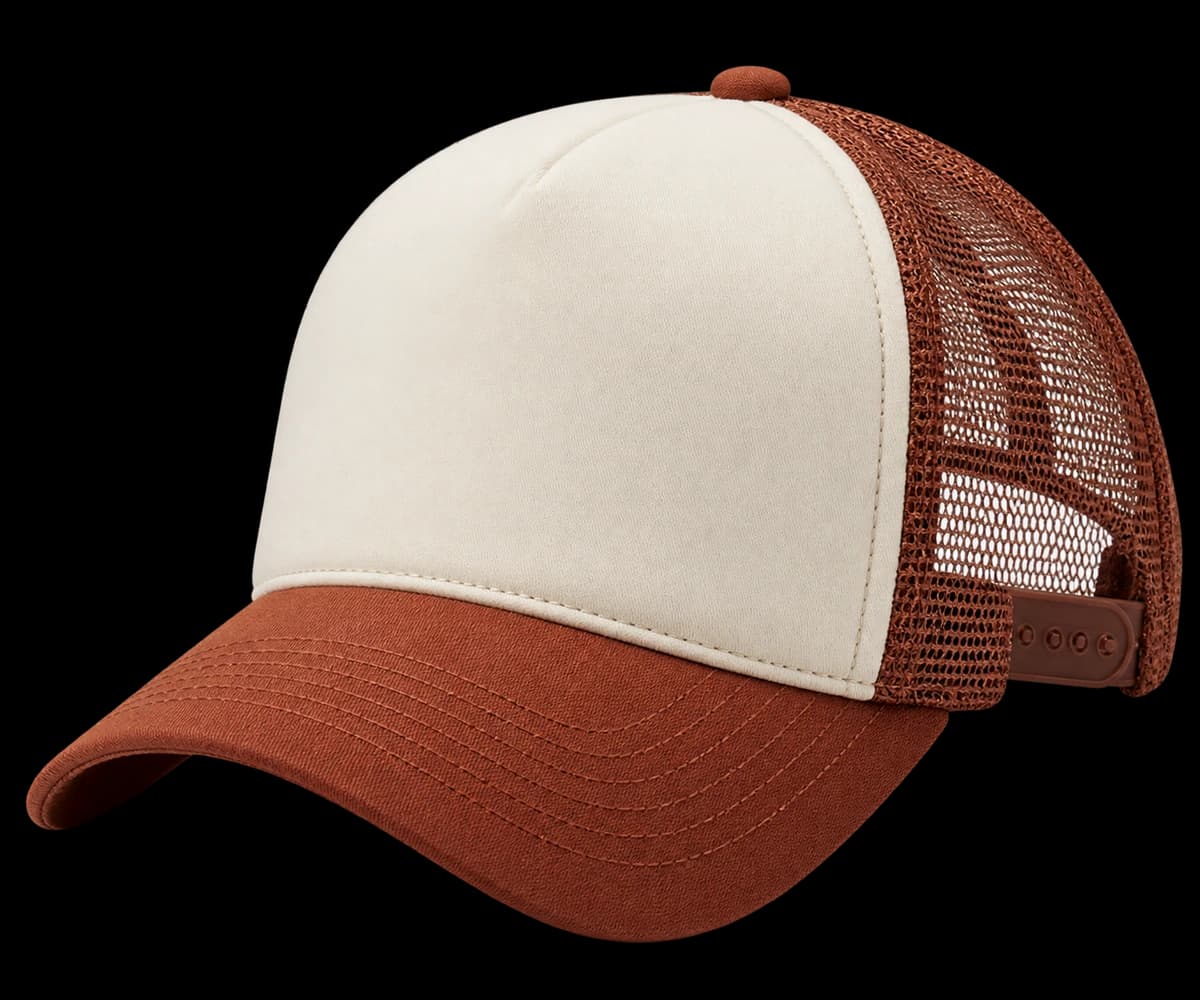
Start a corduroy mesh-back trucker brief with front, side and rear views of the same intended cap. Mark the solid front, mesh sections, brim and rear opening. Specify the crown profile and curved brim separately from the texture reference; a corduroy baseball cap or camp cap can explain the cloth without defining this trucker construction. If two references disagree, state which governs the shape and which supplies only a material idea.
Name the proposed fabric reference and show the ribs at a scale that can be compared with the complete cap. Request the composition and fabric weight for the actual proposal instead of assigning them from a photograph. Mark rib direction on the front and upper brim, including any intentional change. A close-up of attractive ribs does not settle the panel layout, rear mesh or fit.
Use arrows to connect rib direction with each named corduroy component. Keep views of both mesh joins in the same reference set. A front texture photograph leaves the amount and position of mesh unresolved, even though that rear construction is what separates this direction from the existing full-fabric corduroy caps.
Choose front support with the rib direction fixed
Describe whether the front should hold a defined outline when unworn or settle into a softer profile. Treat that request separately from crown height. A taller reference is not automatically a firmer one, and a textured swatch cannot demonstrate either result after sewing. Ask for the proposed support and corduroy to be considered together on the sample, with side views showing the front-to-brim junction.
When reviewing apparent shade changes across adjoining pieces, compare material identity, rib direction and viewing conditions before asking to replace a color. Keep a labeled physical reference with the directional drawing. If the ribs need reorienting, state which part changes and which accepted dimensions remain fixed. Review the revision from the front and both sides; a corrected cloth direction should not silently approve a new crown shape.
Compare undecorated and decorated profiles at a similar camera height and the same rear adjustment. Identify whether support, cloth or pattern changed between samples. That makes the comparison useful without assigning a universal stiffness or crown dimension to corduroy. Recheck the brim junction after a change to the front support.
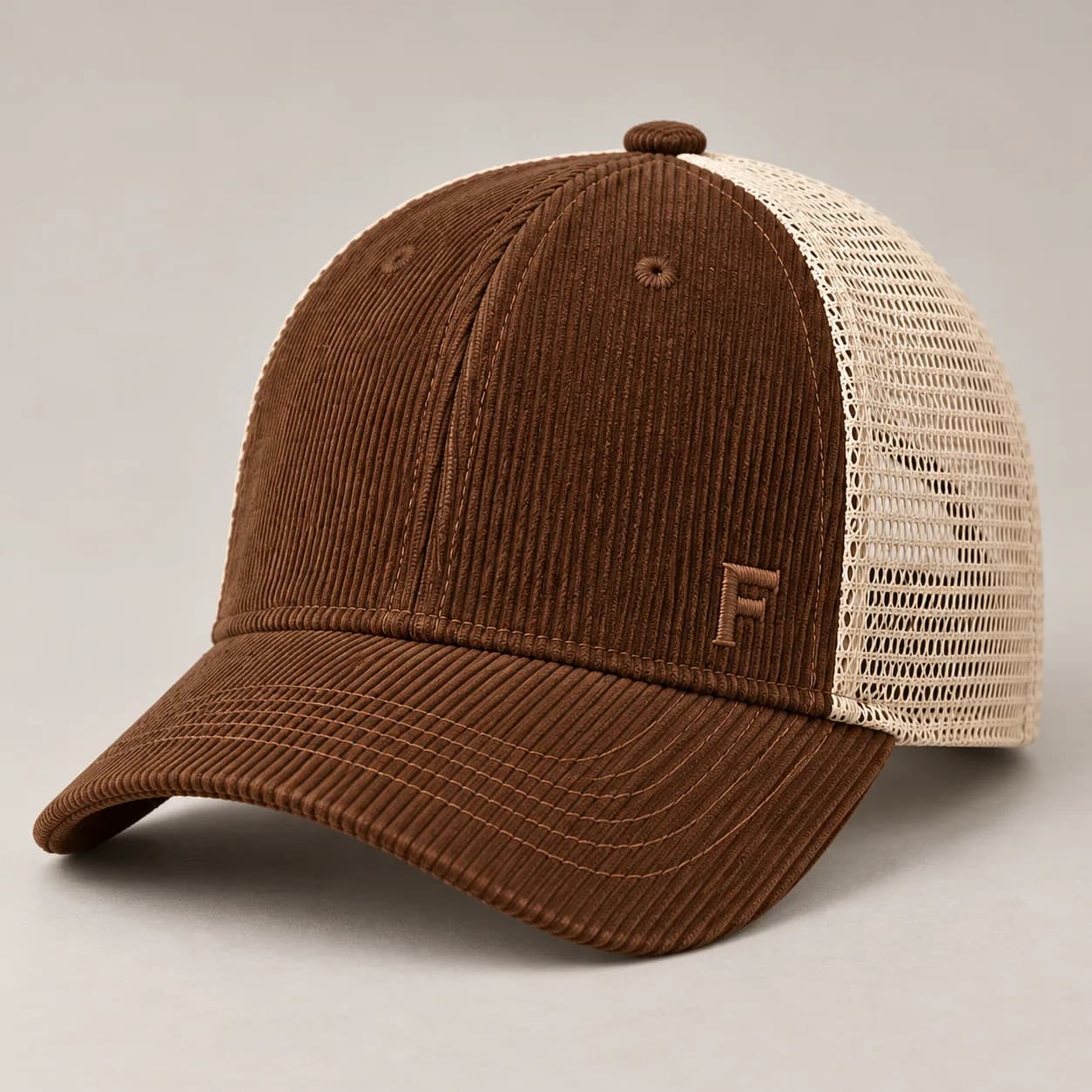
Start with the overall proportion, crown shape and artwork scale.
Inspect the physical sample before approval.Review the logo on the selected ribbed front
Supply artwork at its intended width and height, with distances from the brim seam and nearby panel joins. Identify the smallest letters or gaps that must remain visible. For embroidery, inspect the actual mark and surrounding cloth together. For a woven label, specify its outline, finished size, edge and proposed attachment so the quotation covers more than a flat graphic. Neither treatment is approved simply because a digital mockup is legible.
Keep placement and artwork scale consistent when comparing treatments, and identify each sample. Recheck the front profile after decoration, then look inside at backing or attachment near the wearer. Record whether a problem concerns lettering, position, cloth distortion or the thickness of the attached piece. That distinction gives the next revision a defined question to answer.
If small lettering is the concern, isolate it in a close view and retain a full-cap photograph for context. Avoid changing rib scale, artwork width and support together unless the revision record explains why. Otherwise an improvement in lettering can conceal an unwanted change to the front shape or material direction.
Approve mesh joins and the complete sample record
Inspect where corduroy meets mesh on both sides, including the inside seam finish. Check whether the joining line remains balanced when the cap rests naturally and when worn at the intended adjustment. Review the rear opening, snap attachment, adjustment range and inside band together. A matching color name does not establish the same appearance on mesh and solid cloth; compare them on the assembled cap.
Record the complete front, mesh, brim, underbrim, closure and artwork combination as one finished colorway. List quantities separately for each combination; FORMBRIM’s MOQ is 300 pieces per style, per color. Keep the accepted drawing, material references, artwork revision, sample identity, labels and packing notes together. Sample acceptance resolves the documented development questions. A subsequent substitution or production-release requirement needs its own review.
Connect the sample identity with the rib drawing, component colors and artwork revision. For a seam correction, name the side and provide inside and outside views. Keep unresolved requirements visible instead of approving the whole cap because the front mark is acceptable. A new mesh or fabric proposal reopens the affected sample decisions.

Review the inside finish and contact surfaces.
Inspect the physical sample before approval.A practical buying example
Consider a hypothetical OEM/ODM brief for 300 tobacco-front trucker caps with cream mesh, a curved brim and a small woven front label. This is an example meeting the published style-and-color MOQ, not a customer project. The buyer supplies a rib swatch and accepts the crown drawing, but leaves the support proposal open. The first sample has the intended texture yet a visibly firmer forehead than the fit reference.
Record the sample identity, adjustment setting and side view, then ask for the front support to be reviewed while rib direction and artwork size remain fixed. Inspect both inside mesh joins on the revision; a softer front should not conceal a changed joining line. Check the label attachment and rear closure before accepting the completed record. If another mesh shade is proposed later, reopen that component approval rather than treating the previous cream sample as approval of every combination.
Questions to settle before requesting a sample
When is this the appropriate corduroy shape? Choose this reference when mesh at the rear is part of the cap brief. The corduroy baseball cap keeps a full-fabric rounded crown; the camp cap prioritizes a different panel geometry; the bucket carries the material around an all-around brim. Those are separate construction choices, not interchangeable backing images for the trucker.
What should the quote cover? Supply the front and mesh drawing, rib and fabric references, intended support, brim profile, artwork dimensions, closure, labels and packing requirements. List quantities for each finished colorway, with at least 300 pieces per style and color for bulk planning. State which material, decoration and fit decisions are accepted or still in development. Any test requirement or subsequent production-release condition needs separately identified evidence and agreement.