
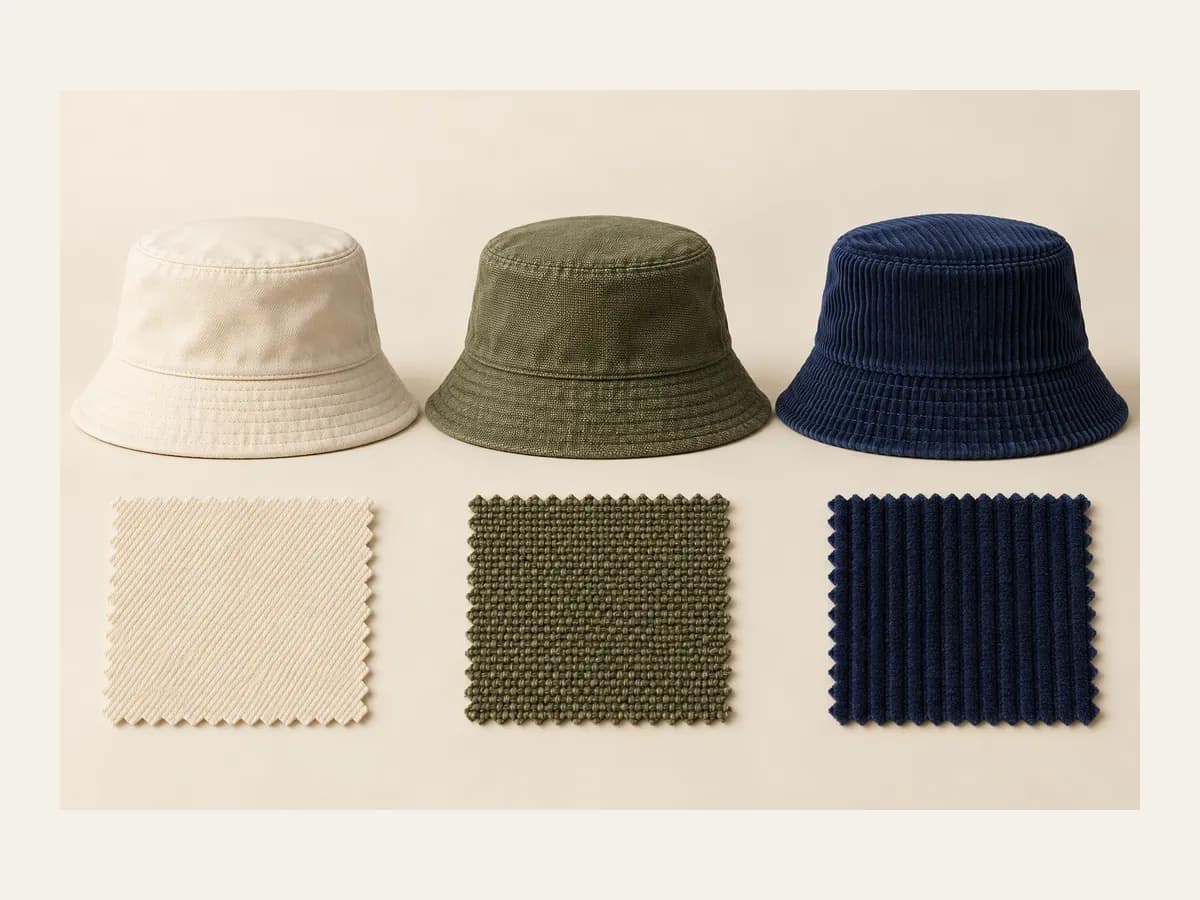
Describe the finished hat before choosing a fabric name
Bucket hat fabric for bulk orders should be selected around the finished construction. Start with the desired crown shape, brim behavior, surface character and decoration. A buyer asking for canvas may want visible texture, a firmer silhouette, or both. Those are different requirements, and a material name alone cannot establish the result.
Use a physical reference where possible. Explain which feature it controls: the hand of the cloth, the washed appearance, the brim drape or the complete fit. If several references are involved, assign each a purpose. Combining the fabric from one hat and the pattern from another is a development request that needs sampling, not proof that the finished result will match either reference.
Ask the manufacturer to identify candidate fabrics by composition, construction, weight when known, finish and a traceable swatch reference. Treat unavailable information as a question rather than filling a specification with guessed values. The shortlist should make clear which details are confirmed and which will be evaluated in the sewn sample.
Compare fabric and brim support separately
Two hats made from similarly described outer cloth can have different brims because the pattern, inner support, lining and stitching differ. When the desired brim falls softly, ask to review its resting shape and how it moves on the wearer. When a more defined edge is wanted, identify the construction that creates it rather than assuming a heavier outer fabric is the only answer.
Hold the pattern and intended dimensions constant during an initial material comparison where practical. Ask the supplier to state any support or sewing changes needed for each candidate. Otherwise, a firmer sample may appear to prove that one fabric is better when several construction variables changed at the same time.
Review front, side and rear views as well as the hat on a flat surface. Mark crown-to-brim joins and any unwanted ripples without flattening the sample to make the photograph neat. Packing and recovery also belong in the discussion if the hat will be folded. A soft material description does not establish how the finished seams, support or decoration will respond to that handling.
- Name the outer cloth and support components separately.
- Record pattern or stitching changes between candidates.
- Compare the worn shape using matching views.
- Review the proposed packing method on the assembled sample.
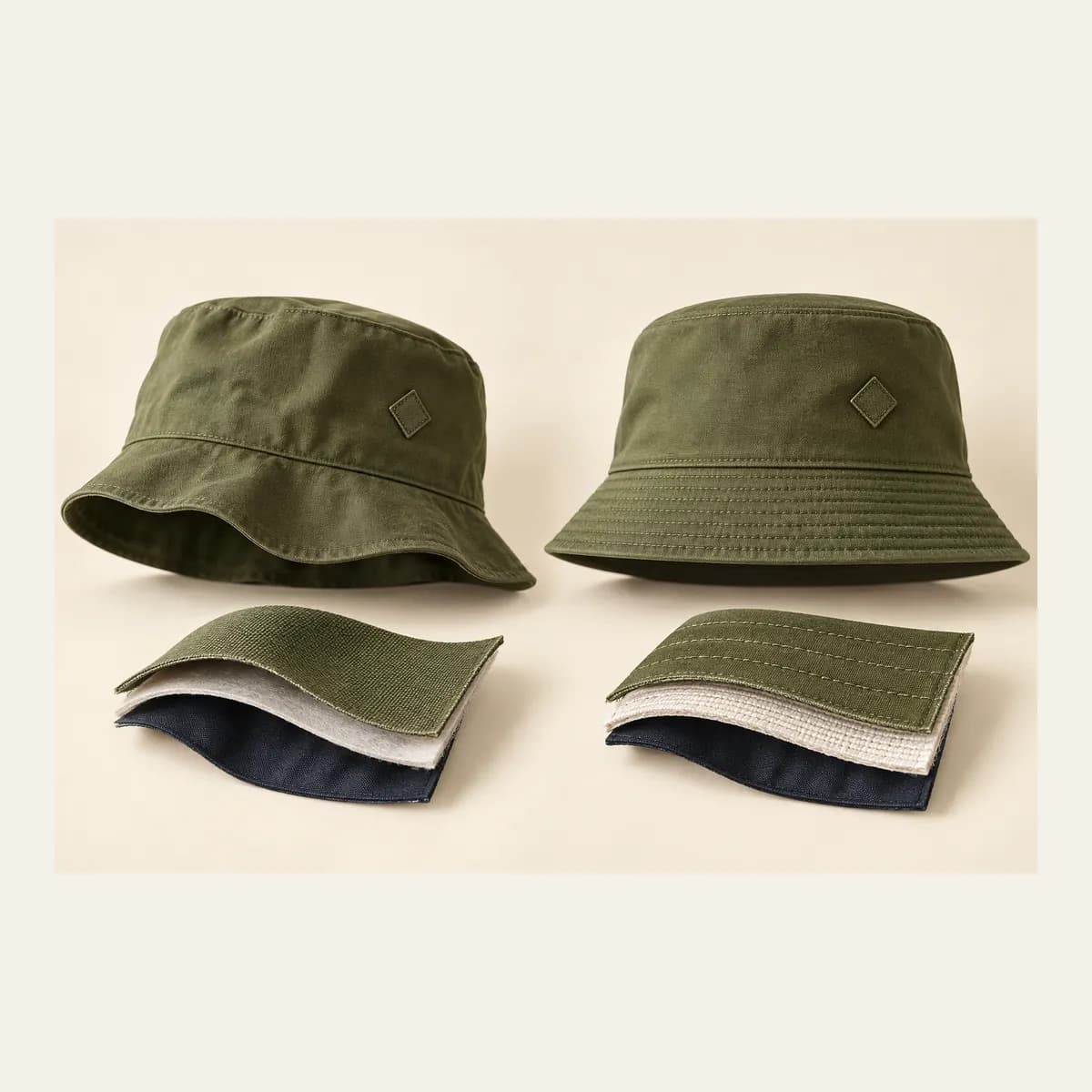
- Keep the intended pattern clear.
- Identify support and stitching changes.
- Compare the complete worn silhouette.
Shortlist twill, canvas and corduroy by the decision they solve
Twill offers a visible diagonal weave, while canvas describes a different woven surface direction; neither name is a universal specification for weight or stiffness. Compare actual swatches instead of ranking all canvas above all twill for structure. For a washed bucket, include the intended finishing route in the material discussion so an unwashed swatch is not mistaken for the final appearance.
Corduroy adds raised wales that affect the visible direction across panels and the surface available for decoration. Mark the preferred direction on the crown and brim, then review adjacent panels together. A swatch can show the texture but cannot show whether the seams, panel orientation and chosen brim construction produce the appearance you want.
If a lightweight synthetic fabric is being considered, request its exact specification and confirm availability for this project. Do not infer water resistance, drying performance, recycled content or UV protection from a fiber name. Any required claim needs its own agreed specification and supporting evidence. The purpose of the shortlist is to identify a suitable sample comparison, not to promise that every named material or finish is offered.
Try the logo on the selected surface
Include decoration before approving the fabric. A small mark that reads clearly on a smooth swatch may look different on raised corduroy or a washed surface. Give the manufacturer the finished artwork dimensions and intended placement, then ask which proposed application method should be sampled. Do not judge the result only from an enlarged image of the digital artwork.
For embroidery, inspect the sewn edges, open spaces and surrounding cloth on the curved crown. Look inside at the backing and attachment where they could affect comfort. A flat stitched swatch is useful for a preliminary comparison, but the assembled hat adds seams, curvature and construction layers that can change what the buyer sees.
If the cloth is washed or otherwise finished, establish the sequence relative to decoration. Ask which sample represents that sequence. Changing from decoration before a finish to decoration after it is a specification change, even if the digital logo stays the same. Record the chosen route and the approved sample version instead of relying on a phrase such as vintage effect.
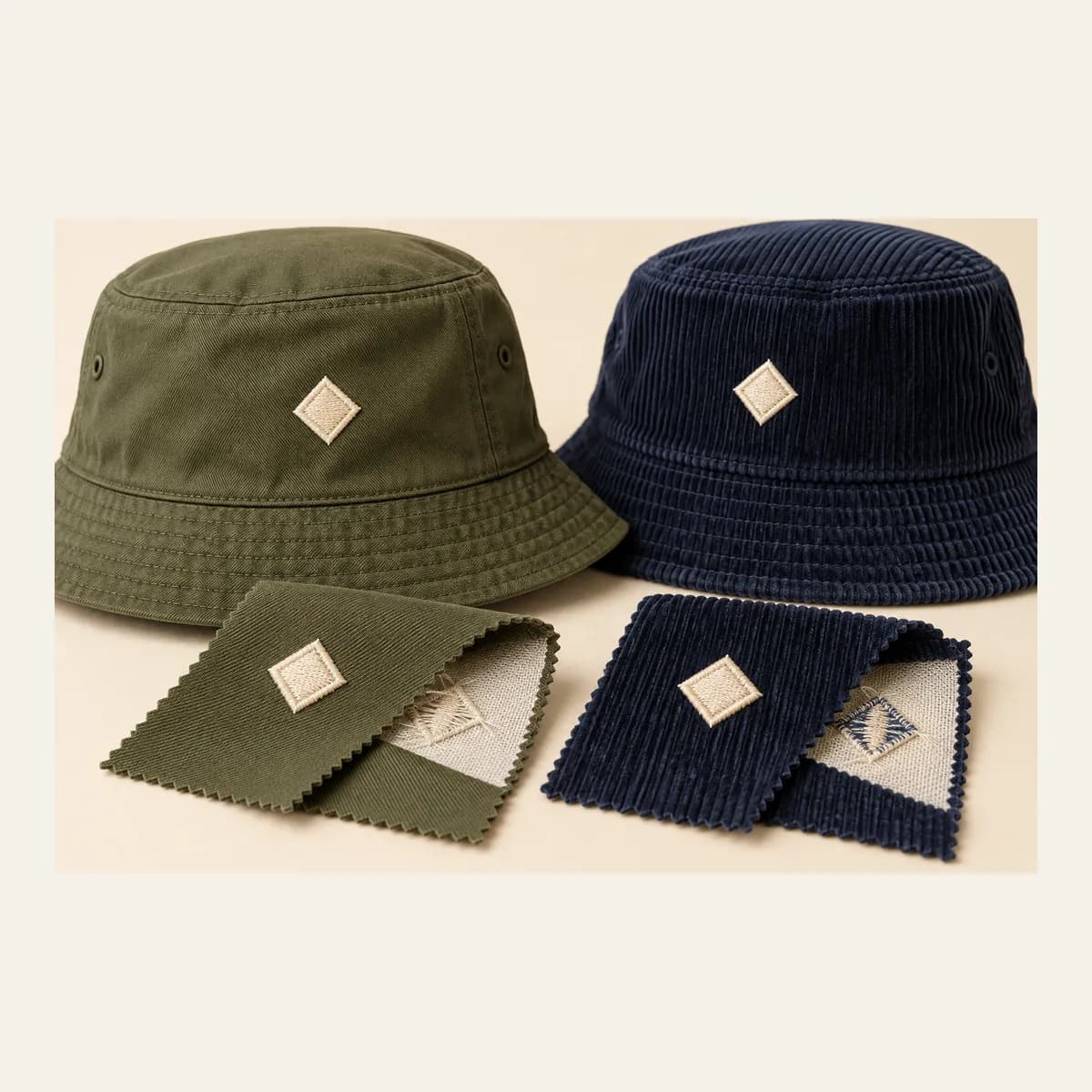
- Keep the artwork size identifiable.
- Inspect detail on the curved crown.
- Approve the inside finish as well.
Keep material approval separate from size approval
A pleasing swatch is not approval of a finished size. Material, lining, inner finishing and any agreed wash route must be considered in the assembled bucket hat. Record the measurement method, sample condition and wearer reference used for the fit decision. A hat measured before finishing should not silently become the reference for a finished order.
For a washed style, ask whether the submitted sample has received the intended production finish. If care testing is required, agree the method and review conditions before comparing results. Do not invent a universal shrinkage allowance or enlarge every pattern by an assumed percentage. The supplier needs the actual material, construction and treatment to assess the project.
Shade and handle also need a clear reference. Compare candidate materials under consistent viewing conditions and mark whether the approved object is a swatch, an unfinished sample or the complete finished hat. For repeat orders, keep that identification available so a new material lot or finish proposal can be reviewed against the same intended result.
Example: choosing between texture and a sharper mark
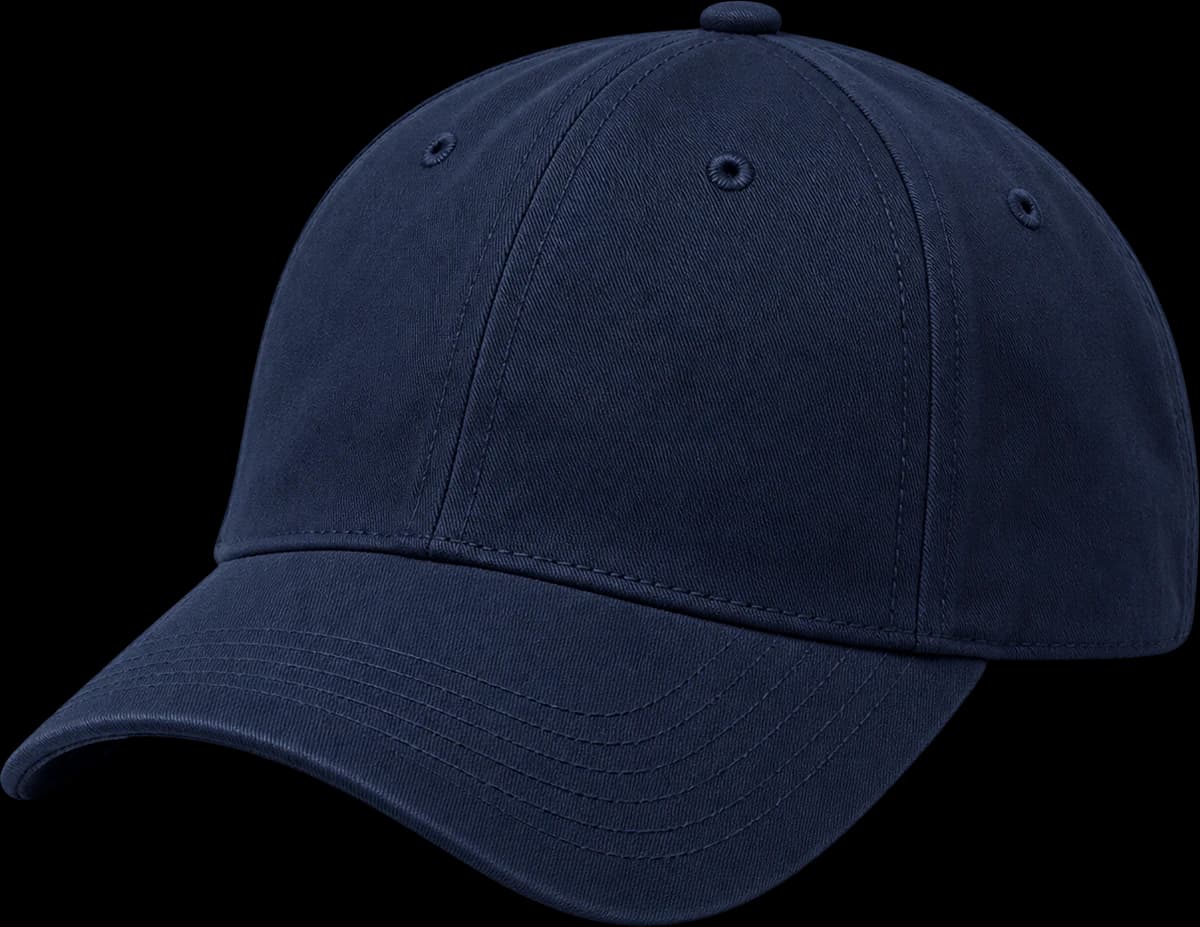
Imagine a brand developing a navy bucket hat with a small cream embroidered symbol. Candidate A is a smoother twill; candidate B is corduroy with a more pronounced surface. The buyer wants both a textured appearance and a clearly open center in the symbol. Those are the decision criteria; the example does not establish a universally better fabric.
Request matched samples with the same artwork size and placement, and identify any necessary construction differences. Review the symbol at its finished size and the complete hat at the same angle. If B loses the open center, first discuss whether a revised stitch treatment or a modest artwork adjustment can be sampled. Do not enlarge the mark without considering how it fits the panel.
The buyer may choose A to retain the original small mark, or keep B and approve a revised decoration. Record that tradeoff explicitly. The accepted outcome is the fabric, artwork and construction together. A decision to keep the corduroy does not automatically approve an unseen logo revision, and a good flat embroidery test does not replace review on the finished crown.
Approve a traceable material package
Before bulk approval, connect the fabric reference to the complete hat specification. Record component names, composition and weight where confirmed, color references, finish, panel direction, brim support and the decoration revision. List any remaining substitutions or pending evidence. Keep an identifiable sample and photographs that show what was actually accepted.
Send quantities by style and finished colorway with the material request. FORMBRIM’s published production minimum is 300 pieces per style, per color. Ask about the proposed material and construction within that order plan; do not assume that a collection total settles every sourcing detail. If a supplier proposes a substitution, review its effect on silhouette, decoration, fit and quotation before agreeing to it.
A practical next step is a short comparison brief with two candidate references, the features held constant and the specific question the samples must answer. This gives the manufacturer a useful development task and gives your team a repeatable approval decision, rather than an open request for whichever fabric looks most premium.
- Selected material and finished sample are identifiable.
- Brim construction and decoration are approved together.
- Wash, care and performance requirements are recorded separately.
- Substitutions require a new review of affected details.