
Identify the denim cloth before comparing proposals
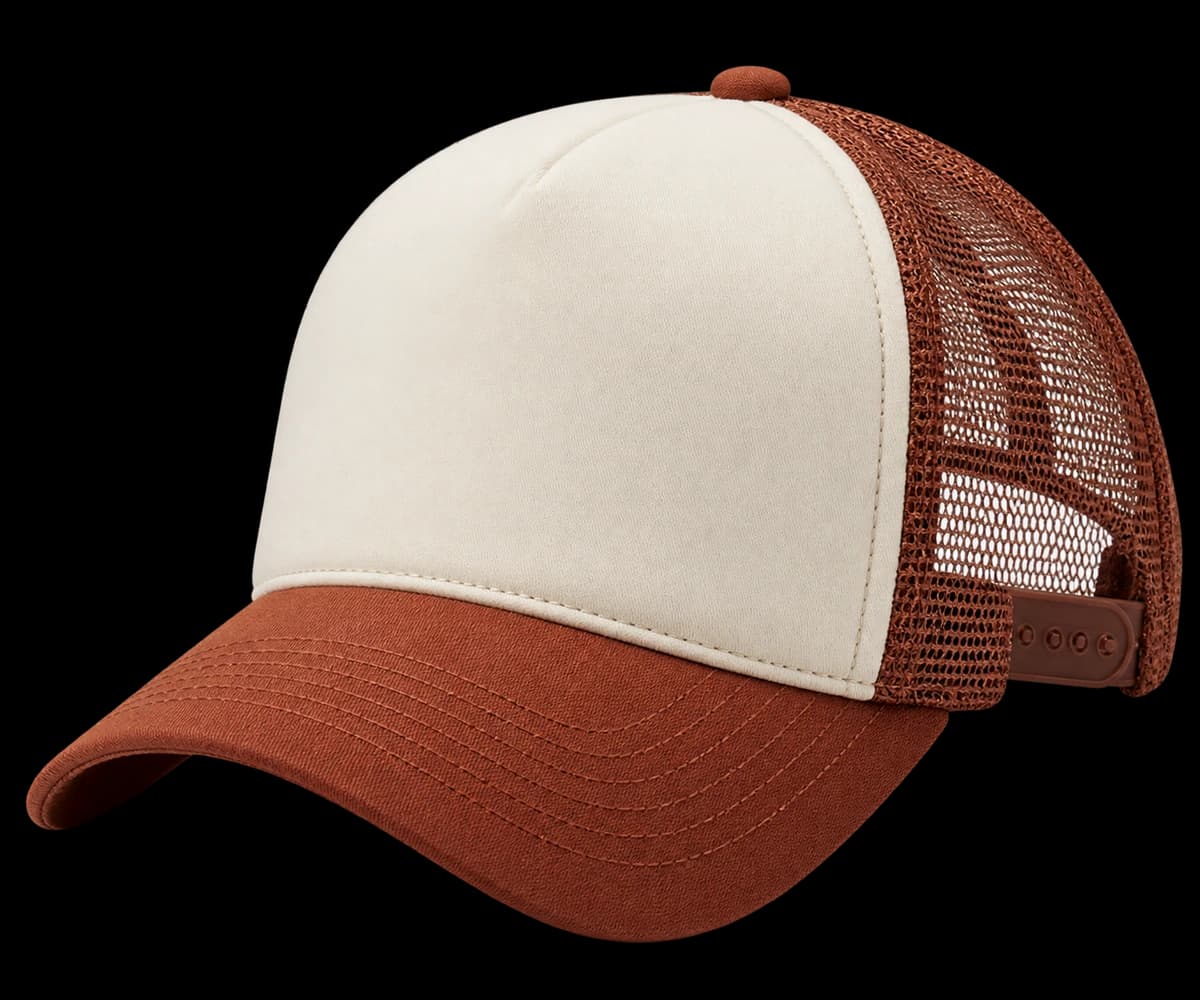
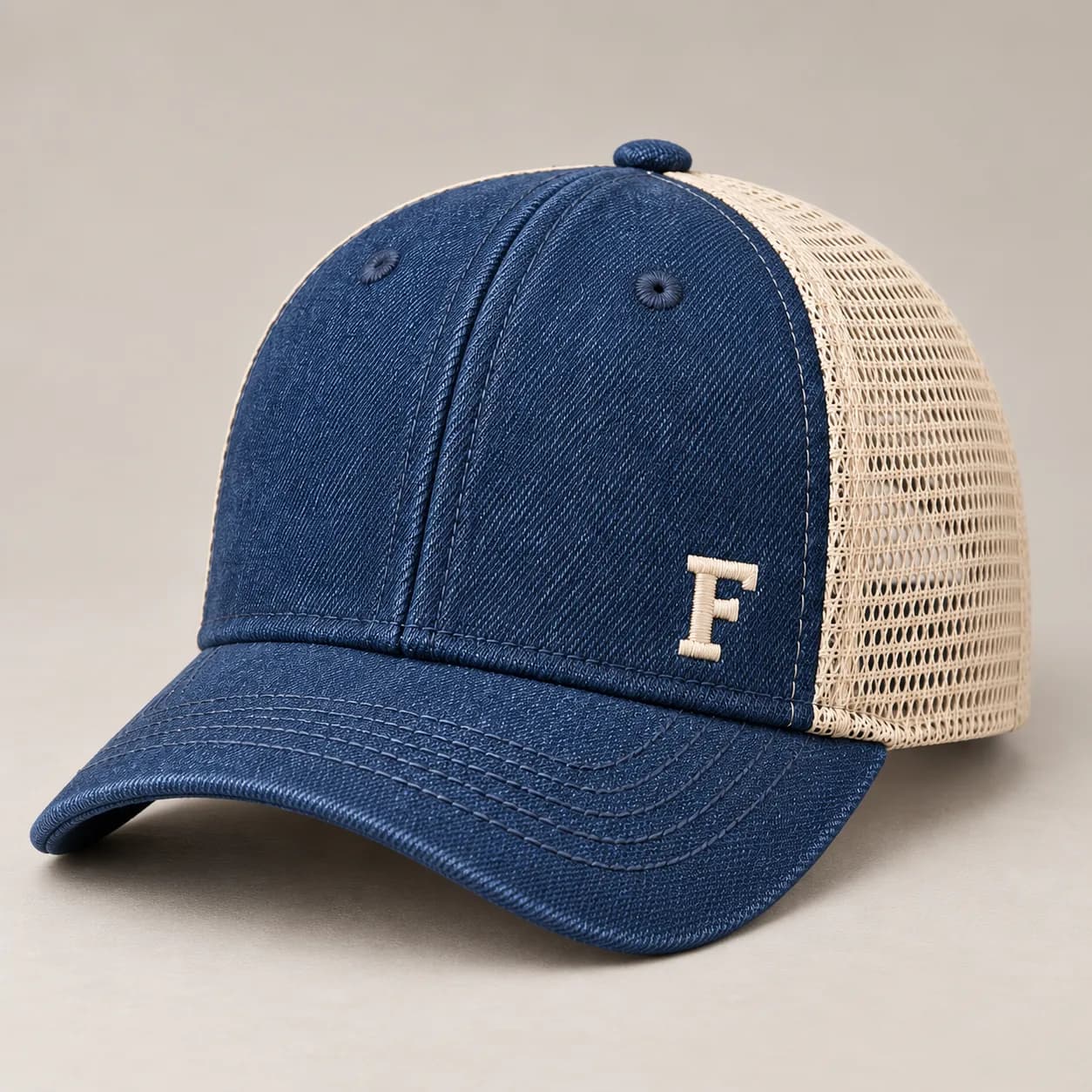
For custom denim hats, this development reference is specifically a woven-front trucker cap with mesh at the back. Begin with that construction rather than a broad request for any denim cap. Send front and side references showing the desired crown and brim, then identify which part of a material image you want to explore: shade, visible weave, hand or surface finish. If the photograph supplies only a color direction, say so.
Ask for the proposed cloth to be identified by composition, weight and finish before treating it as the agreed material. These remain project decisions; the word denim is not a complete specification. If a worn or washed appearance is important, bring a physical reference and discuss how the proposed sample will represent it. The illustration does not establish a particular wash process, treatment capability, shrinkage result or colorfastness level.
Keep the requested reference and the proposed material distinct in the quotation record. A reference photo is a design input, not evidence that the same cloth or finish has been selected. Ask which questions the first sample can resolve and which require a separate material submission before the next review.
Define front support and the mesh junctions
Draw the boundary between the woven front and rear mesh, and label the brim and closure separately. Describe front height and firmness independently. Cloth that looks substantial in a close-up does not determine the finished crown profile. Ask the proposed material, support and panel arrangement to be reviewed together on a complete sample before fixing the logo position.
At both side joins, compare the outside seam line and inside finish. Check the cap resting naturally and worn at a recorded adjustment setting. Inspect the rear opening, closure attachment and inside band without assuming open mesh establishes a measured comfort or ventilation property. If the front changes shape after a material revision, identify that difference explicitly; a correct shade should not conceal an unresolved structural change.
If the front profile comes from one hat and the mesh arrangement from another, label those priorities explicitly. Agree the drawing before assessing the sewn sample. A visually similar full-fabric crown or a different mesh boundary should not silently replace the development direction that the buying team intended to review.
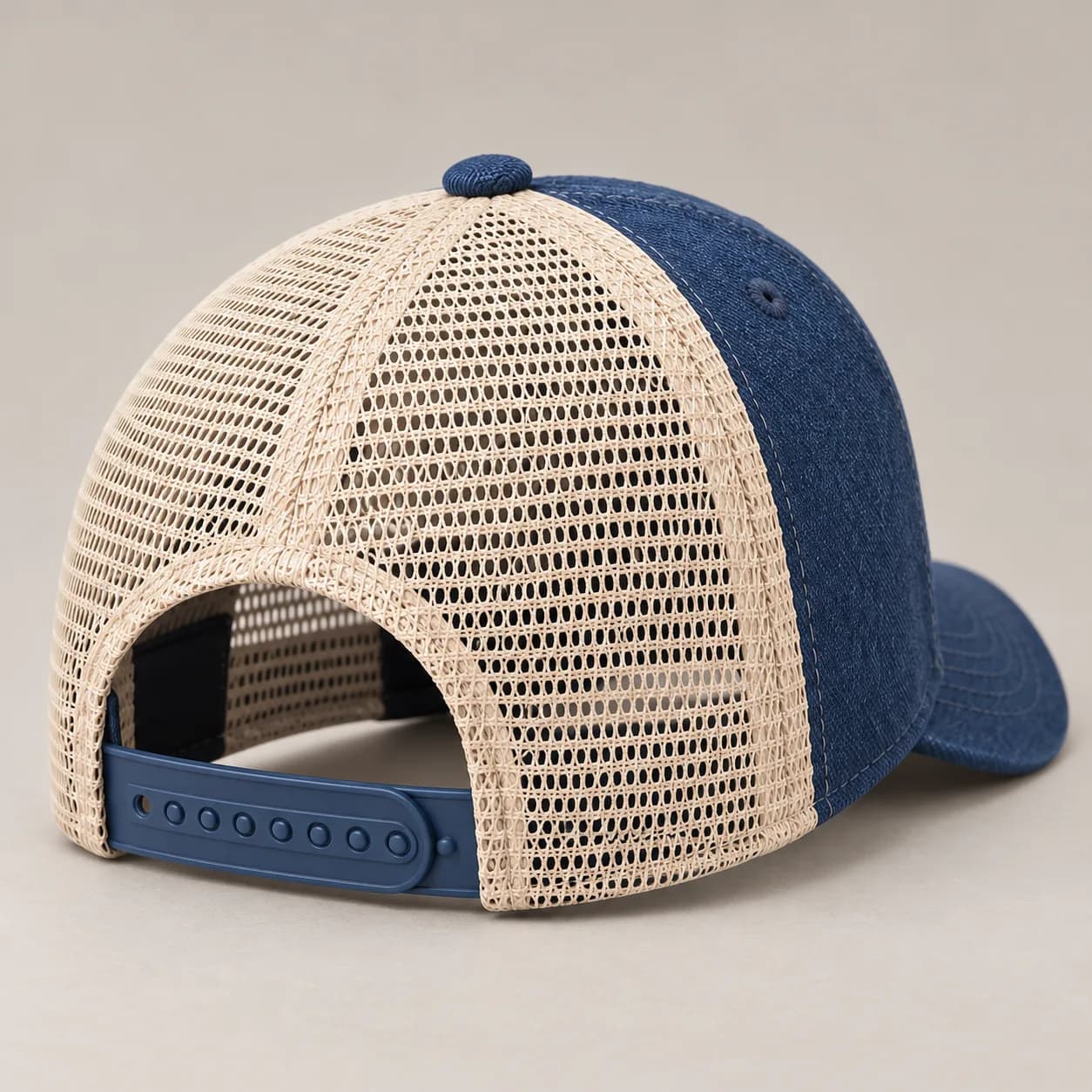
Read the back, panel junctions and adjustment or continuous crown.
Inspect the physical sample before approval.Compare artwork against the actual front surface
Give the artwork revision, finished width and height, color references and placement relative to the brim and nearest seams. Identify elements that must remain readable on the proposed denim shade. A tonal mark may be intentional, but a screen image cannot establish its contrast on the sewn front. Review a physical decoration proposal with the material instead of choosing thread or label colors in isolation.
For direct embroidery, inspect lettering, surrounding cloth and the reverse finish. For a woven label, review its edge, attachment and thickness on the cap, not only the loose label. Keep scale and position consistent when comparing options. Record whether a requested correction concerns contrast, detail, placement or crown distortion. Recheck the assembled front after a change rather than treating a successful decoration trial as approval of the entire cap.
Compare a low-contrast mark under the agreed viewing conditions and record whether it meets the visual brief. If a measured color-transfer or durability requirement is needed, specify it separately. A successful appearance review does not establish the performance of the fabric, decoration or complete cap after a particular treatment or use.
Separate material approval from the order handoff
Use one sample record to identify the proposed denim, mesh, front support, brim, closure, artwork and labels. Mark each item as accepted, revise or still to confirm. If the cloth proposal changes, reopen the affected appearance, decoration and fit decisions instead of carrying forward approval from another material. For a measured requirement, agree the method, reference, result needed and responsibility for evidence before making a claim.
List each complete front, mesh, brim and trim combination as a colorway with its own quantity. The bulk-order planning minimum is 300 pieces per style, per color; sample scope and any size allocation need separate agreement. Include packing preferences, destination and the required arrival date for discussion. OEM/ODM sampling support does not establish a previous mass-production program, a particular treatment process or a guaranteed production result.
Collect the material identity, drawing revision, sample comments and artwork in one handover. Name who can accept a change and how unconfirmed details will be resolved.

Review the inside finish and contact surfaces.
Inspect the physical sample before approval.A practical buying example
Consider a hypothetical brief for 300 blue-front caps with ivory mesh and a compact navy wordmark. The buyer likes the cloth in a reference photograph but has not approved a physical fabric. Identify a proposal and agree which reference controls shade and surface character. A digital mockup can establish artwork position while the material decision remains pending.
Suppose the sewn sample has the accepted mesh boundary but the wordmark is difficult to read. Record the cloth and artwork revision, then compare a specific thread or label alternative at the same size and location. Do not quietly change the front material as well. Recheck the revised front profile, reverse attachment and both side joins. Accepting a more readable mark closes that decoration question; it does not approve an untested finish property or authorize shipment. This scenario describes a review method, not an order previously produced by FORMBRIM.
Questions to settle before requesting a sample
What is confirmed for this direction? OEM/ODM sampling development for a denim mesh-back cap. Final cloth composition, weight, finish, dimensions and suitable decoration remain project decisions. Do not infer washing equipment, a particular treatment, colorfastness or past production volume from a denim-looking reference.
What should an inquiry include? Send the intended woven-front and mesh layout, front and worn-profile references, material direction, artwork at finished size, closure and inside-label requirements. Identify packing preferences, destination and quantity per finished colorway. The bulk-order MOQ is 300 pieces per style, per color; a sample request is discussed separately. If the project requires color-transfer or another measured assessment, state the material, conditions and acceptance requirement for review. Keep that evidence distinct from visual sample approval.