
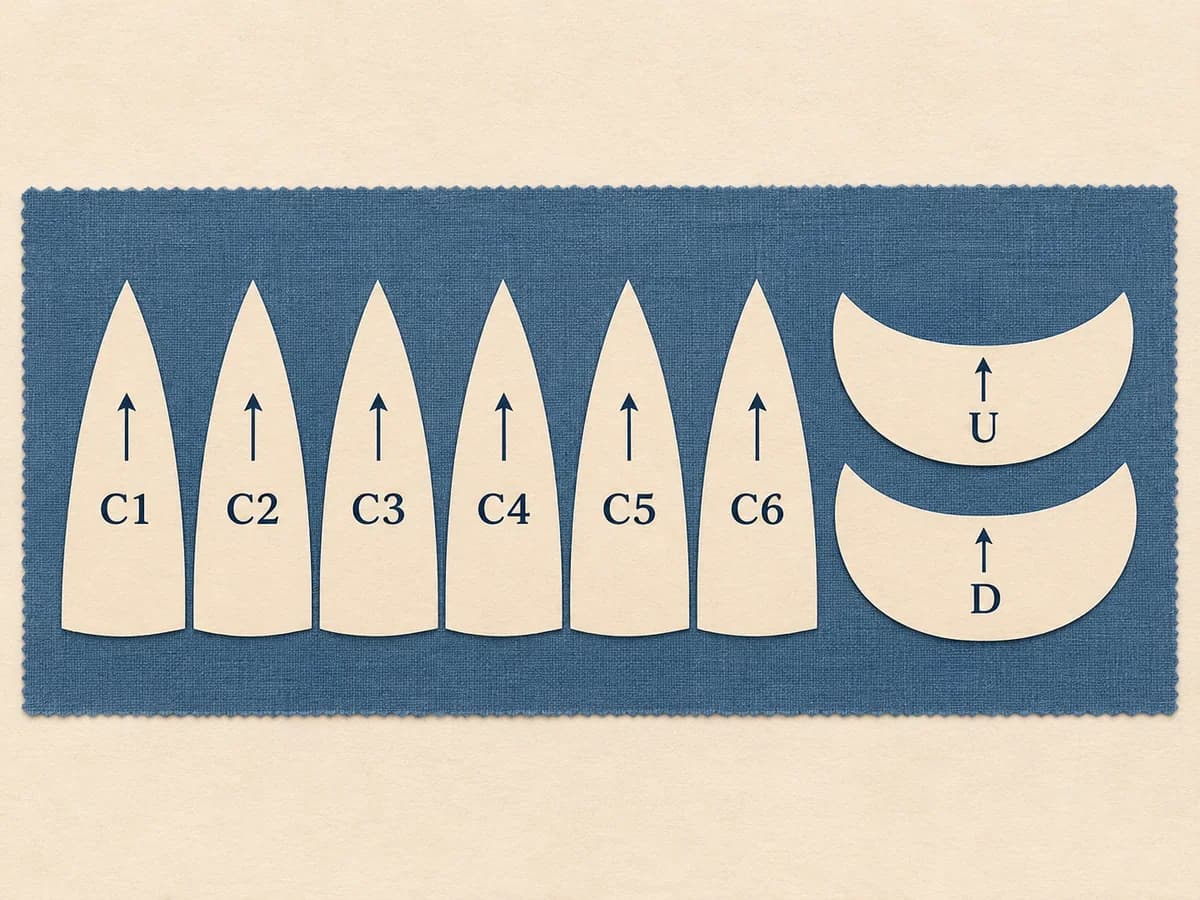
Begin with the same complete shell-piece set
Marker efficiency concerns material-area use within a defined cutting layout. For a hat buyer, the useful question is whether a proposed layout preserves the agreed product while giving a comparable consumption basis. A fuller-looking rectangle cannot approve a missing piece, changed fabric direction or different size allocation.
Consider an illustrative cap shell cut from one directional cloth reference. One complete set contains six crown gores, C1–C6, plus upper-brim fabric U and underbrim fabric D. A and B use those same eight identified pieces at the same scale and usable width. The diagrams show one set to make the comparison readable; the actual layout must carry the agreed complete sets and order allocation. Interlining, sweatband, closure and other materials belong in separate component records.
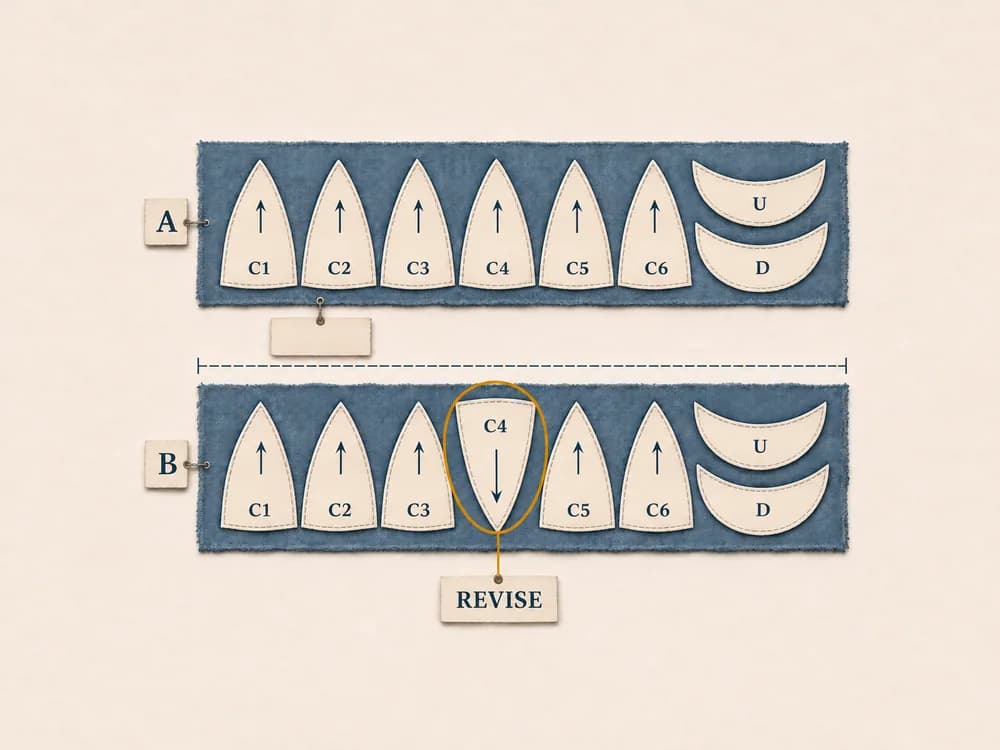
A retains the stated upward direction for the illustrated pieces. B turns C4 while presenting a more compact proposal. The change is deliberately unresolved. These are hypothetical layout drawings, not production patterns, measured yields or evidence of a FORMBRIM cutting result. No numerical saving is supplied, and the apparent spacing is not a consumption calculation.
Confirm direction permissions before packing pieces tighter
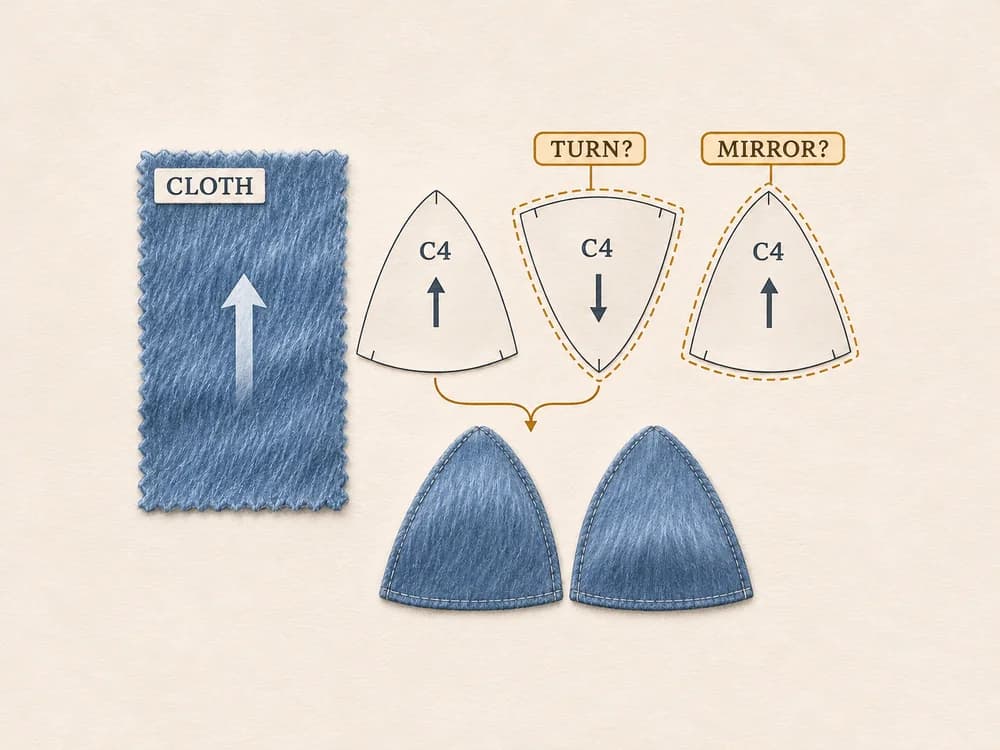
Attach the cloth reference and the accepted assembled appearance to the pattern. A nap, rib or directional design may make orientation visible, but the actual material and technical pattern determine the permissions. Ask which pieces may turn, which may mirror, and whether face direction or paired pieces introduces another restriction. Do not assume that every piece can rotate simply because it fits the available space.
The explanatory image asks those questions using C4. Turning a piece and mirroring it are separate permissions. A similar-looking outline does not settle cloth-face or orientation requirements. Keep the provider’s confirmed instruction on the piece record; mark an unresolved permission as pending rather than allowing a software option to decide it.
Gerber’s Marker Wizard documentation treats models, sizes, quantities and fabric width as marker inputs, and exposes piece turning and flipping options. That explains why permissions must travel with the layout. It does not grant permission for this cloth or establish that FORMBRIM uses that software. Rib and nap appearance on a sewn cap still needs the applicable product-sample review.
- Connect the piece direction to the actual cloth.
- Confirm turning and mirroring separately.
- Keep unresolved permissions pending.
Lock width, revision and complete quantities for A/B
Ask both proposals to identify the same cloth submission, usable-width basis, pattern revision, piece scale, size allocation and number of complete sets. Reconcile repeated pieces and paired components rather than comparing only the outline of the occupied rectangle. A narrower piece, omitted underbrim or reduced bundle quantity changes the product or order basis.
Keep nominal roll width separate from the usable width represented by the proposal. If a provider changes that basis, request a separately identified comparison instead of treating the new arrangement as the same A/B decision. Any stated restrictions affecting placement must remain visible. Their actual technical basis comes from the responsible material and cutting team, not from these diagrams.
The first decision is admissibility: do both layouts contain the required pieces under the agreed constraints? Only then ask the provider to compare their consumption. The BOM can record the resulting confirmed value and revision; it cannot derive purchased fabric from the number of crown panels.
Return C4’s unapproved turn before comparing consumption
In the illustrated B proposal, C4’s point and direction arrow turn together. That makes the changed placement visible. If the agreed instruction keeps C4 in the original direction, return B for correction even if the provider describes it as more efficient. Keep the other seven pieces and all common inputs fixed in the response.
A useful request is: “Please restore C4 to the agreed direction and reissue the complete layout at the same usable width, pattern revision and allocation. Identify the revised proposal and confirm its consumption basis.” The corrected layout might need more space, a different arrangement or a further discussion. No outcome is assumed here.
If the provider instead proposes changing the direction permission, treat that as a product-development question. Ask for the technical justification and relevant cloth or sewn-sample review before accepting it. Do not silently relax the permission to obtain a higher marker figure. A remains the comparison reference, rather than automatic approval of the order or every cutting condition.
- Retain the complete set and common width basis.
- Return an unapproved direction change.
- Request the corrected layout and confirmed consumption.
Separate marker utilization from purchased-cloth requirements
Gerber’s work-area documentation distinguishes target marker length and material utilization. A target or displayed percentage has a defined layout scope; it is not, by itself, the quantity of cloth to purchase. Ask what area and length the supplied figure represents and whether it is proposed or achieved for the identified layout.
For the order, request the provider’s confirmed basis for the complete set count and any lay, end-loss or other allowance included in the quoted requirement. Keep net layout use and additional allowances separately identifiable without borrowing a universal waste percentage. If another width, size ratio or cloth condition was used, reconcile that difference before comparing values.
A higher marker percentage alone cannot establish a lower total quote, reduced order waste or an environmental saving. Keep the confirmed consumption change connected to the relevant material and commercial scope. Other materials, sample work and delivery remain in the existing quotation comparison rather than disappearing behind one utilization figure.
Send an annotated layout decision with the bulk brief
Send the cloth reference, accepted pattern, complete piece quantities, usable-width basis and piece permissions with the marked A/B comparison. Identify C4’s unresolved turn and ask for one corrected proposal or the specific evidence needed to review the permission. Request an accessible annotated drawing or other agreed format; a particular CAD system, nesting report or automatic cutting process is not assumed.
Record which layout is retained for further review, which revision is requested and which consumption remains pending. Update the component record only when the provider confirms the relevant basis. FORMBRIM’s OEM/ODM bulk minimum is 300 pieces per style, per color. Discuss the actual material, sampling and supporting-layout scope for that order; neither the minimum nor this example guarantees an optimization service or a saving.