
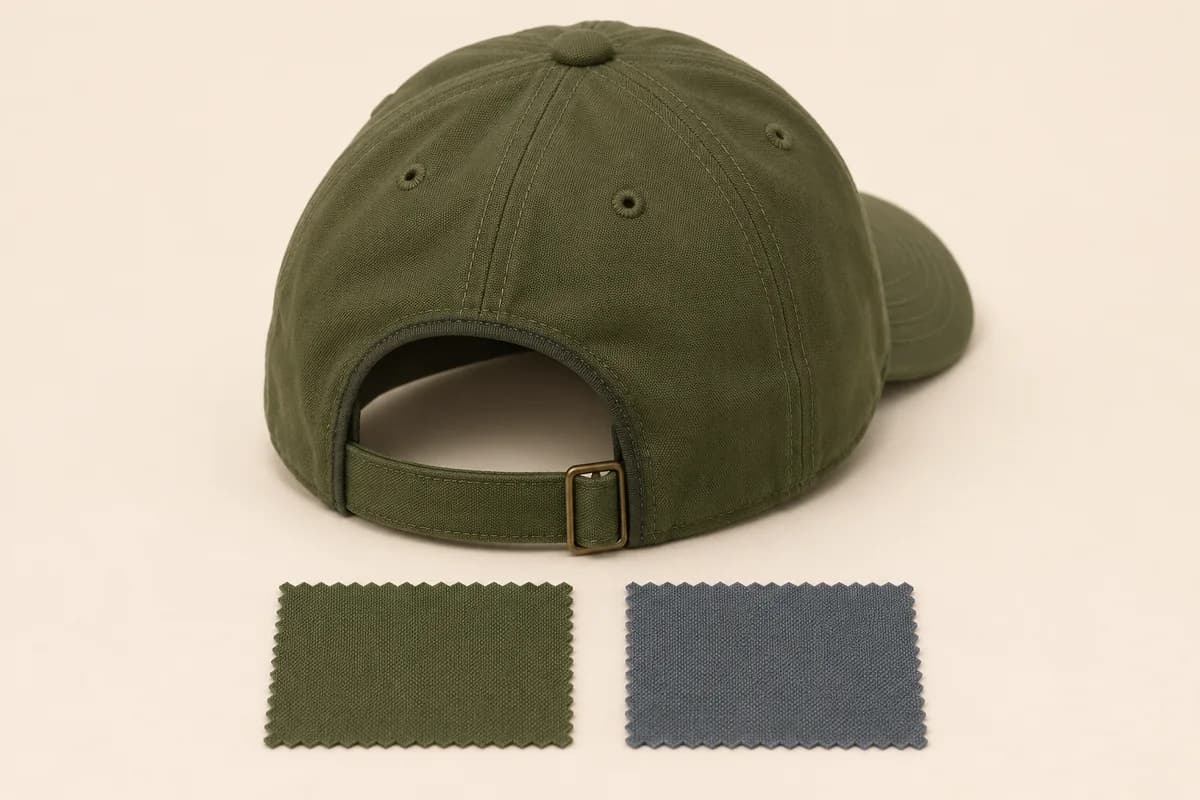
Fix the shell comparison before reading the numbers
Fabric tear strength concerns the force associated with propagating an existing tear under a defined test. A buyer reviewing two proposed shell fabrics needs to establish whether both reports answer the same material question. A force figure from a fabric specimen gives no direct answer about how a tear starts or how the finished cap’s rear opening behaves.
Consider C02, an illustrative six-panel cap with an adjustable rear opening. The pattern revision, shape of the opening, binding and closure stay fixed. The sourcing team is choosing between two proposed nonstretch woven shell fabrics, A and B. It has asked for evidence about tear propagation in the unsewn shell cloth before selecting a fabric for the next sample. The rear opening identifies the product context and stays outside the fabric test comparison.
Identify the two reports and their specimens
Report A identifies cloth A and names ASTM D1424-25, the falling-pendulum or Elmendorf-type method. Report B identifies cloth B and names ASTM D2261-13(2024), the tongue single-rip method using a tensile testing machine. Both report a force in newtons. This example leaves the force values out because the buying team must resolve the method mismatch before ranking the proposals.
Keep each report beside the swatch and the supplier’s submission reference. Look for the tested lot or sample, finish and condition so the lab can confirm what represents the proposed material. A result from a different finish or an unidentified stock swatch adds an identity question even if the testing method appears to match.
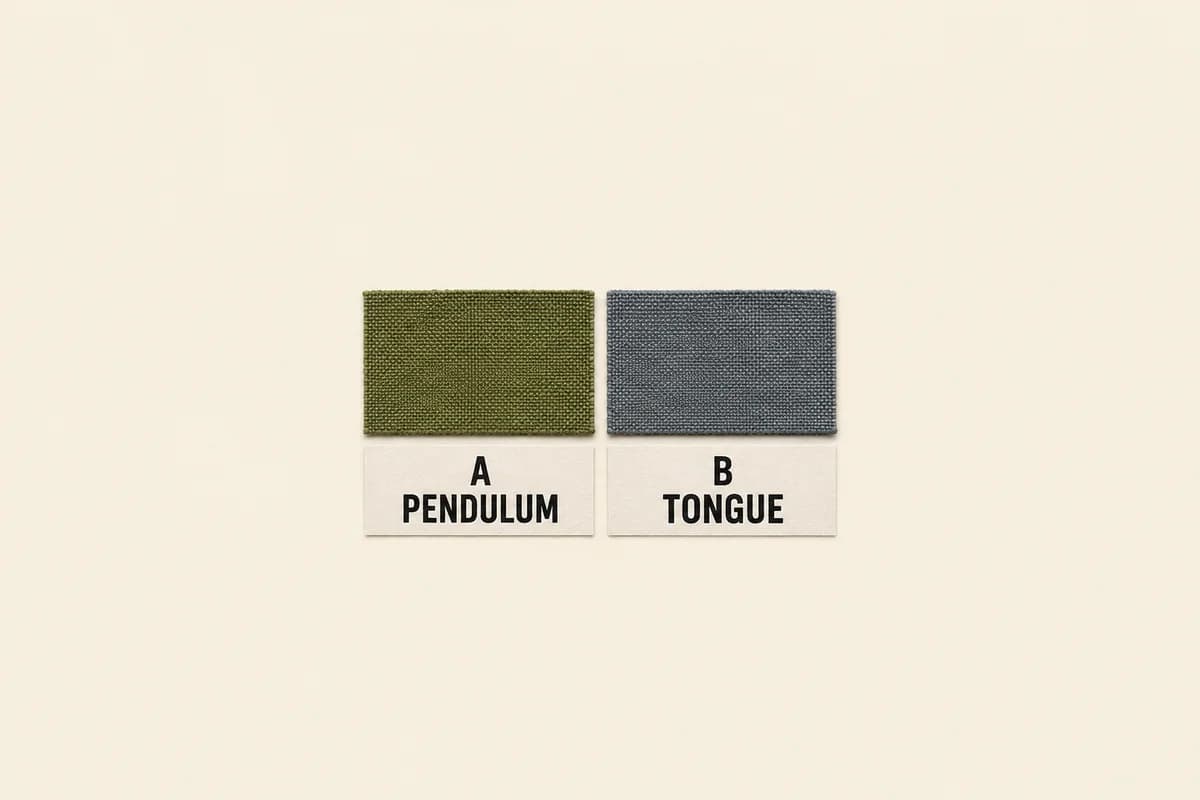
- Report A names ASTM D1424-25 for the pendulum method.
- Report B names ASTM D2261-13(2024) for the tongue method.
- Record the material ID, finish and tested lot for each report.
Check how each method produces the reported result
The pendulum method measures tear propagation from a cut in the specimen using a falling pendulum. The tongue method uses a pre-started tear and measures force as the machine pulls the specimen. Ask the lab which calculation the tongue report uses. Even two tongue reports need a matching calculation basis before their figures can support the intended comparison.
Check the direction convention with the lab. When a row says warp or weft, confirm whether that label describes the test specimen orientation or the direction named for the reported tear. A purchasing spreadsheet should preserve the lab’s convention rather than translating it by guesswork. Record relevant specimen states and conditioning as reported. The Exchange’s historical woven-fabric QA method is one example of a purchaser recording direction and conditioning along with the method.
Keep the request on tear propagation in the unsewn fabric. Tensile evidence can answer a breaking-force question under a different test, and a sewing trial can answer a construction question. Neither supplies the missing basis for comparing these two tear reports.
If a summary collapses directions into one strength figure, ask for the corresponding rows and an explanation of that summary. The lab can then say which report fields are meaningful for the stated comparison. A single figure should not replace a direction-specific requirement in the buyer’s brief.
Example of a material ranking on hold
On the comparison record, enter A and B on separate rows. Record the material IDs, finish or lot references, method and edition, direction convention, specimen condition, calculation and units. Enter unknown where the report leaves a field unresolved. The two rows can both contain useful evidence for their respective scopes while the shared decision remains open.
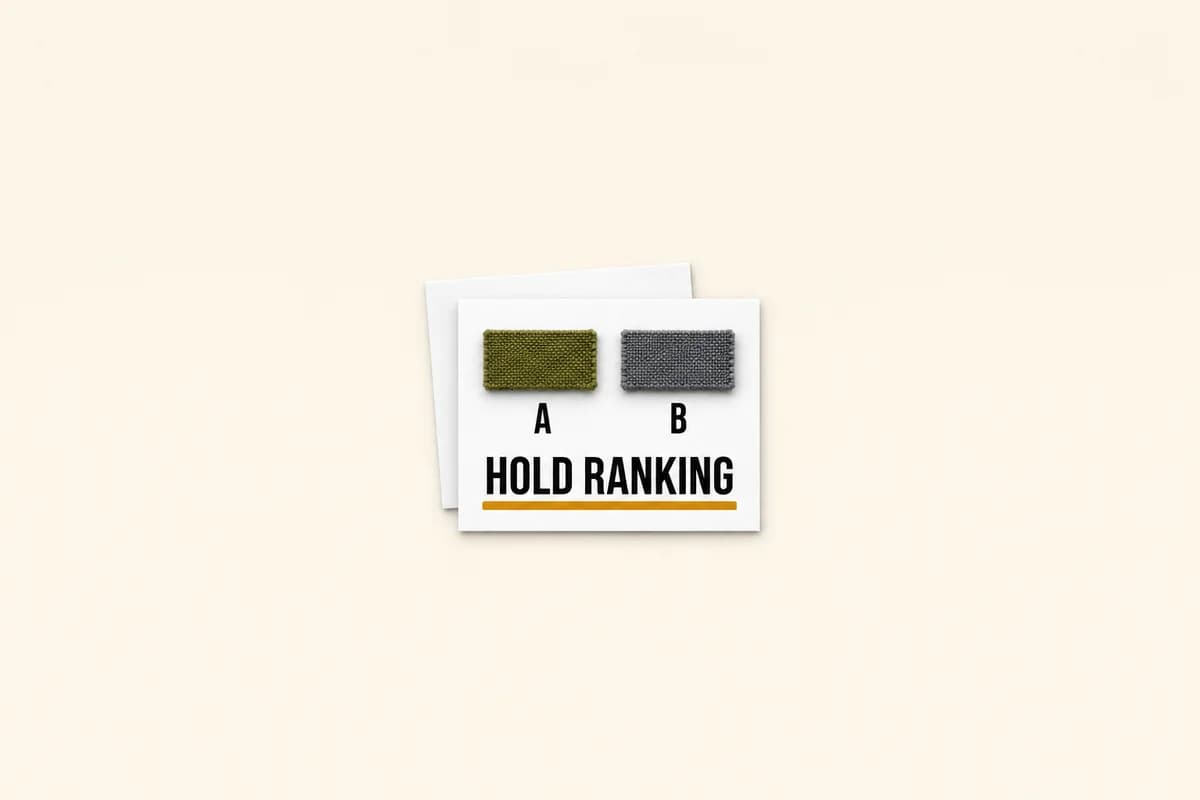
Mark the record HOLD RANKING. The common force unit identifies how each report expresses its result. It does not establish equivalence between the pendulum and tongue methods, and a unit conversion would leave the same mismatch. Keep both proposals open for the matched evidence request. If the lab finds that a common method is unsuitable for either fabric, ask what comparison it can support and keep any unsupported ranking pending.
- A uses the pendulum method. Confirm the specimen identity and the direction and condition attached to the result.
- B uses the tongue method. Confirm the specimen identity and the direction, condition and calculation option attached to its result.
- The comparison stays open until the responsible lab confirms a common reporting basis that fits both proposed fabrics.
- Confirm the applicable method and edition with the lab.
- Match direction, condition, calculation and units.
- Review the assembled rear opening separately.
Request matched evidence and a separate cap sample
Ask the lab to review both swatches and confirm an applicable method, edition, direction convention, specimen conditions and result calculation for the proposed comparison. Request a report with clearly identified material references and comparable fields for both fabrics. If the buyer already has a method-specific requirement, supply its revision and ask the lab to check applicability. The applicable test setup and any acceptance criterion belong to the responsible parties.
A useful request for C02 is, “Can A and B be assessed under the same agreed method and conditions? Please identify the specimen behind each result and flag any row that cannot be compared.” Ask for that response before the sourcing team transfers either report value into the material decision.
Keep a separate sample review for the C02 rear opening. Check the cutout shape, binding and closure on the assembled cap against the drawing. If the order also needs evidence of assembled performance, describe the intended question and seek a suitable assessment. The material results cannot establish performance for that construction.
Attach the comparison to the selected shell revision
When matched evidence is available, record the material reference and the reason for the decision. Retain the original reports and the comparison request with the C02 revision. If a new finish, cloth lot or material substitute is proposed, check whether the evidence covers that proposal before carrying the decision forward.
Bring the shell references, the rear-opening drawing and the unresolved evidence question to your FORMBRIM development discussion. The bulk minimum is 300 pieces per style, per color. Agree material and sample scope for the project and identify who will arrange any required lab work.