
Define the graphic area on the foam front
Choose the viewing distance and the most important part of the graphic. If a slogan must read quickly, simplify the layout before selecting the decoration method. Supply vector artwork where available and identify any gradients or fine details. Ask for method suitability to be reviewed on the proposed front material rather than assuming every print effect is available.
If the illustration includes several colors, identify which details are essential and which could be simplified. Keep one full-color version and one reduced version ready for review. This creates a practical discussion about graphic clarity and the proposed decoration approach without committing the whole design to a technique before material review.
Check print edges and small lettering
The front panel is a curved surface once sewn. Place key lettering within a conservative central area and show its relationship to the brim. Ask the sample to establish the actual safe decoration area. If your reference uses an oversized print, explain whether the size or the full visibility of the artwork matters more.
Measure the intended graphic as a complete rectangle and mark the critical content within it. Decorative background areas and small legal or brand text may need different margins. Compare the decorated cap head-on and at an angle; a layout that fits on the flat artwork can become visually compressed around the front edges.

Inspect the material character and how it meets stitching and decoration.
Generated design study; inspect the physical sample before approval.Choose mesh, visor and closure colors
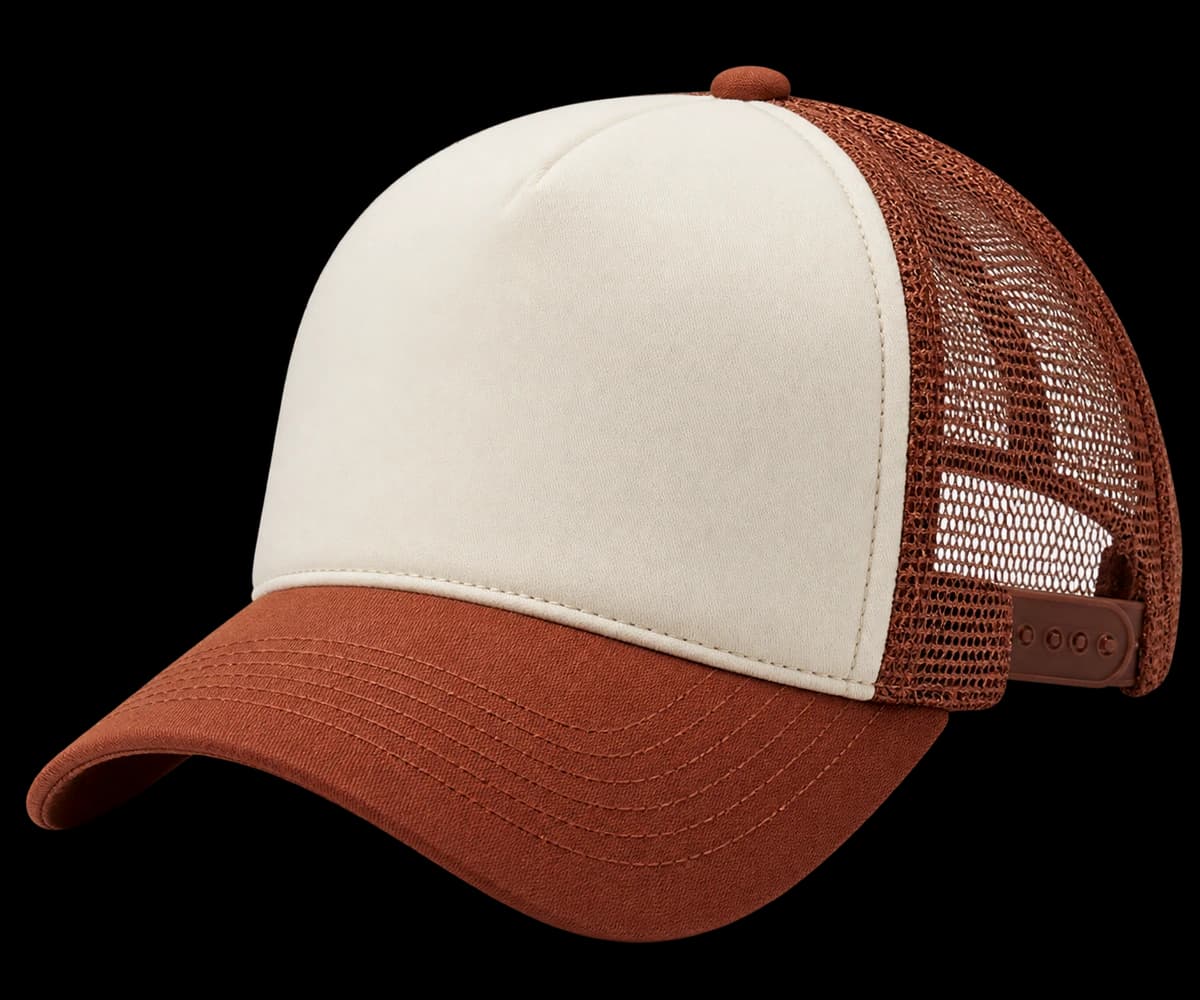
List front, mesh, brim and closure colors separately. Mesh may look lighter against skin or a bright background than it does in a swatch photograph. Review the finished cap against more than one background and on the intended wearer. This is especially useful when the mesh is expected to match a solid fabric.
Decide whether the mesh should be visibly open and contrasting or simply recede behind the front graphic. Include a rear photograph in your approval request. A matching closure may still look different in shine or opacity, so assess the complete rear assembly rather than checking its color name against the mesh specification.
Review the decorated trucker crown
Assess the surface for unwanted distortion and inspect the edge of the graphic where the panel curves. Check front height and the pressure at the forehead. Ask what care guidance applies to the final materials and decoration, and approve that information before it is used on labels or your retail product page.
Press and release the front gently during normal handling and observe how the graphic surface returns to its shape. Discuss any appearance concern with the proposed construction rather than treating it as proof of a performance property. For packaging, identify whether protecting the front profile is more important than minimizing the packed volume.
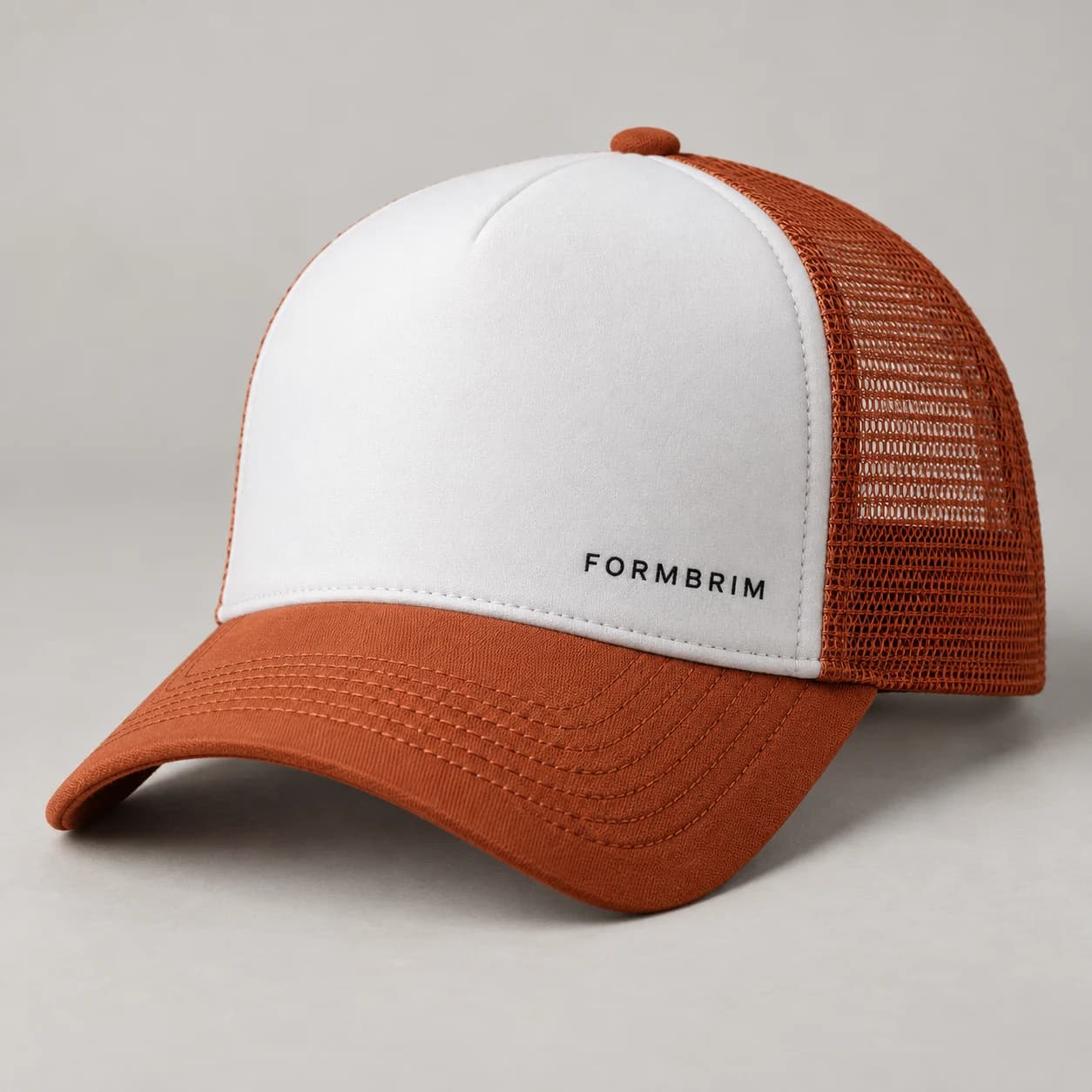
Start with the overall proportion, crown shape and artwork scale.
Generated design study; inspect the physical sample before approval.A practical buying example
For a rectangular event graphic, show the full border as well as the lettering. Ask to see how it sits near the front panel edges on the actual decorated cap. If the border looks distorted, review placement and artwork proportions before requesting a wider print. A version with more breathing room may preserve the design more effectively than filling every available part of the foam front.
Questions to settle before requesting a sample
Choose the foam-front direction for its particular surface and graphic character, not as a substitute for a specified fit. Compare mesh color, opening and rear adjustment on a worn sample. If the brief depends on a fine outline or small text, ask to review those details on the proposed front material. Keep printing questions separate from crown height; a successful graphic does not approve the whole hat.