
Map the upper disk, lower annulus and opening band
Start the sample brief with three separately identified pieces: the circular upper disk, the lower annulus and the narrow opening band. The disk extends beyond the opening. Beneath it, the lower annulus runs inward from the outer shell join toward the band. Show that return on an underside drawing so the supplier can distinguish it from a projecting brim or a straight wall carried beneath a flat top.
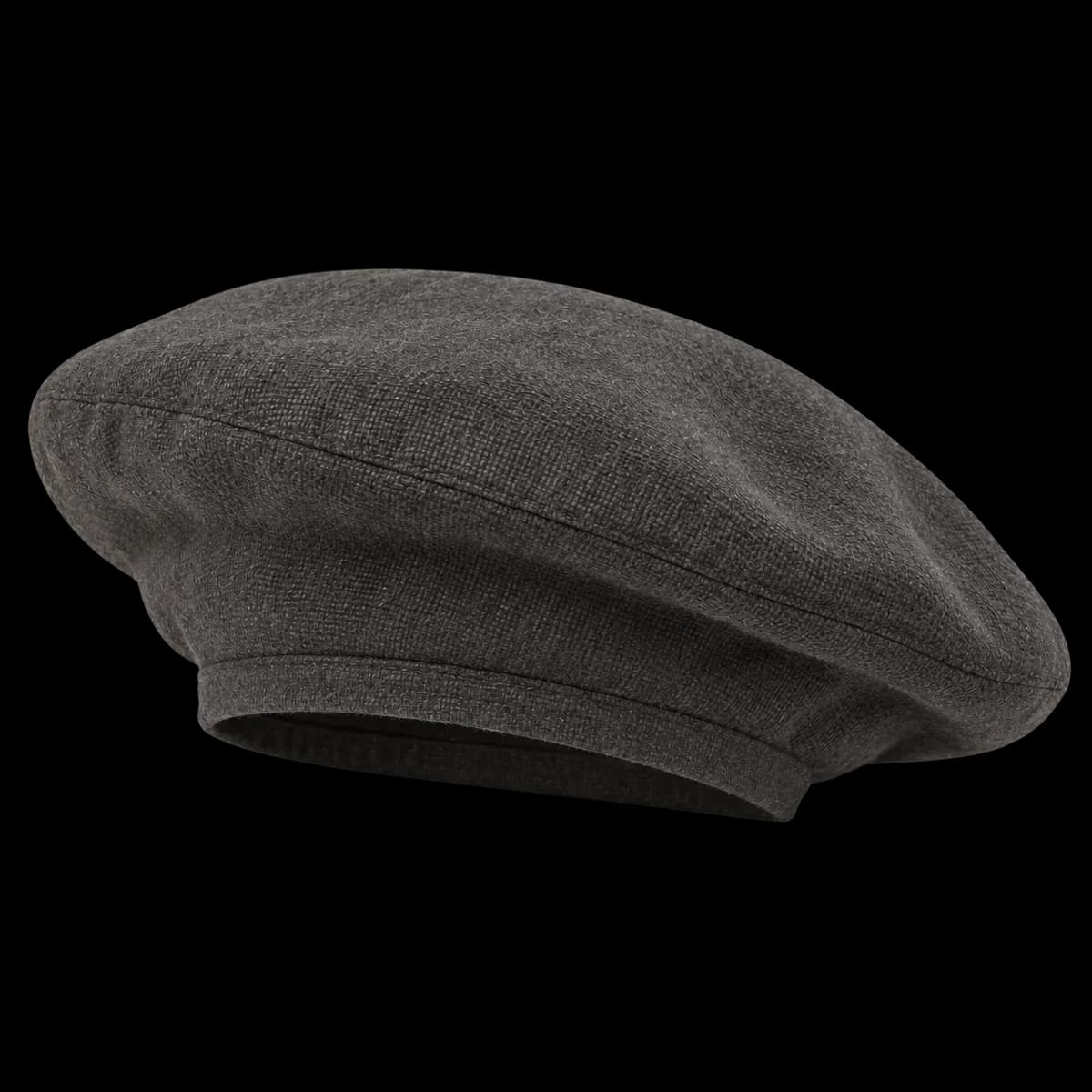
Use a top view for the disk outline and an underside view for the lower annulus. Connect them with the same outer seam reference. Give the opening band its own identity at the inner boundary rather than treating every visible lower edge as one piece. The illustrated dark woven shell has a complete opening without adjustment hardware; retain that proposal until the project defines a different construction.
Review the disk overhang and lower return as a relationship. A request for a wider-looking crown could concern the disk outline, the lower annulus or how the assembled shell is positioned. Mark the feature on the governing drawing before changing it. Keep that drawing beside matching front, rear and inside views. The beret proposal should remain circular and peakless through the revision, rather than borrowing the sloping crown of a flat cap or the outward brim of a bucket hat.
Review both circular joins and the inner edge
Follow the outside circle where the upper disk joins the lower annulus. Then follow the inside circle where the annulus meets the narrow opening band. These are separate connections with different positions in the assembly. Ask the technical team to mark both on the inside construction view, including the edge finish proposed at each join. A single close view of the opening cannot account for an outer seam concealed beneath the crown.
Locate a sample finding at one of those connections. A ridge at the outer return, uneven material around the band attachment and a rough inner opening edge require different feedback. Identify the affected arc on a marked view and ask how the supplier proposes to resolve it. Have the technical team explain the seam and edge treatment for the selected cloth; a drawn line does not establish an allowance, a folding method or a universal construction recipe.
Compare the same local area from outside and inside after a revision. Retain the disk outline and opening reference while the specified join is reviewed. If the proposed remedy changes the lower piece, band or another accepted detail, identify that wider change before sampling. Keep the observed issue, proposed construction and next review point together so a smooth outside crown does not substitute for evidence of the requested inner-edge change.
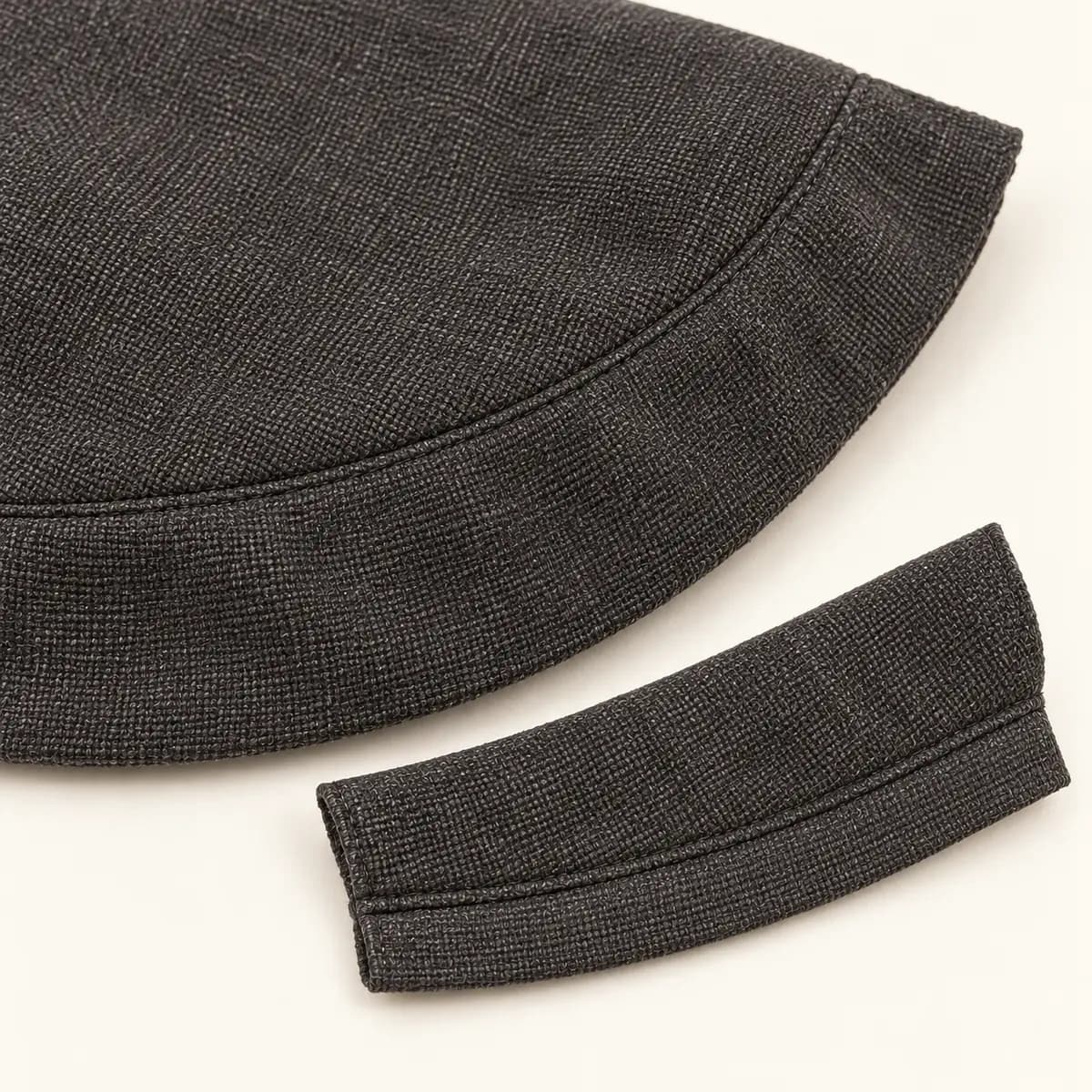
Woven cloth reference · review the curved join and narrow opening edge through sampling
Connect the cloth, opening and artwork references
The deep charcoal woven cloth is a development direction. Request identifiable submissions with composition, weight, finish and hand before choosing the project material. Compare the proposed cloth on the upper disk and lower annulus, then identify what is intended for the opening band. The matching material reference shows a sewn curve and a separate edge sample; it does not set those specifications or establish a finished fit.
Supply the intended fit reference and agree how the finished opening will be measured and positioned for review. Name the band edge used for that route and the condition of the sample. The fixed opening in the illustration does not establish a size or stretch range. Review the opening together with the lower return: an accepted opening should remain identifiable when the buyer asks for a different crown overhang or lower-annulus contour.
Place artwork within a named piece and provide its finished dimensions. Mark distances from a stable seam or band reference, with an orientation mark on the drawing if the plain circular shell has no obvious front. Review the reverse attachment, proposed inside label and any local change to the shell contour. Keep material selection, opening approval and artwork acceptance distinct in the sample record while checking their combined effect on the same assembled beret.
Request one annulus revision with retained features
Turn sample feedback into a component request. If the lower return looks uneven while the upper disk and opening are accepted, mark the affected lower-annulus arc and ask for a revised contour proposal. Retain the accepted disk drawing and finished-opening reference. Ask the technical team whether the requested change can be confined to the lower piece or requires a separately identified change at either circular join.
Give the returned proposal a revision reference before requesting the next sample. Compare its underside map with matching outer and inside views. Check whether the named annulus change is represented, whether both circular joins remain traceable and whether an accepted opening or upper outline has changed. Keep an unclear or concealed connection pending rather than inferring it from a similar top photograph.
For a bulk quotation, combine the agreed pattern direction with material references, artwork, labels, finished colorways and quantities. FORMBRIM’s minimum is 300 pieces per style, per color; agree any size allocation and sample scope separately. Include packing and destination requirements, then review the circular crown and inner edge after unpacking the sample. Keep development, approval, bulk production and transport as separate schedule decisions, with the next technical response assigned to a named contact.
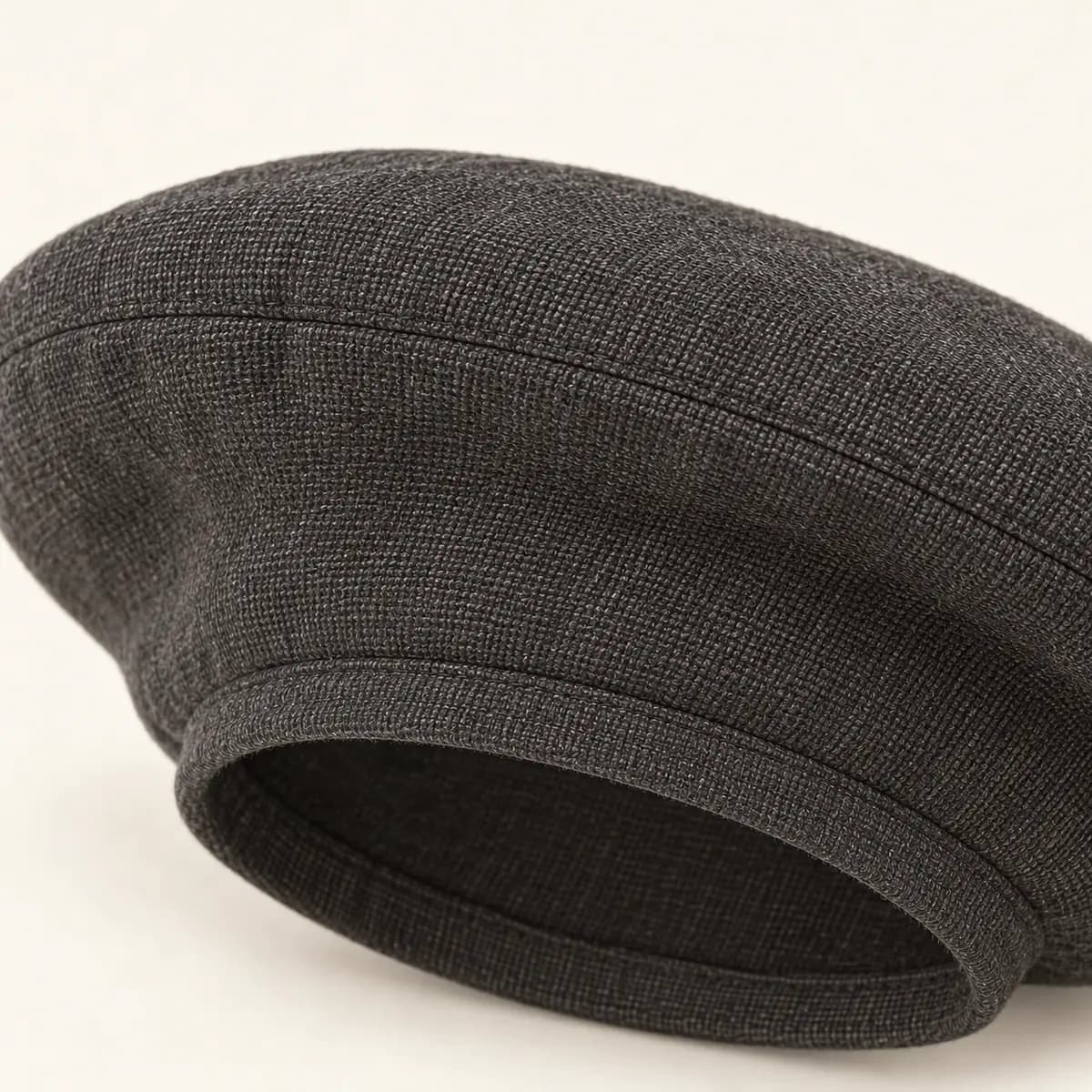
Locate both circular joins and the proposed narrow opening-edge finish on the same sewn shell.
Inspect the physical sample before approval.A practical buying example
Suppose the circular upper outline and finished opening are accepted, but one arc of the lower return sits unevenly. Mark that arc on the underside drawing and request a lower-annulus contour proposal that retains the upper disk and opening reference. Ask whether the technical solution also changes either circular join, then review matching outer and inside views of the next version. Reducing the opening or reshaping the upper disk would reopen separate accepted features. This is hypothetical sample feedback for a proposed revision.
Questions to settle before requesting a sample
Before requesting the next sewn beret sample, identify the circular upper, lower annulus and narrow band on one pattern map. Ask which cloth submission and inside-edge proposal it represents, where both circular joins are shown and how the finished opening will be reviewed. Provide artwork at its finished size with a named orientation and seam clearances. State one requested component change and the accepted features to retain. Include quantities by style and finished colorway; the bulk minimum is 300 pieces per style, per color, with size allocation and sample scope agreed separately.