

Number eight radial crown gores and the apex joins
Begin with a top drawing that numbers eight separate shaped crown pieces. Follow the radial joins toward their shared apex and outward to the lower crown edge. Give the lower band and short peak separate component references. Counting a band or a peak as one of the eight pieces would describe another pattern, while a top button can conceal the meeting point without proving how many gores are underneath it.
Compare the numbered map with front, rear and top views of the same sample. The eight-gore crown should remain identifiable as the cap turns; the front view alone cannot show the whole assembly. Record any proposed top treatment separately. The illustrated direction has no top button, so a later button request also needs a visible attachment and inside-finish proposal.
Keep the nearest existing shapes distinct. The tapered flat cap uses a broad continuous upper with curved sides; the sewn beret uses a disk and inward lower annulus; the cadet cap has a separate top and upright wall. Their cloth or artwork may inform a brief, but those references do not replace the newsboy gore map.
Resolve crown fullness and the band-to-peak connection
Describe where the crown should carry volume, then compare the gore contours and lower attachment on matching profiles. A fuller appearance may involve the shaped gores, their relationship to the band or the position of the cap. Mark the relevant contour before asking for more volume. Do not turn a visual request into an assumed pleat, gathering recipe or seam allowance. Ask the technical team to identify its proposed assembly.
Locate the short peak root, visible projection and crown overhang separately. Trace how the front crown and lower band meet that root from inside the sample. The band controls an opening reference; the peak controls a different forward shape. A request to shorten the front must say which feature should change and which accepted relationships should stay.
Review the apex and crown-to-band joins for the selected cloth at the same time. Ask for an inside view where multiple gore allowances meet and where the band contacts the wearer. An outside contour can be accepted while a concealed finish remains pending. Retain the complete rear proposal unless a different rear construction is explicitly added to the brief.
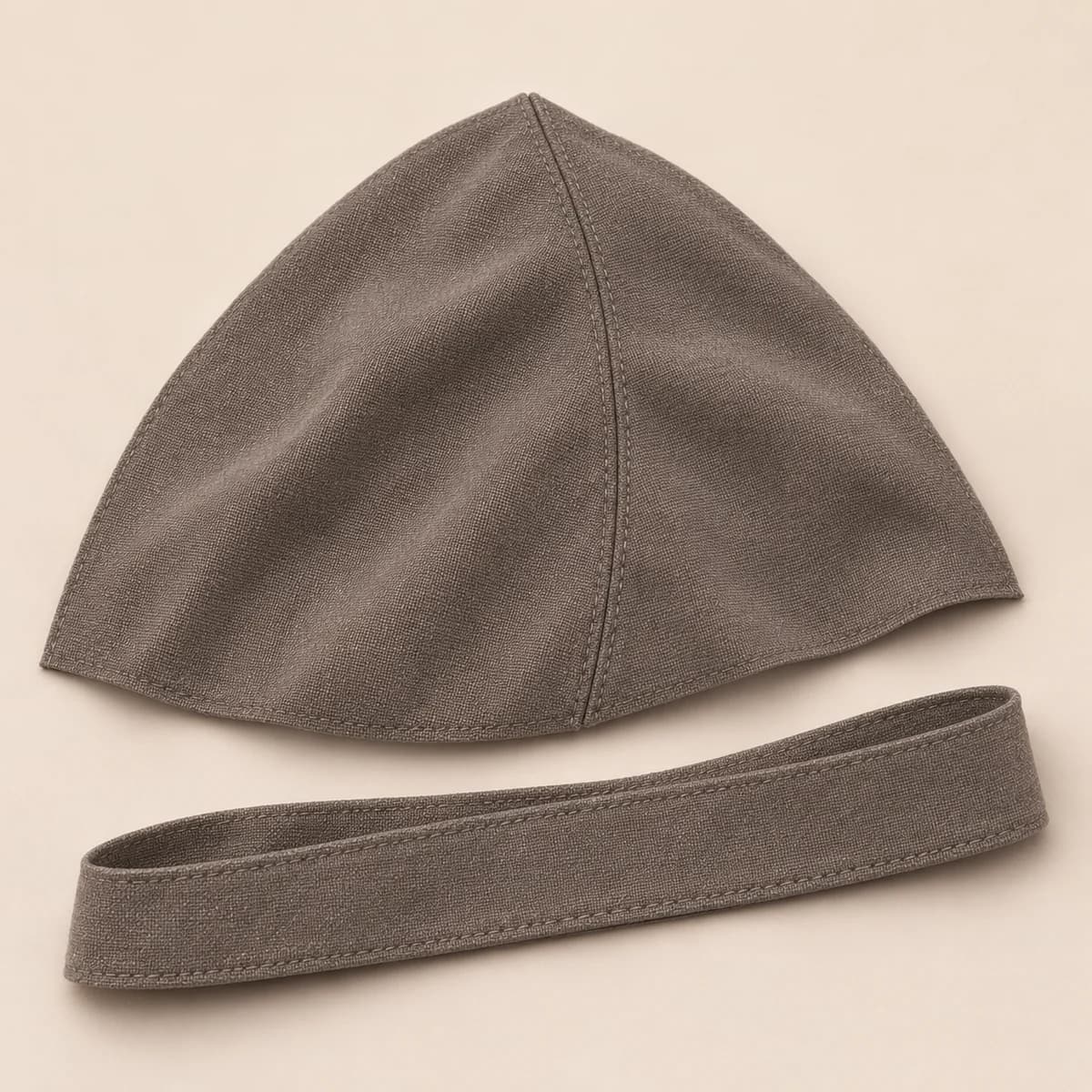
Woven cloth proposal · review radial joins, lower band and peak attachment through sampling
Match cloth, opening and artwork to the numbered crown
The gray-brown plain woven cloth is a proposal for the first development direction. Request identifiable cloth submissions with composition, weight, finish and hand before selecting the project material. Review how the chosen cloth forms the gore curves and the apex, and identify the band, peak covering and proposed inside materials separately. A similar shade does not establish equivalent hand or construction.
Agree an opening measurement route and an intended worn reference. Record the lower band position and how the crown sits over it before judging fullness or peak balance. Keep the finished opening distinct from the crown contour: making the whole cap smaller could alter an accepted fit when only the upper volume needs revision. Any size allocation and grading proposal require their own review.
Supply final-size artwork and mark its distances from numbered gore seams or the band edge. Discuss a seam-crossing design before treating a flat mockup as feasible. Inspect decoration and its reverse attachment on the selected cloth, then check the crown shape again. Inside label wording follows confirmed material and order requirements; the image does not provide a fiber specification.
Issue one gore revision with retained band and peak references
Make the next sample request specific to a component and a view. If the opening and short peak are accepted but the rear crown looks too full, mark the affected gores and ask for a contour proposal that retains the agreed band and peak references. The supplier may need to explain a wider pattern consequence; give that proposal its own revision reference before sampling it.
Compare the returned top map with matching profiles, rear and inside views. Record accepted, revise or pending status for the eight-piece crown, apex, band, peak, opening, cloth and decoration. A new sample should not silently combine another cloth, a revised opening and a new gore contour. Keep the retained features beside the requested change so the next review answers the same question.
For a quotation, send the identified construction direction, material references, artwork, labels, finished colorways, quantities and proposed size allocation. FORMBRIM’s bulk minimum is 300 pieces per style, per color; confirm the sample scope and size allocation separately. Include packing and destination requirements, then review the crown volume and short peak after unpacking the sample.

Keep the crown-to-band connection and separate peak root identifiable in the local review.
Inspect the physical sample before approval.A practical buying example
Suppose the band opening and short peak are accepted, but the rear crown carries too much volume. Mark the affected rear gores on the numbered top map and request a contour proposal that retains the accepted band and peak references. Ask whether the change affects the apex or adjacent gores, then compare matching top, rear and inside views of the revision. Reducing the opening or adding a top button would answer different questions. This is hypothetical sample feedback, not a completed order or an approved physical sample.
Questions to settle before requesting a sample
Before requesting the newsboy sample, identify the eight crown gores and the drawing that governs their apex, lower band and short-peak connection. Ask which cloth submissions and inside finish the proposal represents, how the opening and worn position will be reviewed, and which seam clearances govern the artwork. Name one requested pattern change and the retained features. Include finished-colorway quantities and a proposed size allocation; the bulk minimum is 300 pieces per style, per color.