
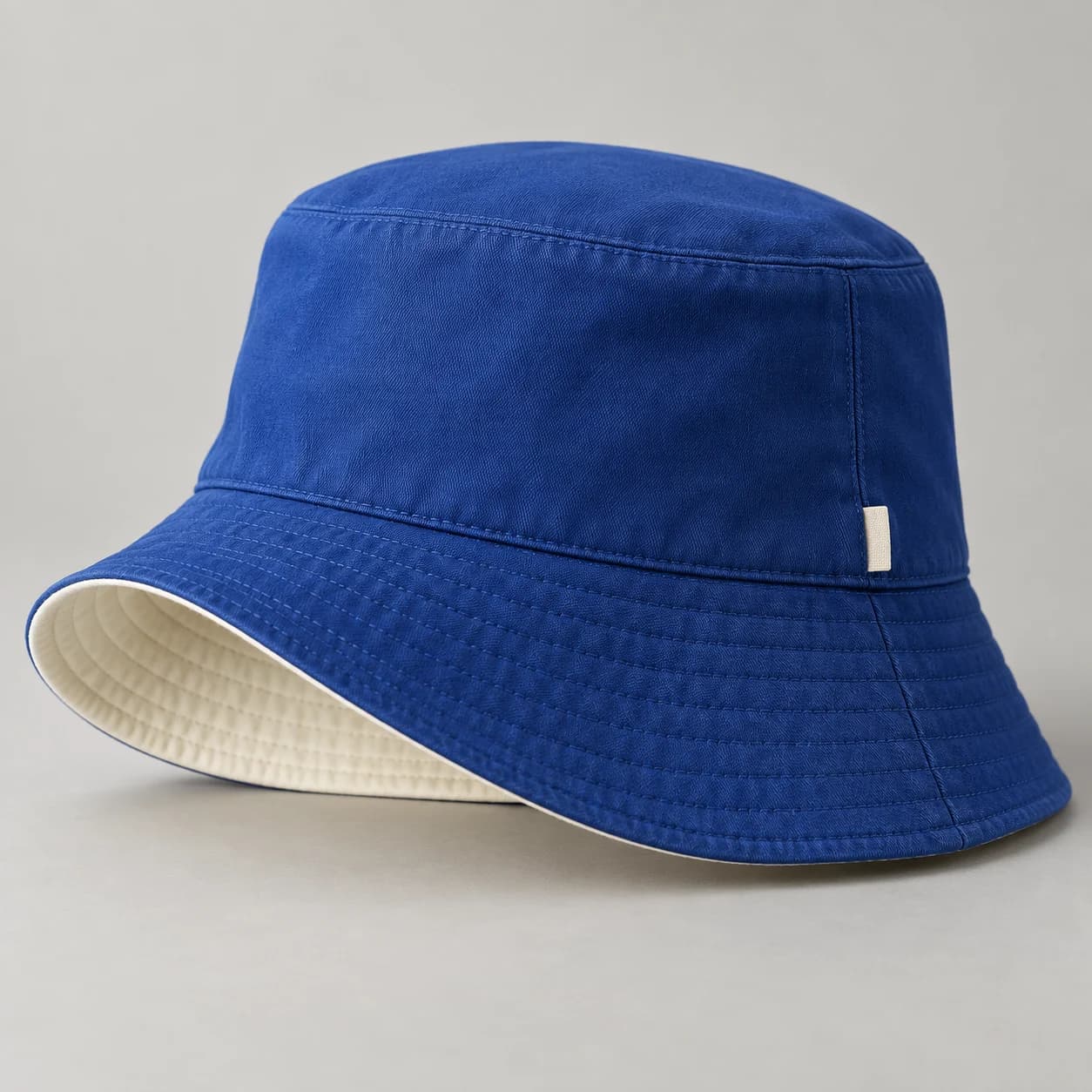
Specify both wearing sides
Name the faces A and B and list fabric, color, decoration and artwork orientation for each. State whether both should feel equally formal or offer different moods. Show how one face appears at the brim edge when the other is worn. This prevents the second side being treated as a decorative lining rather than a usable face.
Decide how different the two faces should be. Similar colors make reversibility subtle; a strong contrast offers a clearer change of mood but makes any glimpse of the other face more noticeable at the edge. Show the desired edge appearance in a sketch and identify whether a slight reveal belongs in the design.
Resolve reversible labels and attachment
Brand and care information need a placement that works for the intended reversible use. Discuss the available construction approach and any labeling requirements for your sales market with the appropriate specialist. Do not leave this decision until the sample is finished; it can affect seam details and the experience of wearing either side.
Review the complete label arrangement with the hat reversed, including any small attachment tab or seam allowance visible nearby. If information must be accessible without undermining either look, discuss the practical options before finalizing branding. Keep the proposed solution attached to the reversible construction specification rather than in a separate packaging note.

Inspect the material character and how it meets stitching and decoration.
Generated design study; inspect the physical sample before approval.Review the combined fabric layers
Review the two fabrics together for thickness, drape and behavior at the brim. Ask how the chosen combination will be handled in sampling and what care instructions apply. Avoid making washability or shrinkage claims from the concept alone. Any performance requirements should be specified and assessed on the final material combination.
Ask whether both faces should have the same fabric character or an intentionally different feel. A light face paired with a firmer one may not behave like either swatch independently. During approval, observe how the layers settle together and whether the edge turns cleanly. Use that evidence to refine the combination before adding more decoration.
Inspect the hat in both directions
Turn the sample inside out and repeat the full fit, decoration and seam review. Check artwork orientation and whether labels or joins become conspicuous. Reverse it several times during the review to understand how the brim settles. Document changes for side A and side B separately so feedback is unambiguous.
Create two approval columns, one for each wearing direction, and repeat the same checks in both. A seam accepted on side A may become a focal point on side B. Record any tradeoff explicitly if improving one face changes the other. The final approval should identify the complete reversible sample rather than two unrelated fabric selections.

Review the inside finish and contact surfaces; the illustration is a proposed construction.
Generated design study; inspect the physical sample before approval.A practical buying example
For navy outside and cream reverse, write two annotated views using the same style code. Show which side carries the brand mark and how required labels are handled. Turn the sample inside out during review and photograph the brim edge each way. If one fabric rolls into view at the edge, identify whether that is intentional before approving either side.
Questions to settle before requesting a sample
Ask how the two selected fabrics work together at the brim and seams. A combination of heavier layers may feel different from either swatch alone. Review decoration backing and attachment from both wearing sides, and decide where labeling belongs before assembly. A reversible design is not complete if the second side exposes an unfinished-looking attachment or a label position the wearer cannot use comfortably.