
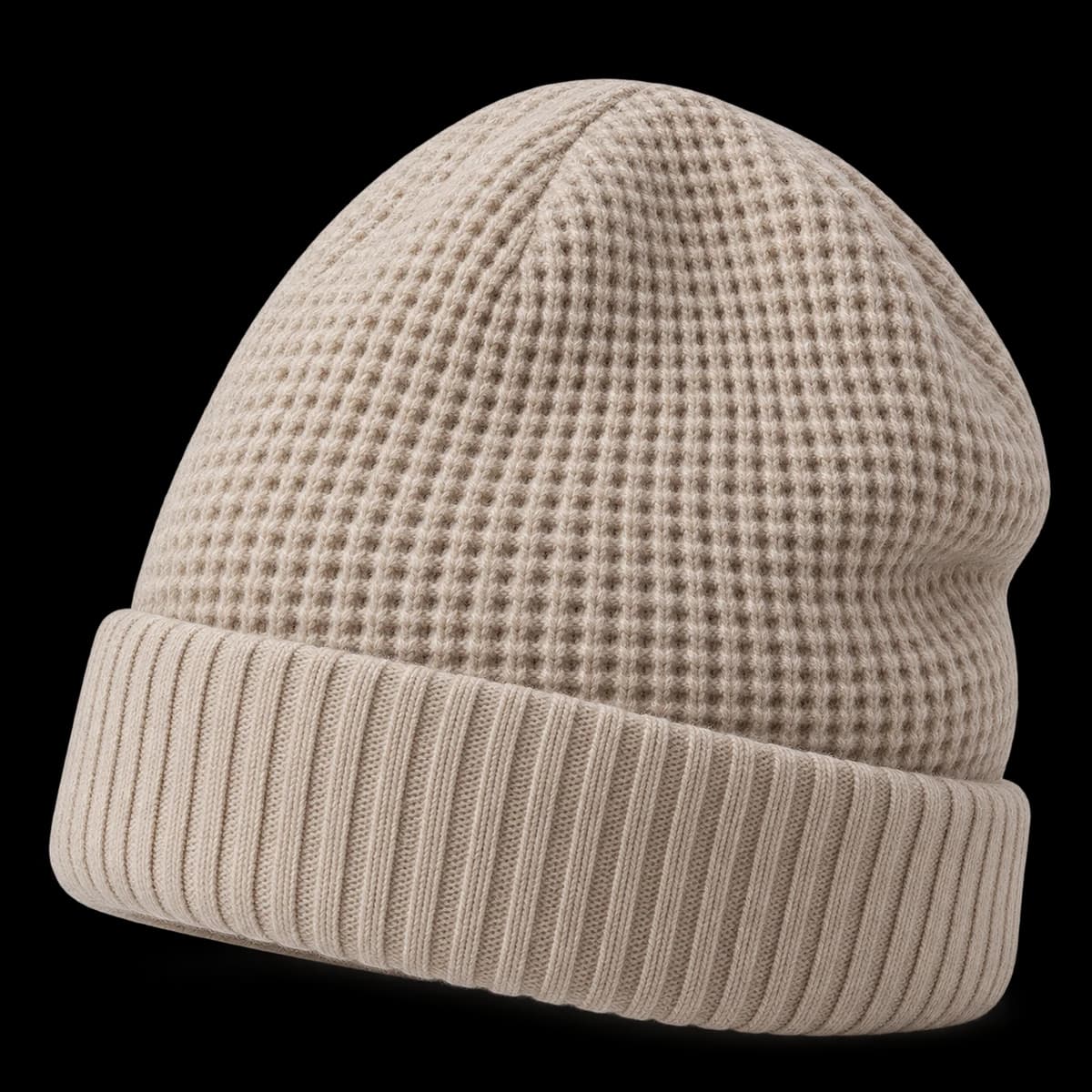
Waffle texture scale
Choose the waffle scale through a physical sample. The size and depth of the texture affect appearance and hand; the image does not establish gauge or weight.
Review the knit relaxed and worn at the same distance. Large texture cells may look prominent in a flat close-up and much less regular under stretch. Specify the physical reference you prefer and request yarn details independently. Keep texture approval separate from a claim about warmth or another performance property.
Cuff transition
Describe the transition into the rib cuff. Review whether the two structures create a balanced silhouette when worn.
Where a rib cuff meets the textured crown, inspect the visual step and feel of the junction. State whether that division should be pronounced or quiet. The folded cuff also changes visible crown length, so assess the transition on a wearer rather than treating it as an isolated fabric strip.
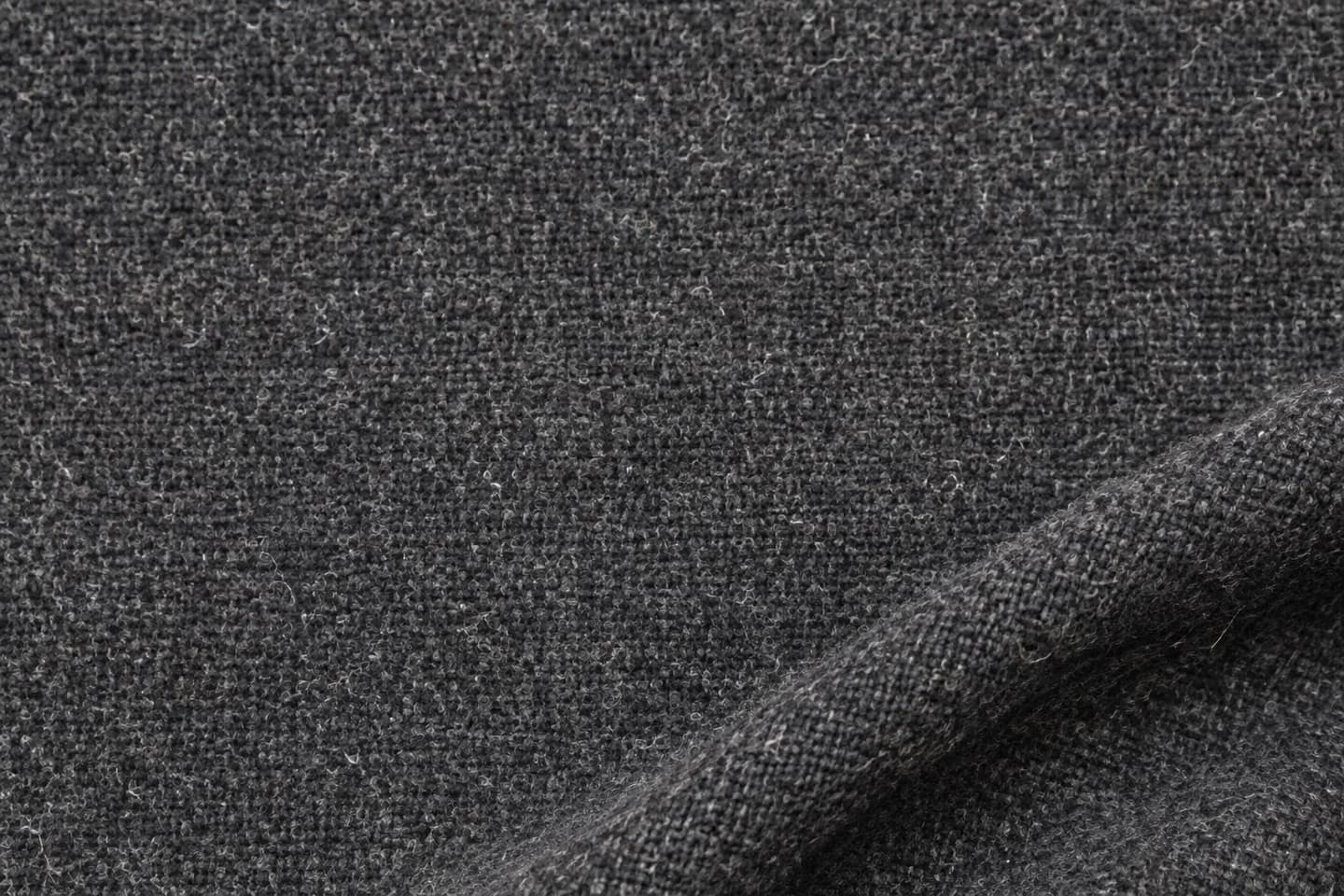
Name the composition, weight and finish you require. Compare the cloth and decorated sample together.
Illustrative texture; not a certified fabric specification.Decoration surface
Locate decoration on the cuff or discuss its behavior on the textured crown. Small graphics need review at finished size on the actual structure.
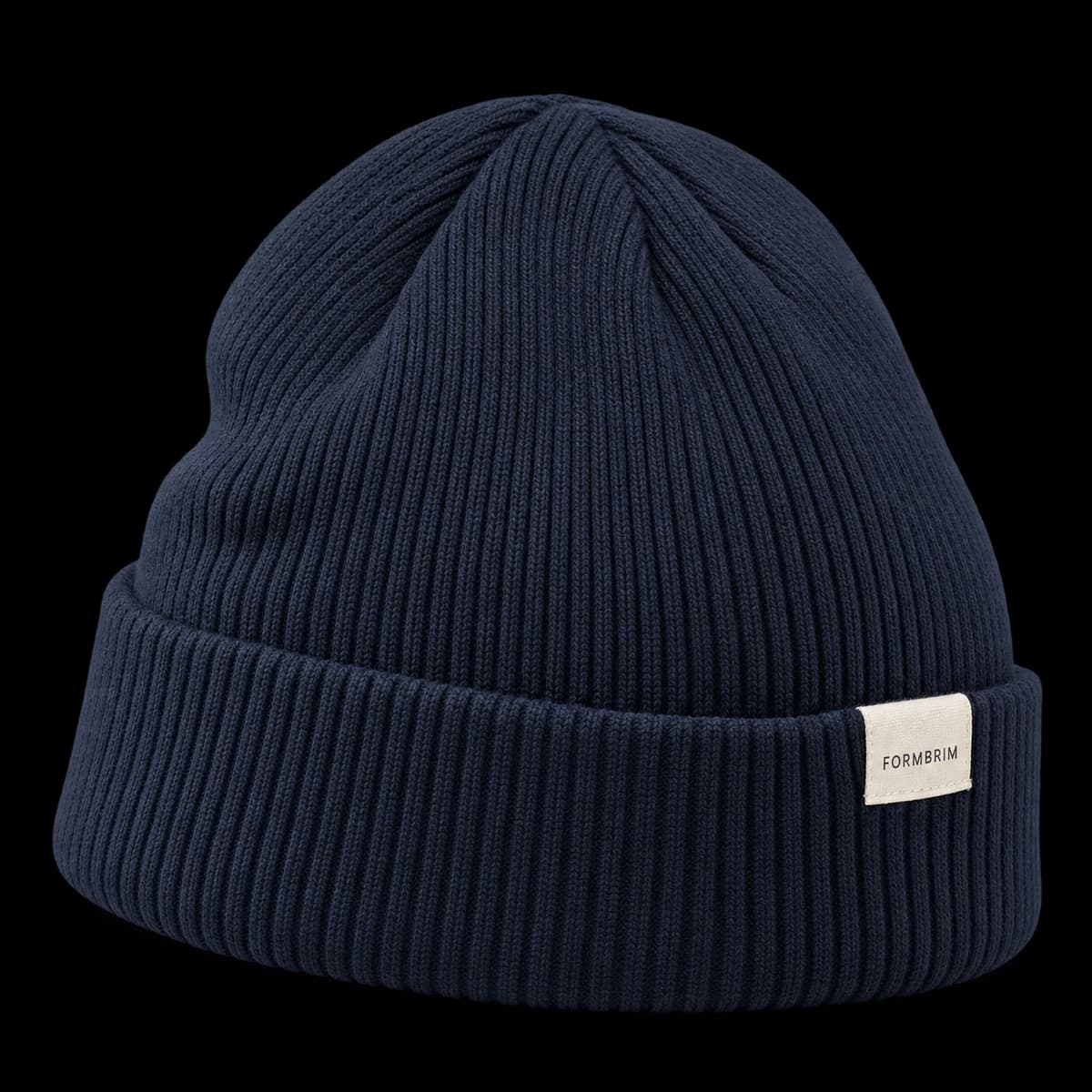
A label on the cuff gives lettering a different surface from the waffle crown. If decoration must sit on the textured area, review its edges and readability at actual size. Ask whether the attachment changes local stretch or creates a firm spot. A digital overlay does not show either effect.
Crown join and composition
Inspect the crown join and the inside of the texture. Agree yarn composition, dimensions and care information separately from the visual direction.
Turn the sample inside out and inspect the crown join and interior texture. Then check how the top sits when worn. A correct-looking swatch does not approve the assembled crown. Record dimensions, selected yarn and label details together before finalizing composition and care information.
A practical buying example
A brand wants a textured olive crown and a plain folded cuff with a small label. A sample with a very deep waffle pattern may dominate the cuff and change the silhouette. Compare a shallower reference while retaining the agreed dimensions. That makes the next review about surface structure instead of changing texture, crown length and label size simultaneously.
Questions to settle before requesting a sample
Select waffle knit when a textured crown is intentional. Ask which part of the reference defines cell scale, where the texture changes into rib, and how the crown join is finished. Compare a plain rib beanie if the main priority is consistent small-logo placement rather than a pronounced surface.