
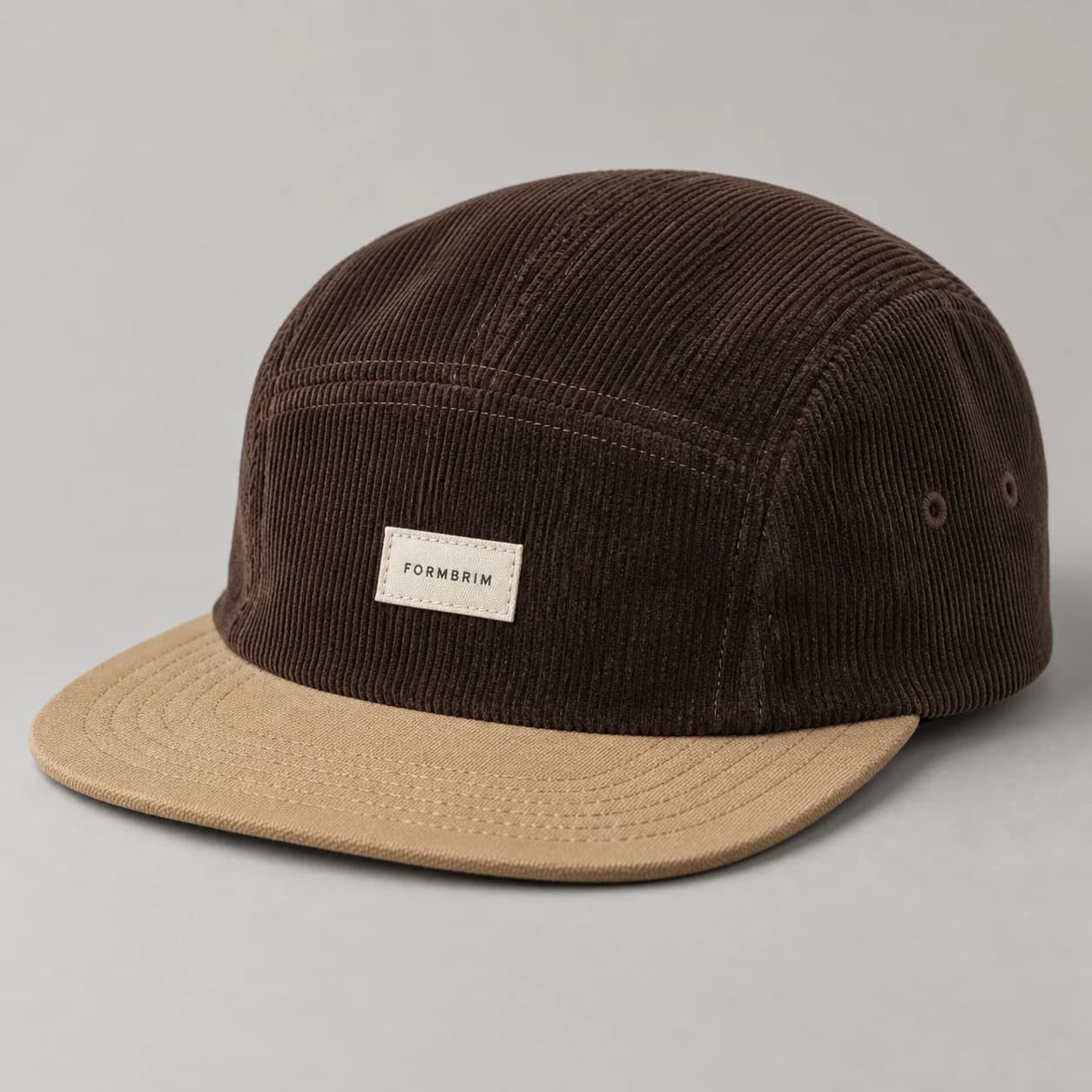
Select corduroy for the five-panel profile
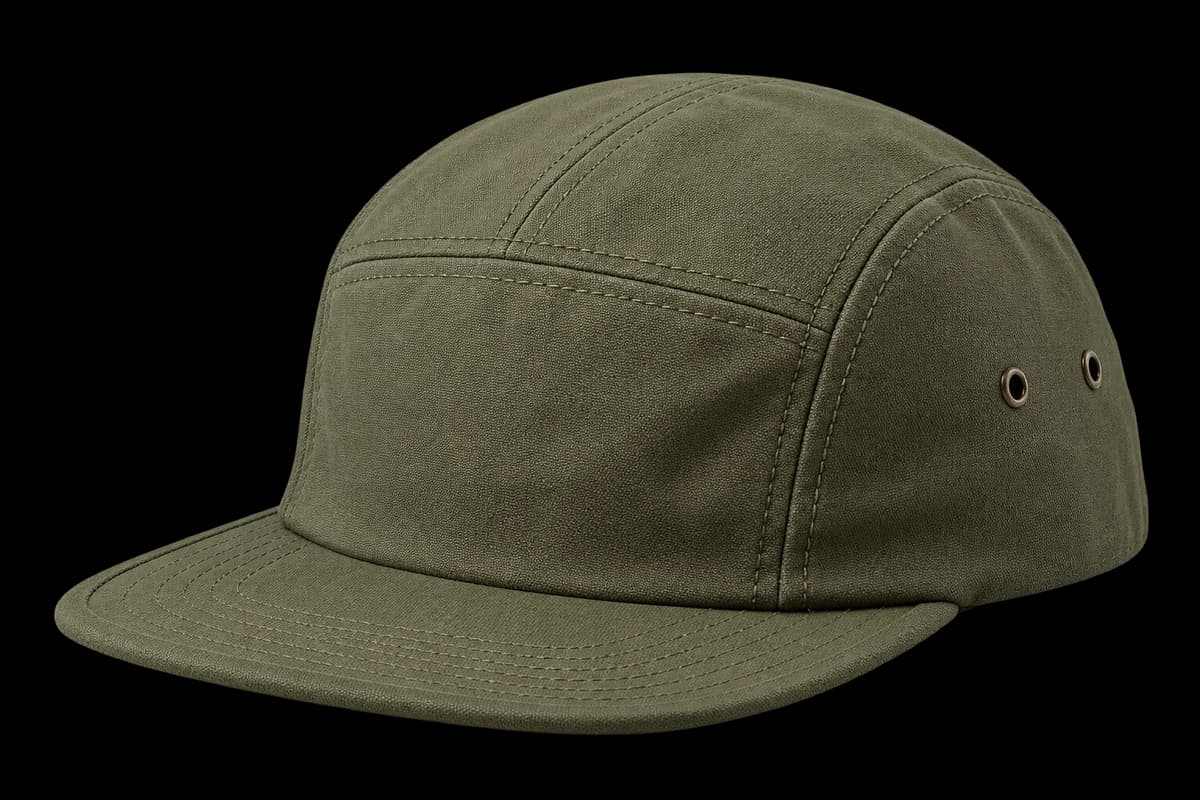
Send a camp-cap silhouette reference and a separate corduroy reference, explaining which features to combine. A texture reference may show a completely different crown. Name the intended front slope and depth so the material choice does not become a substitute for a clear shape specification.
Decide whether the fabric texture or the camp construction should be noticed first. Wider ribs can become the main feature, while finer ribs leave the panel geometry more prominent. Compare both at the intended crown proportions, not only in close-up swatches. This helps keep the design from drifting toward a different visual category.
Set rib direction at panel junctions
Mark the rib orientation for the front, top panels, sides and brim. Ask how the chosen fabric and pattern will affect the joins. Review whether the rib changes are intentional and balanced in profile. The broad front can make a directional mismatch especially noticeable, so include it in sample feedback.
Inspect the top-to-front junction where the rib direction may change visibly. A deliberate change can emphasize the panel map, but an inconsistent one can look accidental. Mark the intended relationship in a drawing and review it from above and from the side. Keep that directional drawing with the final fabric selection for reference.

Read the back, panel junctions and adjustment or continuous crown.
Generated design study; inspect the physical sample before approval.Review a label on the textured front
A small woven label offers a separate surface for fine lettering. Supply its final dimensions and ask to review both the label itself and its attachment to the cap. Check that the corners sit neatly over the ribs and that the label does not stiffen too much of the front. Leave enough fabric visible to retain the texture-led concept.
Consider a taller compact label versus a long horizontal label using the same artwork. Each creates a different relationship with the broad front and visible ribs. Check both at actual size before deciding which feels more balanced. Do not let a generous front panel become a reason to enlarge the logo beyond its useful scale.
Check thick seams and adjustment points
Review the front-to-brim junction, side seams and rear adjustment opening in wear. Corduroy changes the hand at these layered areas, so compare comfort as well as appearance. Capture revisions with clear locations and priorities. Approve the completed decorated sample after those changes rather than a fabric swatch alone.
At the rear, compare the thickness of the adjustment strap with the closure opening and the surrounding seams. Ask how the proposed combination feels when tightened and loosened. Record any point where the material bunches or feels bulky, then review that specific area on the revised sample alongside the approved front shape and label.

Review the inside finish and contact surfaces; the illustration is a proposed construction.
Generated design study; inspect the physical sample before approval.A practical buying example
For a tobacco corduroy camp cap with a small woven label, select a rib reference and label dimensions before sampling. If the top appears a different shade from the front, check orientation and light before changing colors. Keep the approved front angle when revising the cloth direction so the next sample answers the texture question without introducing a new silhouette.
Questions to settle before requesting a sample
Review the front-to-brim junction and rear strap where thicker cloth folds. A closure selected for thin twill may feel different with the proposed corduroy strap. Ask whether the label corners sit flat and whether its border competes with the ribs. Compare with a corduroy baseball cap if a rounded crown is more important than the uninterrupted camp-cap front.