
Start with the claim your team wants to review
UPF testing measures how much ultraviolet radiation passes through a textile specimen under defined conditions. If a supplier sends a report for one cloth, a sourcing team can check whether the specimen represents that cloth in the order. Approving wording for a complete hat is a further decision. Keep the proposed wording and its intended market on the review record so the team can see exactly what the evidence would need to support.
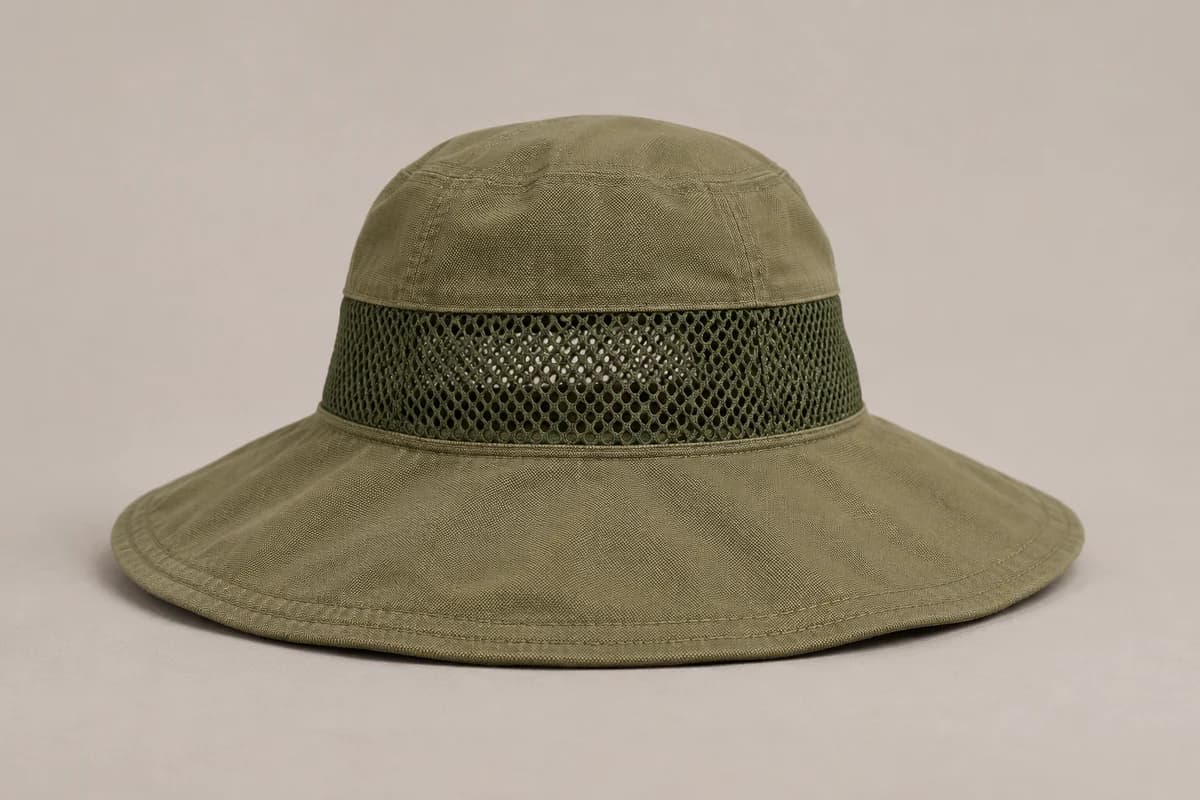
Consider H01, an illustrative full-brim hat with a woven crown top and a dark open-mesh side band. The supplier has sent a report for the woven cloth, and the brand has proposed a UPF statement for the complete hat on a draft hangtag. The drawing and the report can both be useful while the hangtag wording remains pending. The example supplies no rating or test result.
Map the solid cloth and mesh on one hat
Mark the solid crown top and the outer brim face as W01, the same proposed woven cloth. Mark the side crown band as M01, the separate mesh. Show the seams where the mesh meets the solid fabric, where any backing begins and ends, and how the brim joins the crown. Use the sample revision and size on the drawing. A flat swatch can identify W01 without describing any of those relationships.
Give each material its own row in the evidence record. If an underside, backing or other layer uses a separate material, identify it separately when it matters to the question. Leave an unknown material or layer open. That way, two panels sharing a shade cannot be mistaken for two panels made from the same tested cloth.

- Map W01 to the crown top and outer brim face.
- Map M01 to the separate side crown band.
- Show the junctions and identify any other layer under review.
Find the actual specimen in the report
Ask the supplier to link the report ID and specimen description to the proposed material reference, color, finish and lot or submission. If the report concerns an earlier or differently finished cloth, ask the supplier and lab whether it represents the current proposal. Keep the source record with the evidence, even when the approved physical swatch and the report use different reference numbers.
Check the method and edition and the conditions actually reported. The public summary of AATCC TM183 describes fabric specimens assessed in either a dry or wet state. Use the report to establish which state was tested. Any additional condition required for the proposed claim belongs in a separate question to the lab. The same method number on two reports does not identify the same specimen or conditions.
For example, if the lab labels the sample SWATCH 3 and the order labels the cloth W01, ask for the supplier’s cross-reference from the dispatch or submission record. A file named after the hat is easy to locate, but the file name leaves the specimen identity unanswered.
- Specimen identity records which material the lab received and which order reference it represents.
- Test scope records the method, condition and property addressed by the report.
- Claim scope records the exact wording, market and product revision the brand wants to review.
Example of a claim left pending
In H01, the specimen reference and supplier record connect the report to W01. File the report against the woven-cloth row. M01 is absent from that submission, so the mesh row stays open. The drawing identifies where both materials sit on the assembled hat, but the report does not assess the assembled arrangement or its coverage. Keep that question separate from whether W01 was correctly identified.
Record CLAIM PENDING against the complete-hat wording. This status keeps the draft hangtag from moving into artwork approval while the team resolves the evidence gap. The material report can stay on file without being rejected. A matching W01 report and an approved design drawing are separate records, each with a specific use.
A later change to the mesh band or its backing would change what the team is asking the lab and the claim owner to review. Name that change explicitly and retain the earlier H01 evidence record. Do the same for a new woven cloth that no longer matches W01.

- File the matching woven report under W01.
- Keep M01 and the assembled configuration open.
- Send the drawing, existing report and proposed wording for review.
Ask the lab and the claim owner different questions
Give the lab the existing report, the hat drawing, the proposed wording and its intended market. Ask which material specimens, finished sample and supporting information are relevant to the assessment. Ask the lab to identify the applicable method and conditions and to explain what each resulting report can cover. ARPANSA, for example, has separate submission instructions for fabric and for finished garments and hats under its Australian testing route. Confirm the appropriate route for your own destination.
Give the brand’s claim reviewer the same revision and the precise wording under consideration. Ask which evidence is needed before approving artwork or any other publication of that wording. Keep the decision attached to its market and sample revision. Record any request for a construction change separately so it does not become an unreviewed change to the hat.
If claim evidence is a condition of the order, name that dependency when you request the sample or quotation. The team can then schedule the evidence review and reserve a separate artwork decision, with the unresolved wording visible to everyone working from the brief.
Send the evidence map with the sampling brief
Attach the drawing and report with the W01 and M01 references, the open assembly question and the current claim status. Ask the development team to use the same revision when it quotes or reviews the sample. When the missing information arrives, record which row it covers and who is responsible for the decision that follows.
For a FORMBRIM OEM/ODM project, share the hat configuration, destination and evidence questions with your brief. The bulk minimum is 300 pieces per style, per color. Agree the proposed sample scope and identify the parties responsible for testing and claim review.