

Map the closed head, face aperture and integrated neck
Start with front, side and rear drawings showing a closed head crown continuing into a neck section. Mark the single face aperture as a separate opening in that shell and give the lower neck edge its own reference. This scope differs from a beanie that ends around the head, a separate neck tube or a cap with attached ear flaps. A longer knit body alone does not explain the required face opening and neck shaping.
Ask the technical team to identify the proposed construction route and any connections that need review. Complete sample-development capability does not select a knitting program, seam arrangement or piece count for this particular project. Keep those details pending until the technical proposal defines them. Use an inside construction view when an outside photograph conceals the connection or its finish.
Retain one drawing reference across all views. Specify the intended covered areas and face exposure without adding a protection claim. The deep navy direction has one oval face opening and no drawcord or buckle. A request for a different opening arrangement or an extra fastening changes the brief and needs its own feasibility and sample review.
Review the face-opening path and edge contact separately
Mark the upper, side and lower points of the face aperture on the governing front view. Compare that path with a matching profile at the agreed worn position. Record where a requested change belongs: the upper edge, a side contour or the lower opening. Moving the entire opening, changing its outline and changing the head depth are different revisions.
Give the proposed narrow rib edge a separate finish reference. Ask how its connection to the body and its inside contact surface will be formed for the selected knit. The illustration does not establish an edge width, tension setting or universal recipe. Inspect the same edge from outside and inside rather than accepting an even external outline as proof of the concealed finish.
Agree the sample condition and intended fit reference before comparing how the opening sits or moves. Any stretch, recovery or dimensional requirement needs an agreed assessment and acceptance basis; it cannot be read from the knit texture. If the edge changes, recheck the adjacent body and neck position while retaining the accepted crown reference.
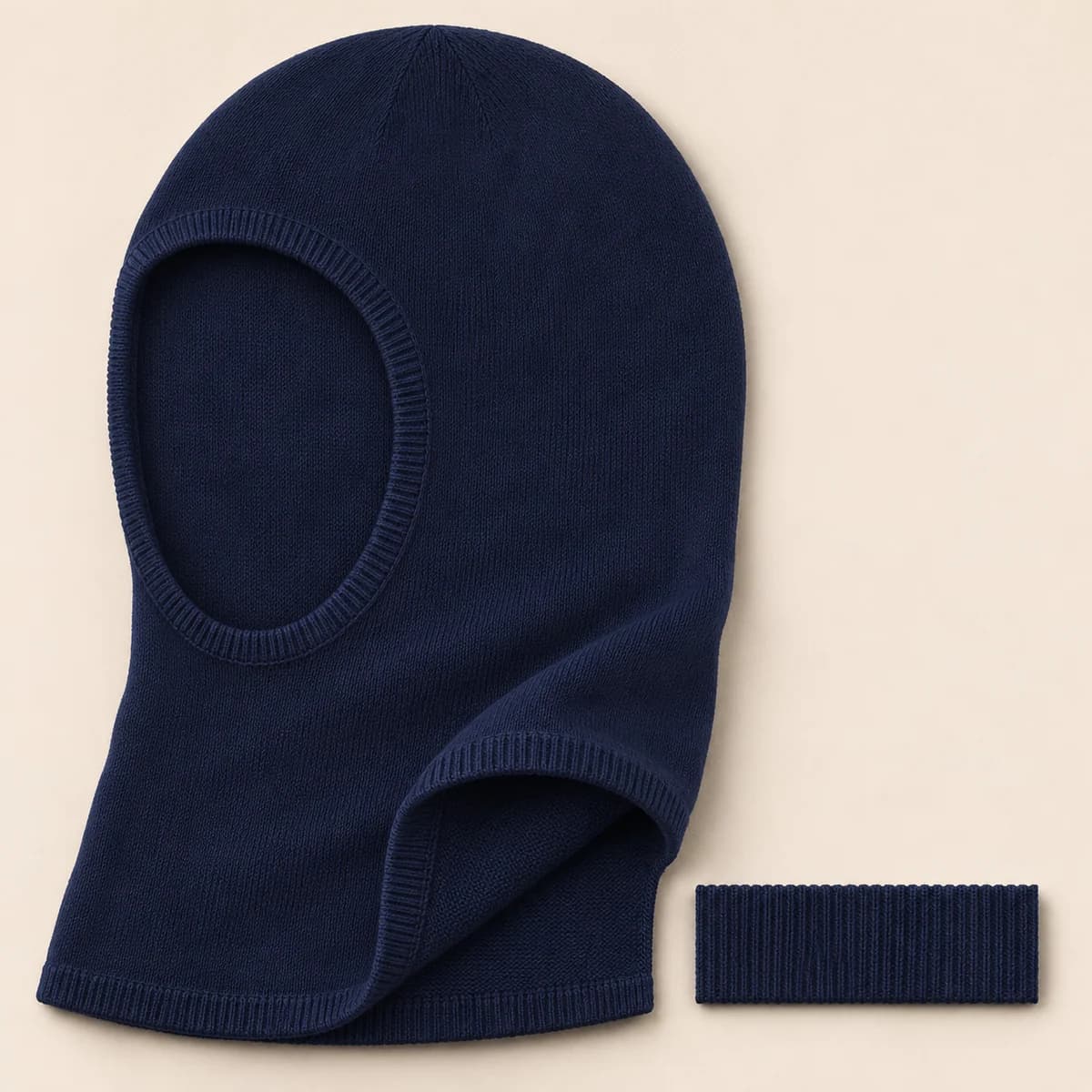
Knit development reference · agree the body, face-edge finish and neck shape through sampling
Connect the knit proposal, neck shape and artwork
Request identified yarn and knit submissions with the composition, structure and other project specifications the buyer needs to settle. The smooth navy body and narrow rib edge describe the pictured proposal, not confirmed yarn content, gauge or finished weight. Compare the chosen proposal on the shaped head-and-neck sample rather than approving the whole product from a flat swatch.
Define how the neck section should sit in the intended use position and mark the lower-edge measurement route. Keep neck length, opening shape and body fit separately identifiable. Agree any proposed size allocation and the fit references that will represent it. A change to the face aperture should not quietly become a longer neck or a different head depth.
Place final-size artwork within a named area clear of the face-opening and lower-edge connections. Discuss the proposed decoration method on the chosen knit, including its effect on local shape and the reverse attachment. Review the inside label and contact finish on the same version. Keep functional or certification requests in a separate requirement record with evidence to be agreed; a balaclava name and dark knit establish no measured protection.
Close one aperture revision and the complete bulk brief
Write feedback around a named feature and retained references. If the crown and neck are accepted but a side of the face opening needs revision, mark that arc and request an aperture-and-edge proposal while retaining the agreed head and neck dimensions. Ask the technical team to identify any wider change needed to make the request feasible. Do not substitute a general instruction to make the balaclava tighter.
Compare the next sample in the same condition and worn position. Keep front, profile, rear and inside references together, with accepted, revise or pending status for the head, aperture, edge, neck, knit and artwork. A revised edge finish may affect the adjacent body, so review those connected features explicitly rather than carrying every earlier decision forward automatically.
For a quotation, consolidate the construction proposal, yarn and knit references, aperture drawing, intended fit references, artwork, labels, finished colorways and quantity allocation. FORMBRIM’s bulk minimum is 300 pieces per style, per color; agree sample scope and proposed size allocation separately. Include packing and destination requirements. Keep development and approval decisions distinct from bulk production and transport timing.

Separate the aperture path, narrow rib edge and adjacent knit body when marking feedback.
Inspect the physical sample before approval.A practical buying example
Suppose the head depth and neck position are accepted, but the lower face-opening edge needs revision. Mark that arc on matching front and profile views, then request an aperture-and-edge proposal while retaining the accepted head and neck references. Ask which adjacent body area must be reviewed again and inspect the inside finish of the revised edge. Changing yarn and shortening the whole neck at the same time would make the result harder to assess. This is a hypothetical review example, not a measured fit result or a previous customer order.
Questions to settle before requesting a sample
Before requesting a balaclava sample, identify the complete head-neck drawing, face-opening path, proposed edge finish and lower-neck reference. Ask the technical team to define the construction route and material proposal, then agree the intended fit reference and sample condition. Send final-size artwork with opening clearances, label requirements and one local revision request. Include quantities by finished colorway and a proposed size allocation; the bulk minimum is 300 pieces per style, per color. Resolve any functional claim through separately agreed evidence.