
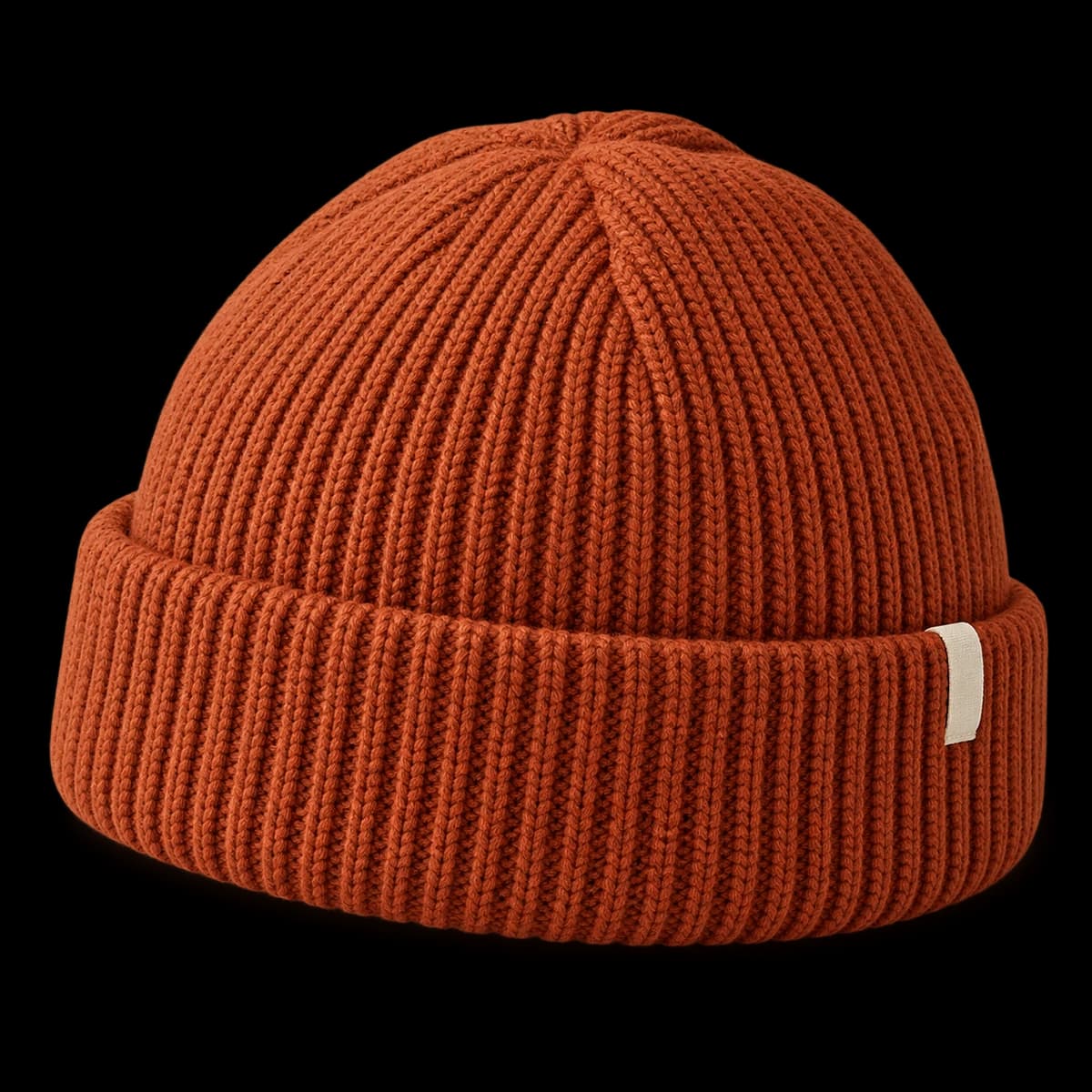
Intended worn coverage
Provide a worn reference showing the intended coverage around the ears. Describe the short silhouette without assuming one fixed fit for every wearer.
Use a side view on a wearer to mark the lower edge. Record the fit reference instead of relying on a product photograph standing upright. Ask how the opening and crown length are measured in the relaxed sample. The same short appearance can hide very different pressure and coverage when worn.
Cuff-to-crown proportion
Balance cuff depth with the remaining crown. Too much fold can change the whole appearance, so specify the proportions together.
Compare the folded cuff and remaining crown in one view. If the cuff grows deeper, the crown visible above it becomes shorter. Discuss the balance rather than revising dimensions independently. Check the top join as well; a compact shape should not create an unexpected raised point.
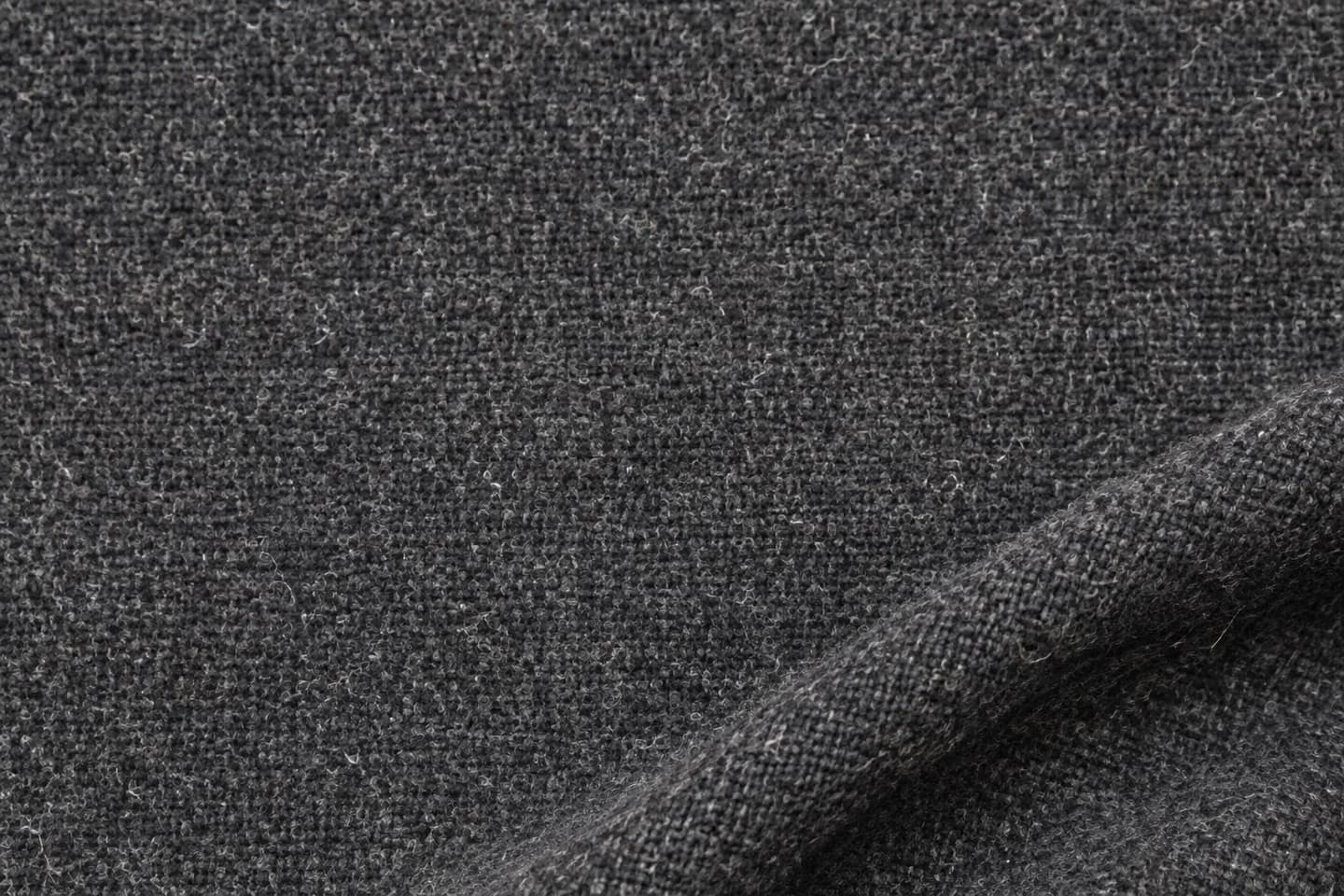
Name the composition, weight and finish you require. Compare the cloth and decorated sample together.
Illustrative texture; not a certified fabric specification.Small brand placement
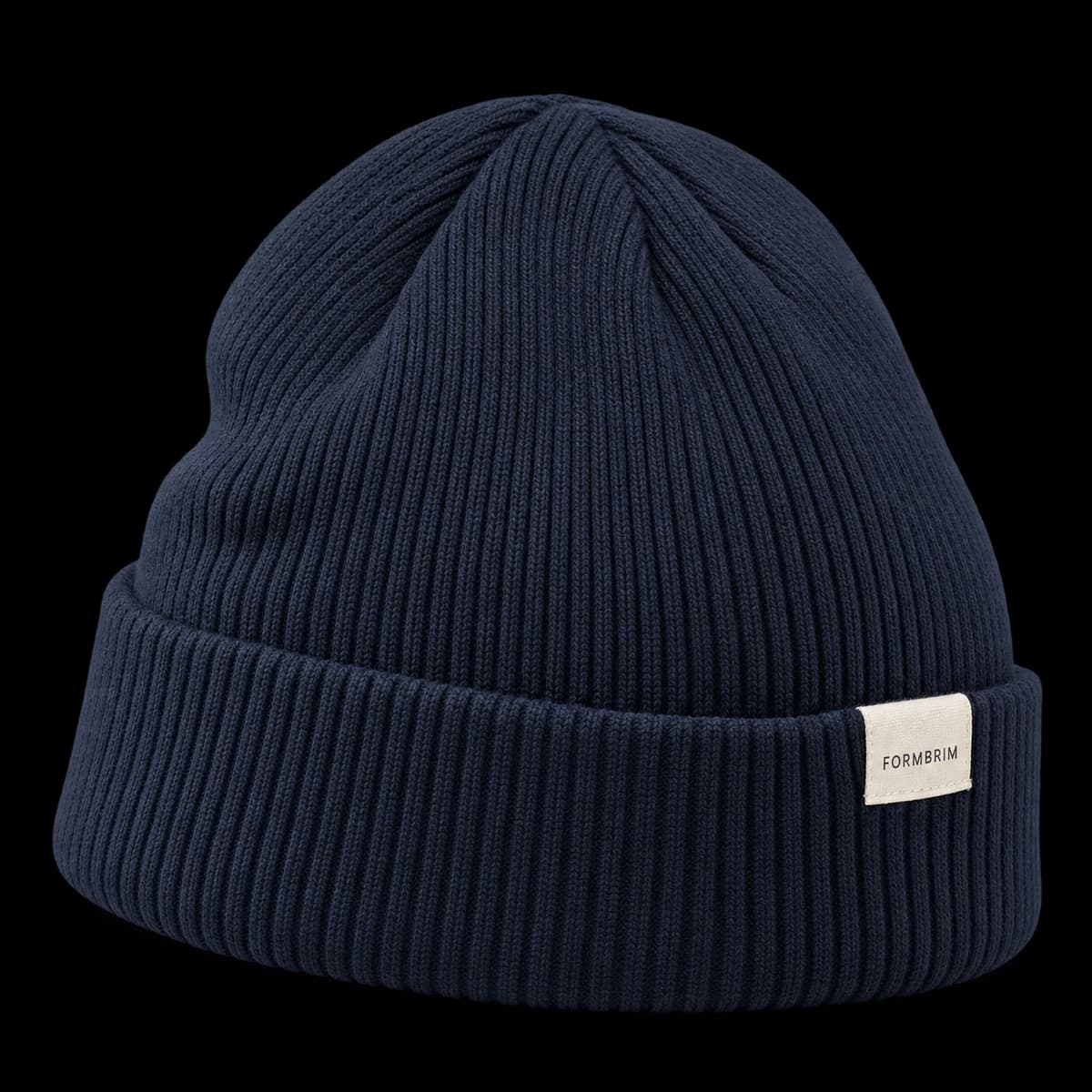
Use a small label or restrained artwork that fits the cuff height. Confirm placement on the folded sample rather than on a flat knit panel.
The available cuff height limits how a mark fits. Supply the actual label dimensions and show its position relative to the fold. Review the visible border, not only the lettering. A small side label may support the compact look better than a large centered badge, but its attachment still needs inspection.
Lower edge comfort
Check the lower edge and crown join for comfort. Record relaxed dimensions and the intended feel before establishing final sizing.
Wear the sample long enough to notice the lower edge and inner joins. Record the particular location of pressure or bulk rather than asking for a generally looser hat. A larger opening could change how the short shape stays in position, so review the revised fit and silhouette together.
A practical buying example
A buyer wants an above-ear silhouette with a deep cuff. The first sample covers more of the ears than the reference. Mark the intended lower edge and compare the folded crown length before changing the opening. Asking for a smaller beanie without identifying the dimension could make it tighter while leaving the coverage problem unresolved.
Questions to settle before requesting a sample
Choose this direction for a specifically short look, not as a universal winter fit. Ask how the target wearer and relaxed measurements are recorded and whether the label remains visible at the approved fold. If customers are expected to pull the hat over the ears, compare a longer cuff beanie before finalizing the assortment.